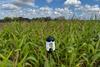
Matt Clark says that sampling biological material from the air was initially ‘a wacky idea’ that he had while working at the Earlham Institute (EI) in Norwich, UK. Clark, now at the Natural History Museum in London has spent the past 12 years refining the idea, along with Richard Leggett at the EI. They are now launching a portable air sampling technology called AirSeq as part of a joint spin-out, Agnos Biosciences.
‘What we have now is a well-developed pipeline,’ says Leggett. Initially, a portable device on loan to customers sucks air through for around an hour while out in the field, depositing biological material on a filter.

Once the devices are back in the laboratory, the team then extracts and purifies DNA from the filters for analysis using nanopore sequencing, which all takes around 90 minutes. Nanopore sequencing involves passing DNA strands through small protein pores in a membrane, where each DNA base generates a unique electrical signal to create a readout. The longer-term plan would be to be able to process things onsite with the customers,’ Leggett says, avoiding the need to send samples in the post.
While other tools only analyse easy-to-target genes that can generate large signals from small amounts of material, Leggett explains that AirSeq sequences all the captured DNA. To do this, the team developed a software tool known as MARTi (metagenomic analysis in real time), as well as an algorithm that helps reduce the false positive rate when identifying certain species or genes.
Most of the team’s research has so far used the technology in agricultural fields to detect crop pathogens in the air. Clark explains that the end-stage analysis ‘enables us to not only work out what species are present – bacteria, for example – but also to look at the toxins that they might have in the genome or the antibiotic resistances that they have’. The technology can also detect species of pollen, fungi and viruses, as well as DNA samples collected from swabs, liquids and solids.
‘You could also envisage [the technology] in surgical theatres, ensuring that it is really super clean after [an] operation,’ adds Clark. Other applications include monitoring clean-room environments, biosecurity and in food manufacturing, particularly where food is sold as ready-to-eat.

The US Defence Advanced Research Projects Agency initially gave the team a grant as part of the SIGMA+ project to detect biological threats, but the company has since received additional funding from the Biotechnology and Biological Sciences Research Council in the UK.
Clark explains that several donors have also given philanthropic donations to the Natural History Museum ‘to help us progress the technology from academic towards the commercialisation [stage]’. He adds that museum is looking to diversify its sources of income as ‘you don’t want to put all of your eggs in one basket’.
Meanwhile, Leggett believes that Agnos can go beyond what it can currently do with AirSeq. While the DNA pipeline is well established, sequencing RNA from the air is more challenging as it currently uses a less advanced technology and the amount of RNA in each sample is lower, reducing signal quality. But Clark notes that being able to analyse RNA ‘has implications for [analysing] a lot of respiratory diseases that are viral, like Covid-19’.


No comments yet