Two startups in Grangemouth, UK, that produce chemicals by fermenting whisky residues have won over £9 million in government funds, attempting to fill the economic gap left as the nearby oil refinery closes. The UK government is also providing £120 million in guaranteed loans and grants for Ineos’s Grangemouth ethylene plant, with the aim of preserving and rebuilding critical chemicals infrastructure in the area.

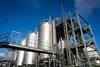
The exterior of a new industrial bio refinery showing pipes, stairs and large distillation tanks

Source: © Ashley Coombes/Celtic Renewables

Celtic Renewables will use £6 million of government funding to design an acetone-butanol-ethanol biorefinery based on its existing pilot plant

Biotech firm MiAlgae feeds whisky waste to a proprietary algae strain to produce high-value omega-3 fatty acid nutrients. It’s won £1.5 million from the Scottish government, which will be matched by the UK government to reach £3 million in total. The Scottish government claims that this will help MiAlgae create up to 310 jobs over the next five years.

The Scottish government also says that the £6 million it is giving Celtic Renewables will create up to 149 roles in Grangemouth by 2030. This money will help pay for pre-construction work for a new biorefinery to produce acetone, butanol and ethanol. The company’s innovation comes in bacterially fermenting leftovers from other industries, typically a combination of reject potatoes and whisky industry effluent. Demand comes from pharmaceutical, cosmetic, fragrance and industrial companies seeking to defossilise their supply chains, chief executive Mark Simmers tells Chemistry World.

Every tonne of algae MiAlgae produces saves 30 tonnes of fish, it estimates, preserving precious fish stocks. ‘Omega-3s are known to be essential, yet the main place we can get them is from a diminishing supply of anchovies, effectively, off the coast of Peru,’ says Douglas Martin, founder and chief executive of MiAlgae. Its first customers are animal feed producers, initially for pet food, but also farming, where omega-3 fatty acids can help pigs and salmon grow faster. The company was a runner-up in the Earthshot Prize, founded by Prince William and Sir David Attenborough, in 2024.

MiAlgae had already confirmed plans to build its facility in Grangemouth in April 2025. Although it only started construction at the beginning of December, the company expects the plant to be operational within six months. The fermentation equipment has already been constructed and tested at the manufacturer’s site, so can be disassembled, moved and reassembled relatively quickly, Martin says.

There is enough waste in the world to completely displace the production of fossil-based acetone and butanol

Martin explains that the government funds will help scale up faster. ‘Our goal isn’t to be a small manufacturer,’ he says. ‘Some of our customers’ minimum orders would be thousands of tonnes.’ The company currently employs 60 people for two fermentation modules, but it plans to scale to 50 modules. ‘We’re very confident that we’ll hit that. It’s a timing question, more than anything else, how fast can we go?’

Displacing fossil feedstocks

The UK and Scottish governments’ Project Willow report identified Celtic Renewables’ technology as one of the viable alternative pathways that could successfully be deployed within the Grangemouth industrial cluster. That report said that acetone–butanol–ethanol bacterial fermentation could create up to 100 jobs, requiring up to £265 million of capital investment. The UK and Scottish governments have previously pledged £200 million and £25 million respectively to support Grangemouth investments.

Celtic Renewables is already running a pilot plant in Grangemouth intended to produce 400 tonnes of product annually. The £6 million grant will be used for front-end engineering design work for a new biorefinery, which the company will seek £120 million of private investment to build once that work is complete, Simmers says. It would take too long to construct on the existing Petroineos refinery site, so it is looking at other nearby sites. Like MiAlgae, Celtic Renewables sees speed as being essential, with the company planning to build up to three biorefineries in the next five years, Simmers says.

Despite both companies using whisky residues, their chief executives are on friendly terms and view their technologies as complementary. Martin stresses that there are around 150 distilleries in Scotland, many being close to Grangemouth. ‘With the equivalent of 25 distilleries, we would hit our target of 50,000 tonnes a year,’ he says.

Simmers adds that he believes that it’s possible to supply the world’s entire demand for acetone and butanol from spirit refinery waste. Celtic Renewables specifically uses pot ale, the fermented liquid and barley left over after the first distillation step. ‘There’s 4 billion litres a year of effluent that comes out of the whisky industry,’ he says. ‘We’re using half a percent of that in our first plant. If we got all of it, we would be making hundreds of thousands of tonnes per year. There is enough waste in the world that we could completely displace the production of fossil-based acetone and butanol.’

Both companies will benefit from the local skills base and infrastructure such as low emission energy generation. Other companies are in discussions with Scottish Enterprise and the Scottish government to step into the economic and industrial hole left by the Petroineos refinery, Simmers adds. He would welcome their addition. ‘MiAlgae and ourselves don’t want to be the only ones that are doing this,’ he says. ‘This needs to gather momentum.’