


First-hand account of an international collaboration to make flow battery testing more reliable and reproducible
Have you ever tried to reproduce what you’ve read in the energy storage literature? Ever tried to test an electrochemical cell and not been able to replicate the results? Well, you’re not alone.
Over the past two years, my colleagues and I at Queen’s University Belfast (QUB), UK, along with fellow researchers at Massachusetts Institute of Technology (MIT), US, have brought together a community of flow battery researchers who have repeatedly faced this exact problem. And they each want to play a role in fixing it.
It all started at the UK Flow Battery Network Annual Symposium in 2024, where an international group of researchers heard a presentation from MIT’s Fikile Brushett. Speaking candidly, he described the everyday challenges his laboratories faced in matching the performance metrics reported in peer-reviewed publications. His transparency, and his interest in the experiences of students and researchers in the room, prompted a lively discussion.
That discussion highlighted a shared view: advancing flow battery technology will require greater collaboration across the community. To accelerate its role in renewable energy storage and make the field more accessible to new researchers, those present agreed on the need to develop more robust, consistent, and accessible testing practices.

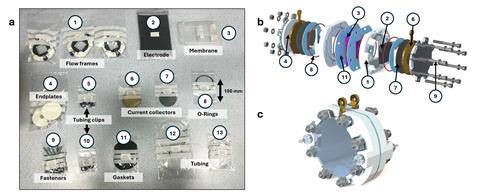
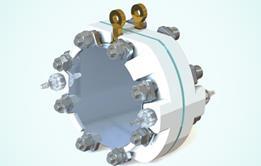
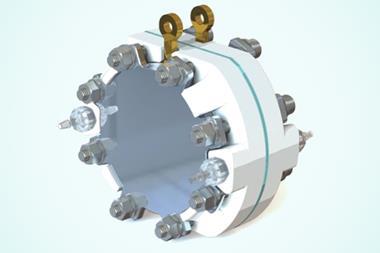
Among those present was Hugh O’Connor, then a PhD student and now a colleague of mine. During his PhD, O’Connor developed a low-cost, 3D-printable flow battery cell and had encountered first-hand the difficulty of achieving repeatable experimental results. Building on the momentum from the symposium, QUB and MIT joined forces with researchers from Queen Mary University of London, Eindhoven University of Technology, Harvard University, the University of Cambridge, and the University of Manchester to launch an interlaboratory study. Using O’Connor’s cell design as a shared platform and a methods-focused experimental brief, the study set out to understand how much commonly used electrochemical testing techniques vary from one laboratory to another.
We provided all cell components, along with an assembly guide, and requested three experiments: charge–discharge cycling, polarisation curve analysis, and electrochemical impedance spectroscopy. Where possible, parameters were specified, with some left to participants’ discretion. These were collected, alongside the data, in a post-experiment survey for comparison.
Expectations versus reality
We expected that everyone would perform the same tests, with some variability – potentially due to differences in auxiliary equipment, such as tanks or pumps. What we found, however, was that, particularly when it came to polarisation testing, the way people tested their flow cells differed from group to group. In fact, each of the eight research groups applied a slightly different protocol. This laid bare that there is no single ‘best practice’ protocol in the flow battery community.
Given that our experimental brief contained a similar level of detail to a typical flow battery publication, caution should therefore be taken when comparing polarisation curves from literature, unless the protocol has been explicitly reported. Indeed, we are calling for a standardised approach to polarisation curve analysis in flow batteries, akin to those established for fuel cells and electrolysers.
In the case of charge–discharge cycling, researchers largely carried out their experiments in the same way. Nevertheless, the study uncovered appreciable variability in key metrics, including electrolyte utilisation (±9.2%) and capacity decay (±2.5%/day). The impedance data similarly showed wide-ranging values for area-specific resistances associated with ohmic, charge transport, and mass transport losses, even when applying the same equivalent circuit model. Our results show that the same chemistry and the same cell are not sufficient to produce replicable performance; other sources of error are clearly influencing the results.
Despite collecting data from eight different research groups, we could not unequivocally attribute the experimental differences between participants to the quantifiable variability in their data. For this reason, we are now undertaking even larger interlaboratory studies, comprising almost 40 researchers across the world. Nevertheless, metadata gathered in our post-experiment surveys points towards potential areas for error mitigation, including electrical connections and electrolyte tank configuration. This led the two leading institutions to explore the impact of two- and four-point probe connections and the length of electrical cabling as well as the impact of both tube placement and stirring in the vessels containing the electrolyte. We demonstrated that an appreciable proportion of the variable in ohmic losses in the system may stem from poor electrical connections, and variable electrolyte utilisation may well be impacted by tubing configurations that facilitate a degree of fluid bypass, at least when the electrolyte is not stirred.
So, what can you do to help mitigate this problem in your own lab? Here are five things we recommend:
- Use a four-point probe connection, ensuring your connectors are clean and firmly attached to your current collectors.
- If you can, stir your electrolytes to ensure homogeneous mixing and to mitigate any issues with fluid bypass.
- Ensure your inlet and outlet tubing are not located close to one another, particularly if you are not able to stir your electrolyte.
- Report the exact electrochemical protocol used to generate polarisation curves (and any other electrochemical data).
- Be as transparent as possible about your experimental set-up and chosen parameters, providing sufficient detail for others to replicate your work.
At the outset, we were concerned that this kind of study might be perceived as a critique of the field. Instead, we saw our scientific community at its best: coming together openly and constructively to improve a technology we believe has an important role to play in the sustainable energy transition. For researchers in other fields who recognise these experiences, we encourage you to lead similar studies in your own community.
References
This article is open access
H O’Connor et al, Energy Environ. Sci., 2026, 19, 3323 (DOI: 10.1039/d5ee07103h)

Small experimental choices undermine flow battery comparisons
Multi‑lab study highlights the need for standardisation in redox flow cell tests
- 1
 Currently
reading
Currently
reading
Lessons from a community effort to fix flow battery testing








No comments yet