A new organocatalytic reaction offers a simpler way to make an important class of drugs based on modified nucleic acid chains. The catalyst eliminates the need for temporary molecular guides that are currently needed to control phosphorus stereochemistry during the synthesis of phosphorothioate oligonucleotides used in several approved RNA therapies.

Phosphorothioate oligonucleotides are short strands of DNA or RNA in which one oxygen atom in the phosphate backbone is replaced with sulfur. This makes the molecules more resistant to degradation inside the body and improves their ability to enter cells, and so is used in nearly every approved antisense oligonucleotide drug. But every sulfur substitution also creates a chiral phosphorus atom, meaning each linkage can exist in two mirror-image forms. Current manufacturing strategies produce both forms indiscriminately, generating mixtures of molecules whose biological activities can differ markedly.

Scheme

Source: © Shuai-Shuai Fang et al/Springer Nature Limited 2026

Phosphorothioate linkages are features of several oligonucleotide drugs

Alternatively, chemists can use bulky molecules, called chiral auxiliaries, to force phosphorus into the desired configuration. While effective, these auxiliaries must be added in stoichiometric quantities and later removed, making the synthesis longer, more expensive and harder to scale.

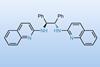
Now, Ming Shang and colleagues at Shanghai Jiao Tong University in China have replaced those guide molecules with a chiral catalyst that acts as a scaffold, both activating the reaction and controlling its outcome. The catalyst temporarily holds both the phosphorous reagents and a nucleoside in the correct orientation through a network of hydrogen bonds. ‘Such cooperative interactions could create a well-defined chiral environment around the phosphorus center and enable stereochemical control,’ explains Shang. This stereochemically defined building block is then coupled to a second nucleoside using the same chemistry already employed to assemble oligonucleotides. Crucially, the stereochemistry set by the catalyst is carried through into the growing DNA or RNA strand. ‘This is important because directly performing catalytic stereocontrol during every iterative coupling step of solid-phase oligonucleotide synthesis would be extremely challenging,’ says Shang.

Figure

Source: © Shuai-Shuai Fang et al/Springer Nature Limited 2026

Shang’s team assessed a range of organocatalysts, shown on the right of this figure, for their ability to selectively install phosphorothioate linkages

Shang and his team adapted the catalyst from carbon-bond forming chemistry developed by Jeffrey Johnston’s lab at Vanderbilt University, US. ‘The Shang team has discovered new reactivity in the catalyst,’ says Johnston, who was not involved in the new work. ‘This is a finding that fires on all cylinders: a new use of a versatile bifunctional organocatalyst, a powerful new approach to stereoselective phosphorothioate oligonucleotide synthesis, and what appears to be a practical starting point for future scaling.’

The team demonstrated the method across more than 20 nucleoside combinations and used it to form phosphorus–oxygen, phosphorus–sulfur, phosphorus–carbon and phosphorus–nitrogen bonds. They also adapted the chemistry for automated solid-phase oligonucleotide synthesis.

Beyond simplifying the synthesis, the approach could also help answer a longstanding question in oligonucleotide therapeutics: how much phosphorus stereochemistry contributes to drug performance. ‘Ultimately, we hope to understand whether stereopure oligonucleotide medicines can provide meaningful advantages over the current stereoisomeric mixtures and contribute to the next generation of nucleic acid therapeutics,’ says Shang.