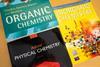
Peter Atkins, Catherine Housecroft and Jonathan Clayden guide us through the changing world of textbooks 

Textbooks

Source: © Royal Society of Chemistry

Everyone remembers the textbooks they worked with at school or university. For me, Lubert Stryer’s Biochemistry was my constant companion, a heavy tome to heft around. They hold a special place in our heart whether we read them deeply or just consulted them for help with tricky concepts. But are these big, bulky textbooks still fit for purpose in our highly digital age?

We talked to three leading authors of chemistry textbooks – all of whom have been writing them for decades – and they provided us with their insight into how the market has changed, why new editions keep coming out and how they’ve adapted their writing as the student body has changed and grown.

Catherine Housecroft, author of Inorganic Chemistry, now in its fifth edition, tells us how students are less keen on lugging heavy textbooks around and increasingly want digital editions, a format that has advantages over paper but also some drawbacks. Peter Atkins, author of Physical Chemistry, now on its 12th edition, notes that publishers are moving away from hard copies of textbooks but he still feels that paper has a unique pedagogic power – somehow the memory of seeing something on page sticks with you better than on a screen. While Jonathan Clayden, author of Organic Chemistry, currently in its second edition, notes that people have been predicting the ‘imminent death’ of the textbook forever but that they’re still here and they keep evolving to serve students’ needs.

Each of the three authors has their own approach to ‘rewriting the textbooks’ and the areas that they like to focus on. What they all share though, and what shines though, is the enjoyment they get from helping the next generation learn chemistry.