





This week, we discuss the latest milestone in quantum computational modelling and reveal the common laboratory item causing strange results in microplastics research – with Frankie Macpherson and Patrick Walter.
This week’s headlines
Featured stories
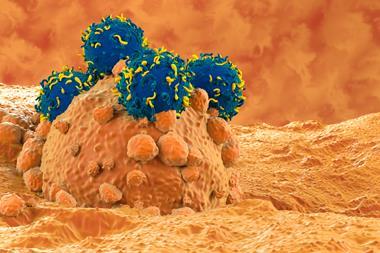
For a long time, quantum computing lived firmly in the realm of theory and lab experiments. But in recent years, the field has accelerated dramatically – and real-world applications are starting to come into view. Now, a collaboration between researchers at Cleveland Clinic, Riken and IBM has set a new benchmark, successfully simulating a protein-ligand system with more than 12,000 atoms. It’s a major step toward applying quantum computing to realistic biological problems. But how close are we to turning breakthroughs like this into practical tools – and what challenges still stand in the way?
And, a group from the University of Michigan, US, have flagged a potential source of contamination unbeknownst to microplastic researchers. While testing samples for environmental microplastics, the team received results reporting microplastic counts 1000 times greater than expected for the area. The findings were a surprise, considering they had followed all the standard protocols to prevent sample contamination. So why were they seeing these false positives?
We would love to hear your feedback on this new podcast, so if you have any questions or comments please get in touch.















No comments yet