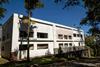
One of Venezuela’s leading institutes for graduate training appears to have sustained severe damage from US air strikes earlier this month. The air strikes were part of efforts to capture Venezuela’s then president, Nicolás Maduro, and his wife.

Venezuela’s minister for science and technology, Gabriela Jiménez, claimed that the mathematics building at the Venezuelan Institute for Scientific Research (IVIC) was ‘completely destroyed’ during the 3 January attacks and at least four other buildings sustained significant damage, including one housing its chemistry programme. She added that physics, nuclear research and ecology buildings were also damaged.
‘The attack was total: these areas housed servers and equipment essential to our computer networks that were completely devastated,’ Jiménez wrote on Telegram, referencing the maths centre.
Two missiles struck the area, according to Jiménez. ‘These spaces, now devastated by the bombing, have been fundamental in training the professionals who underpin our healthcare, engineering and oil industry,’ she said.
A video posted by Alberto Quintero, Venezuela’s vice minister of scientific knowledge and director of IVIC, purported to show damage caused by missiles to the institute’s campus.
Benjamin Scharifker, a physical chemist at Simón Bolívar University and former rector at the Metropolitan University in Caracas, says colleagues at IVIC have told him that a communications antenna on the top of the maths building was part of a larger communications network in or near Caracas that the US military targeted during its recent operation.
‘And so the building was hit, and what colleagues have told me is that several other nearby buildings were also affected, among them the chemistry building,’ Scharifker confirms. It appears there were no injuries because the attack occurred in the early hours, he says.
‘But the infrastructure was severely damaged, and probably there are no research activities going on in these IVIC buildings at the moment,’ Scharifker adds. ‘And most likely it will take several days, or several weeks, until such activities can be resumed.’
A Venezuelan researcher from another scientific institution in the country confirmed that IVIC buildings and infrastructure were damaged by the missiles, including those of the institute’s chemistry department.
A 14 January statement from IVIC described a recent address by Jiménez decrying ‘the reprehensible attack’ against IVIC that attempted to ‘destabilise’ research in the country. ‘This act was condemned as an affront to the rights of sovereign nations seeking technological independence,’ IVIC recalled.
At Simón Bolívar University, Scharifker says research activities have been ‘at a minimum – very, very low – for several months, if not years’. The 3 January attack occurred during the university holidays with activities set to resume on 5 January, but the university remained closed until 15 January.
Scharifker is not lecturing this term and does not plan to return to Simón Bolívar University’s campus for now, mostly because of the current political disturbances. There is heavy military presence on the streets, he adds.
Even with Maduro gone, Scharifker doesn’t foresee major changes at his university or others across Venezuela. ‘When it comes to science, there is no sign that there will be any change – all the structures of power of his government remain,’ he says. ‘It’s the same ministry of education, the same ministry of science and so on, so the policies affecting universities and research will be exactly the same.’


No comments yet