All Chemistry World articles in November 2026 – Page 3
-
 Research
Meet diamondiyne, the new diamond-like carbon allotrope predicted 35 years ago
Unusual mix of sp and sp3 bonding could furnish porous material with unique properties
-
 Research
Google DeepMind’s mutation Atlas shines a light on our dark DNA
AI’s predictions on the impact of changing each and every base of the human genome will help scientists understand genetic basis of disease
-
 News
Elsevier teams up with AI firm to extract chemical structure data from papers
Publishing giant will host data on Reaxys but researchers have concerns about independently validating the method
-
 Research
Simple organic catalyst walks phosphate groups along sugar backbones
Inspired by nature, method is first example of autonomous mechanical motion in small molecules
-
 Research
Hats off for new, lower temperature route to unzip plexiglass for recycling
Hydrogen atom transfer agents key to solvent-free method to produce pristine monomers from old acrylic
-
 News
Looming social media ban for under-16s in UK sparks debate on accessing science online
Restrictions on children’s access to site like YouTube and TikTok will begin in March 2027
-
 Research
New boron allotrope is up to 10 million times more conductive than any other
Imma-B60 produced by innovative strategy that might enable discovery of new allotropes of other elements
-
 Opinion
Autocatalytic networks could lie at the beginning of evolution
New modelling suggests how compartmentalised cross-catalysing networks can evolve adaptations that are passed on through chemical states
-
 News
Ukraine’s National Academy of Sciences hit by Russian drone, killing two
Academy is now calling on the scientific community to ‘stand united’ against Russian attacks on science
-
 Research
Batteries that break down in the body could power ingestible medical devices
Magnesium–molybdenum battery powers wireless trackers and stimulation capsules for days before safely breaking down in the gut
-
 Research
Tool flags ‘lurking menace’ isomers before they become an expensive problem for drug developers
Open-source workflow developed at AstraZeneca screens drug candidates for atropisomerism
-
 Research
Tagging AI-generated proteins during design process will let scientists know who made them
Google DeepMind researchers who developed the method say that this will help uphold scientific integrity and prevent misuse of protein designs
-
 News
Discovery of light-activated proteins and their application in neuroscience wins Nobel prize in medicine
Optogenetics has helped researchers better understand the brain and is enabling new treatments for neurological conditions
-
 Research
AI helps chemists consider more options when it comes to picking the best reactants for an experiment
Algorithm can standardise substrate selection to improve performance and structural diversity
-
 News
High-energy neutrino detection captures Nobel prize in physics
Francis Halzen spearheaded the IceCube Neutrino Observatory in Antarctica and is the first solo-winner of the physics prize since 1992
-
 News
Meet the two scientists who have just won the 2026 Nobel prize in chemistry
Learn about the lives of newly minted chemistry Nobel laureates Henri Kagan and Kensō Soai
-
 Research
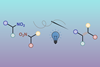
Two accidental nitroalkane reactions reveal complementary photochemical routes to alkenes and unite their discoverers
After independently uncovering new synthetic pathways for generating substituted alkenes, two researchers were introduced by a journal editor who spotted similarities between papers they had rejected
-
 Research
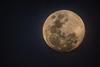
Lunar samples returned by China’s Chang’e 6 mission contain rare, highly magnetic iron allotrope
First discovery of γ iron – normally only stable above 900°C – on the moon
-
 Research
Skeletal editing step forward as carbon atoms swapped for nitrogen by embracing unreactive radical intermediate
The reaction’s mild conditions could aid editing of sensitive natural products
-
 Opinion
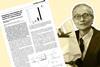
What’s it like to be the first person privy to Nobel-worthy work?
As Philip Ball, handling editor of Kensō Soai’s 1995 paper reveals, sometimes you’re oblivious to it