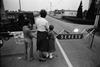
Fifty years ago, an accident at a chemical plant near Milan released up to 30kg of dioxin over residential areas. The Seveso disaster would traumatise a local population and bring about health effects that are still being studied today. But the accident also catalysed stricter chemical regulation and united European environmental campaigners in unprecedented ways
- A catastrophic chemical accident in 1976 released toxic dioxin over Seveso and nearby towns. A runaway reaction at the Icmesa chemical plant near the Italian city of Milan caused an explosion that vented a cloud containing TCDD (dioxin), exposing thousands of residents before authorities fully understood the scale of the contamination.
- The immediate impacts were severe, with widespread contamination, animal deaths and human illness. Vegetation died, thousands of animals perished or were culled, and many residents – especially children – developed chloracne. Evacuations of the most heavily contaminated area
- Seveso became one of the world’s most important long-term studies of chemical exposure. Researchers collected and preserved blood samples from tens of thousands of residents, enabling decades of follow-up research that linked dioxin exposure to various health effects, while also showing that human toxicity was generally lower than early fears suggested.
- The disaster transformed environmental regulation and public attitudes toward industrial risk. It led directly to the European Union’s Seveso Directives, requiring stricter controls on hazardous industrial sites, and became a symbol of corporate accountability, environmental protection and the public’s right to information.
This summary was generated by AI and checked by a human editor
Early in the afternoon on Saturday 10 July 1976, at a small chemical plant 20km north of Milan, disaster struck. Captured in one local newspaper headline a few days later: ‘Un forte boato a mezzogiorno, e poi s’alzo il bianco vapore’ – a loud boom at midday, then the white vapour rose.
This white cloud would spread south from Meda, where the Icmesa facility was located, and across other closely connected urban areas: Cesano Maderno, Desio and the town with which this devastating event would become synonymous, Seveso.
The vapour brought a foul smell to the air. But the residents in this increasingly industrialised area were used to strong odours emanating from the nearby factories. As the US biologist and environmentalist Barry Commoner wrote in a report after visiting the area: ‘For a while not much happened. People worked, as usual, in the local furniture-making shops; they tended the small orchards and gardens that filled most of the house yards and harvested ripening tomatoes and other vegetables; the local dairies continued to produce milk; youngsters played soccer in the fields of the sports centre just downwind of the chemical plant and swam in the outdoor swimming pool. Life went on within the walls of the nearby seminary.’
It would take several days before warnings started to reach the local population that they should stay indoors and avoid eating homegrown fruit and vegetables. Almost a week and a half would pass before it became public that the cloud over Seveso contained a highly toxic contaminant: 2,3,7,8-tetrachlorodibenzo-p-dioxin – known by its abbreviation TCDD, or simply as dioxin.
The Seveso disaster was a pivotal moment that highlighted fears felt by many communities living near Europe’s expanding industrial regions. The accident traumatised a local population and brought about health effects that 50 years later are still not fully understood. It also spurred pan-European environmental campaigns, and eventually led to stricter international chemical regulation.
The chemical plant accident
Icmesa was owned by the Swiss cosmetics company Givaudan, which was itself a subsidiary of the healthcare conglomerate Hoffmann–La Roche. The factory in Meda was producing an intermediate compound, 2,4,5-trichlorophenol, that would later be converted into the bactericide hexachlorophene for use in hand sanitiser.

‘The plant at Icmesa was making trichlorophenol, and an earlier step in that production is the production of sodium trichlorophenate,’ explains Alastair Hay, a toxicologist and chemical weapons expert from the University of Leeds, UK. ‘When two molecules of sodium trichlorophenate combine, that’s when you get the tetrachlorodibenzodioxin.’
Soon after the Seveso accident, Hay – then at the early stages of his academic career – travelled to Italy to report on the disaster and its aftermath for UK science news outlet Nature. He gained unparallelled access to Givaudan’s investigation team that was trying to piece together what had happened at the plant. Hay would later write a book, The Chemical Scythe, on the chemistry and history of dioxins, including a detailed analysis of the events at Seveso.
Six and half hours before the explosion, technicians were preparing to close down the Icmesa facility for the weekend. It was at this point that a fateful decision was made to shut down the 10,000 litre trichlorophenol reactor – the heating supply was switched off, as was the mechanism for stirring the reactor’s contents.
Usually at this point, thousands of litres of water would be added to the vessel to quench the reaction. But on this occasion no water was added.

‘The chemist that Givaudan employed [to investigate the incident] said that from his laboratory work, what he found was that on the surface of the reaction process an exothermic reaction had taken place, and that had led to … increasing temperature, a build-up in pressure, and that had resulted in the release of the contents over the surrounding countryside,’ says Hay.
With no agitation of the reactor’s contents, heat reflected from the vessel’s walls raised the temperature of the surface layer to around 220°C. At this temperature an exothermic reaction began, driving the temperature and pressure of the reactor’s contents even higher. At 12.37pm, a valve burst and six tonnes of the reactor’s contents were expelled into the sky.
The cloud contained a mixture of chlorinated aromatic compounds. Exactly how much dioxin was released is difficult to say with certainty: estimates at the time varied from 250g to as much as 130kg, but more recent estimates seem to settle at around 15–30kg.
Understanding dioxin contamination
Although Seveso was unique in terms of the quantity of dioxin released over an urban settlement, this wasn’t the first time that people had been exposed to the substance. Dioxin-contaminated trichlorophenol, made in a similar manner to the material in the Icmesa facility, was used in the production of agent orange – the defoliant used in herbicidal warfare campaigns by the British in 1950s Malaya and by the US during the Vietnam War.
And remarkably, over the three decades prior to the Seveso accident, all but one of the facilities producing trichlorophenol – including sites in the US, Germany, the Netherlands and UK – had experienced a serious incident in which workers and members of the public were exposed to dioxin.
Studies on dioxin exposure show that it is a carcinogen and linked to a number of additional negative health impacts. It is also a persistent organic pollutant, extremely stable and insoluble in both water and fats and therefore slow to dissipate.
’Leave everything behind and run away’
Within days of the accident, plants withered and birds and small mammals living in the area began to die – by the end of the month 3300 animals had died, while another 77,700 were killed due to concerns that they could be contaminated. Hundreds of people, children especially, began to develop chloracne – a skin condition involving the eruption of blackheads and swellings, often around the face and neck. Hay explains that chloracne is a hallmark of exposure to dioxin and related halogenated aromatic compounds. ‘The burns that children experienced happened fairly quickly, because some of them were outside [at the time of the accident], and they were exposed to the vapour and the condensate that came from the reactor,’ he says.

But information on the exact nature of the contamination was slow to emerge. One worker from the Icmesa facility told The New York Times later that year that it took a full five days before staff were told they should shower before leaving work, ‘meanwhile we’d all seen the burned trees, the kids red with burns, the dead birds and rabbits’. Eventually staff went on strike feeling that they’d be left in the dark about the potential hazards on the site.
It wasn’t until 16 July that Givaudan’s laboratories in Switzerland first detected dioxin in samples sent from the Seveso facility and the surrounding area. It would take another eight days until this evidence and further analysis conducted by the public health authorities would show that the level of dioxin contamination was so high that residents would need to be evacuated.
The area was divided into three sectors based on dioxin concentrations in the soil. Zone A, an area of around 1km2 and home to around 750 residents, was the most severely affected area, with soil concentrations above 50µg per square metre. Zone B, the second most contaminated area, and a larger Zone R were home to a further 37,000 residents.
Finally, on 25 July – more than two weeks after the accident – an order to evacuate the most contaminated area was released. The message in Milan’s Corriere D’Informazione newspaper was stark: ‘Chiudi casa, lascia tutto e scappa via’ – lock your house, leave everything behind and run away. Initially around 200 Zone A residents were told to leave, with the rest being moved out by 2 August. The most contaminated areas were sealed off with barbed-wire fences, with only authorised personnel wearing full protective gear allowed to enter.
Residents of zones B and R were advised not to eat locally grown foods, but were not evacuated. Pregnant women and young children were relocated away from Zone B during weekdays.
Seveso’s long-term health effects
The Seveso accident placed pregnant women, in particular, in an unthinkably difficult position. Dioxin exposure was known to cause developmental defects in the offspring of laboratory animals, although little was known about the effects on an unborn human child.
Although abortion was illegal in Italy at the time, on 2 August the Lombardy Regional Health Council passed a resolution allowing exceptions to be made for women in Seveso on a case-by-case basis. Despite this, immense pressure to carry pregnancies through to term was exerted by the church, politicians, the press and even healthcare workers. At least 26 women are known to have ended their pregnancies, although others are likely to have travelled abroad for the procedure, or had unregulated terminations. Over the six years that followed the accident, monitoring of more than 21,000 pregnancies in Seveso did not identify changes in the birthweight of newborns, and no major malformations were detected among children born to women from Zone A.

The health impacts on Seveso residents have continued to be monitored in the decades since. Much of this research was overseen by Paolo Mocarelli, who at the time of the accident was working as a clinical scientist in a local hospital in Desio. His team was involved in analysing blood samples to assess various health indicators including liver and kidney function.
In the period following the disaster, Mocarelli and his team stored blood samples from 30,000 Seveso residents. Brenda Eskenazi, an epidemiologist and expert on chemical exposure from the University of California, Berkely, in the US, considers Mocarelli’s decision to do this as ‘one of the most brilliant things that any scientist has ever done’.
‘The province of Lombardy said “We’ve got a disaster here. What should we do?” And he rounded up [thousands of people] from the community and collected blood samples,’ she explains. Eskenazi points out that, at the time, it wasn’t clear exactly what substance Seveso’s residents had been exposed to, nor how it could be measured in biological material. ‘Was it going to be in urine? Was it going to be in plasma? Was going to be in whole blood? None of that was known,’ says Eskenazi. ‘And he did what a good clinical chemist did: he collected blood and he stored it.’
‘I was involved on Sunday 25 July, and we started to draw blood on Monday 26 July. 230 people were evacuated that Monday from the most polluted areas,’ recalls Mocarelli. ‘It was known that in no laboratory in the world was it possible to measure dioxin in samples of human blood. So I decided to save one small sample of every blood draw in case future measurements became possible as the science and technology progressed.’
Mocarelli explains that in the aftermath of the incident, regional and national authorities organised various specialist groups to provide clinical, dermatological, paediatric, gynaecological and laboratory monitoring. These services were offered for free to all residents of zones A, B and R. A cancer registry was also created, covering a population of around 250,000 residents. The monitoring system operated until 1984, after which a series of targeted follow-up programmes continued until 2014, he adds.
Eskenazi explains that dioxin is a ‘very difficult material to measure’ in blood because of the very low concentrations in which it appears. ‘Usually we measure things in parts per million. This is measured in parts per trillion,’ she says. ‘So you have to have very, very sensitive equipment, very delicate processing to be able to measure it in humans – and it wasn’t until the 1980s that that became available.’
The subtle effects of dioxin
When it eventually became possible to measure such low concentrations of dioxin, Mocarelli’s decision to store blood samples meant that researchers were able to more accurately map health outcomes to the actual levels of dioxin people came into contact with, rather than indirect estimates of exposure based on soil measurements near study participants’ homes. Later analysis would show that concentrations of dioxin in residents’ blood varied significantly even among those who lived close to each other.

From 1987, Mocarelli began a collaboration with support from the US Centres for Disease Control and Prevention, measuring dioxin in more than 3000 samples. And from the mid-1990s, Eskenazi led a long-term study probing the effects of dioxin exposure on around 1000 female residents of Seveso. The Seveso Women’s Health Study (SWHS) compared levels of dioxin exposure, gauged from the blood samples Mocarelli collected years earlier, with medical records and interviews with the study participants.
Over the years, a range of effects have been observed, including increased instances of some cancers, and various endocrine-related effects. A negative impact on fertility has been reported in both men and women.
‘We discovered subtle effects of dioxin, such as an excess of female births from exposed fathers, modification of endocrine regulation causing in some people, a reduction of semen quality in men, and one-day modification in menstrual cycle – but only if exposure was during infancy, which is a very sensitive period,’ says Morcarelli.
However, Mocarelli explains that overall the health impacts on Seveso’s residents have been far lower than was initially feared. ‘The main finding is that dioxin in humans, luckily, is much less toxic than in experimental animals,’ he says. ‘In those days the serum background in the Milan area and other industrial cities was about 15–20ppt in adults. In Seveso some exposed people had up to 56,000ppt with no significant clinical problems, other than chloracne in some cases.’
Eskenazi notes that she wanted to continue the SWHS using modern tools to analyse epigenetic changes in the Seveso cohort, and had hoped to continue studying potential health effects in the second generation – children born to parents who were exposed at Seveso. However, the study has recently ceased due to difficulties obtaining funds from the US National Institutes of Health, which had previously backed the research.
The Seveso directives
Seveso was remarkable due to its proximity to a major, relatively affluent European city. Such was the outcry that followed, the disaster would end up having a major impact on environmental campaigning and also on the regulation of the chemical industry in Europe.
‘The Seveso accident was a strong factor that stimulated an enormous change in the relation between industry and environment,’ says Mocarelli. ‘Nothing was as before.’

In 1982, the European Union enacted a law known as the Seveso directive, aimed improving the safety of industrial facilities that stored large quantities of hazardous chemicals. It has since been succeeded by the Seveso II and then the Seveso III directives.
‘Basically it was a law that was designed to protect not just plants, but also citizens living around those plants and the environment, against the hazards of major accidents,’ says Koen van Zon, a political historian from Radboud University in the Netherlands. He explains that the directives required chemical facilities to take precautionary measures against accidents, and also to ensure that citizens living nearby always had access to information about the potential risks, and measures to be taken in case of emergency.
According to van Zon, the Seveso disaster fed into a burgeoning environmental movement in Europe. He references the popular slogan ‘Seveso is everywhere’ that captured the insecurity felt by many people across the continent, who feared that dangers beyond their control could be brewing at industrial facilities situated near their homes.
The disaster’s lasting legacy
Van Zon notes that this was amplified in 1983 when a scandal erupted after it became clear that Hoffmann–La Roche had lost track of 41 barrels of dioxin-contaminated waste from the Icmesa facility. The material would eventually be located in a disused abattoir in northern France, having changed hands through a series of subcontractors that had been tasked with incinerating it.
‘The Seveso disaster was crucial in broadening the awareness of environmental issues, especially after the event where the waste went missing,’ says van Zon. He explains that the waste scandal sparked a boycott of Hoffmann–La Roche products, promoted by ‘a new kind of pan-European coalition of consumers and environmentalists’ and spearheaded by the French consumer organisation Union Fédérale des Consommateurs/Que Choisir.
‘Where environmental organisations had long had this critique against consumerism and modern capitalism, this was much less the case for consumer organisations,’ he notes. ‘And in the case of Seveso, you really see them coming together to actually contest the way in which this multinational corporation, Hoffmann–La Roche, dealt with the aftermath of the disaster,’ van Zon explains.
‘Of course, it was a big environmental scandal, but it was about much more than that,’ he adds. ‘It was about the accountability of multinational corporations. It was about the access to information for citizens, about environmental issues and all kinds of other risks – it all came together in this issue.’
‘There were many different dimensions to it: the transnational aspect, there’s a gender aspect, there’s an environmental aspect, there’s a labour aspect – there’s all these different groups that were impacted and could identify with the victims of Seveso,’ he says. ‘That made it a very strong, symbolic disaster.

A clean-up operation eventually saw personnel wearing protective suits and working in strict two-hour shifts carefully dismantle the contaminated Icmesa facility. Zone A houses in the close vicinity were also demolished. But an initial plan to incinerate this material along with several inches of topsoil was rejected by Seveso residents, fearful of yet more damage to their environment. Instead, all 500,000 tonnes were buried underground in two huge concrete structures. Fresh soil was then layered over the top, and trees planted. The Seveso Oak Forest park opened on the site of Zone A in 1996, 20 years after the accident happened, with dioxin concentrations below the expected background level.
The park stands as a lasting reminder of those events from half a century ago. And for Mocarelli, it brings an important lesson about protecting nature in an era when humans are changing their surroundings with unprecedented haste through the use of pesticides, chemicals and the overuse of energy. In what he has described as ‘a move laden with hope’, the people of Seveso agreed to keep the dioxin under controlled conditions, ‘but in the form of beauty: woods that grow and in which children can play’. ‘A magnificent park has been grown on the previously contaminated area,’ he says. ‘Seveso is still a nice city.’


No comments yet