Creatures that survive extreme conditions like mind-boggling temperatures and toxicity challenge how we define life. Bárbara Pinho finds out how it will impact how we search for life beyond Earth?

  • Extremophiles are organisms that thrive in conditions once thought uninhabitable, from Antarctic ice and deep-sea vents to radioactive environments, challenging scientists’ understanding of the limits of life and expanding possibilities for life beyond Earth. 
  • Tardigrades are among the best-known extremophiles, capable of surviving extreme heat, cold, radiation and even space exposure by entering a dormant ‘tun’ state that protects their cells until conditions improve. 
  • Researchers have discovered surprising forms of life underground, including cave-dwelling cyanobacteria that use near-infrared light for photosynthesis and deep-subsurface microbes that may survive for thousands to millions of years with almost no available energy. 
  • Studies of extremophiles are reshaping astrobiology, prompting scientists to reconsider how life should be defined and whether life elsewhere in the universe might exist in forms very different from those found on Earth. 

This summary was generated by AI and checked by a human editor

To venture into Antarctica, some gear is non-negotiable: boots to walk through the snow and ice, layers of clothing to withstand freezing temperatures and protective clothing for your head, face and hands. But to Michaela Musilová, an astrobiologist and explorer, gloves are probably an exception you might not expect. ‘When you’re doing biology research you need your hands. And those giant mittens, you just can’t do it with them,’ she says.

Musilová prefers to use thin plastic gloves or nothing at all – at the expense of her own hands – when she’s on the ice. She needs the ability to precisely grab samples of organisms withstanding the extreme conditions you can only find in places like Antarctica. These organisms are called extremophiles, and Musilová studies them to understand the limits of life.

‘These organisms are able to survive in such challenging conditions that they give us hope that life doesn’t have to be just what we see around us.’

What makes tardigrades so tough?

From worms surviving toxic levels of arsenic in hydrothermal vents to fungi thriving in Chernobyl’s radiation, extremophiles are diverse and theoretically everywhere. Thanks to advances in DNA sequencing technologies, research on these creatures has been evolving rapidly, but some organisms are still surprising scientists with their ability to survive almost anything. Perhaps the best known example of this is the tardigrade.

Bright yellow deep sea worm on a black background

Source: Wang H, et al., 2025, PLOS Biology, CC-BY 4.0

The Paralvinella hessleri worm’s bright yellow colour comes from the high levels of arsenic it can tolerate

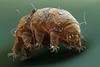
Tardigrades are microscopic creatures that look like inflated caterpillars. They can live above 6000m altitude in the Himalayas down to ocean depths below 4700m, but they also inhabit places we wouldn’t consider extreme, like moss by rivers.

In dozens of studies, tardigrades have been burned, frozen, sent to space and exposed to deadly levels of radiation, and they’ve somehow been able to make it through the other side. ‘Tardigrades are one of, if not the, toughest animals we know of,’ explains Thomas Boothby, a researcher and tardigrade specialist at the University of Wyoming in the US.

Scientists still don’t know exactly what makes these organisms so resilient, but they’re starting to get an idea. Whenever a tardigrade is exposed to different types of stress, like being dried out, frozen, or deprived of oxygen, it enters an almost death-like state called ‘a tun’. To do so, it squeezes most of the water from its body, retracts its head and legs, and curls into a dried-out position. It slows down its metabolism and remains in a tun state until conditions become favourable again.

One particular sugar, trehalose, may be behind their cells’ ability to remain stable after being dried out. In other animals that use similar survival methods involving drying out (desiccation), trehalose helps stabilise proteins. Tardigrades don’t have much of this sugar in their cells. However, they do have groups of unusual proteins that preserve the inner workings of their cells and work in tandem with trehalose to form a complex that stabilises the cell. This makes it possible for the tardigrade to survive conditions we would deem too extreme for human life (and for most animals).

Tardigrades’ evolutionary puzzle

Tardigrades are also interesting from an evolutionary perspective: they withstand such diverse conditions that one might wonder why they’ve evolved to tolerate so many different environments. Boothby explained it might all be a matter of mobility. He said that if a human is in an environment that doesn’t suit them well, they would likely go and find another spot. For a tardigrade, however, this could be difficult due to its size and limited mobility, so they evolved to tolerate rather than avoid extreme conditions. It has also been suggested that tardigrades are so small they might be picked up and carried to new environments by air currents.

Light microscopy image of a tardigrade, looking slightly transparent

Source: © sruilk/Getty Images

Tardigrades have evolved to survive in almost any environment – even space

‘For a tiny organism that could be swept up in air currents and deposited anywhere (Antarctica, the Sahara desert, etc) it would be beneficial to be able to cope with many diverse extreme environments,’ Boothby adds.

He also explained that tardigrades may survive some extreme environments through cross-tolerance: by evolving to tolerate one environment, they inadvertently developed tolerance to another stress. This could explain why tardigrades can survive in space, even though they would normally never encounter that environment.

Tardigrades are the type of extremophile often viewed through a sci-fi lens. This is possibly because we can so easily picture them withstanding intense conditions and winning. But then there are those thriving in more serene environments, where the extreme is quiet, isolated and dark. Hazel Barton, a microbiologist from the University of Alabama in the US, has been studying microorganisms living in places like these for years. She’s a cave explorer and combines her passion for caves with microbiology.

She works on chemical cycles in caves and studies how living organisms interact with the local chemistry in such closed systems. She doesn’t really call these life forms extremophiles, though. She prefers the term ‘interterrestrials’: beings that live underground, within Earth, and that have evolved in ecosystems with no sunlight. And one of her most recent findings fits that description perfectly.

Cave cyanobacteria: photosynthesis without sunlight

One day, Barton was giving a talk in Copenhagen when Uppsala University researcher Lars Behrendt asked her about photosynthesis.

‘He came up to me and said “Have you ever studied photosynthesis in caves?”’ she recalls. She found the question odd. Caves are dark, so she had never thought about looking for light-dependent biology there. ‘I gave him a “caves are dark” sort of answer, but then he went “Well, have you looked?” So we went in and started looking.’

Multipanel image of 18 different cyanobacteria-dominated cave biofilms

Source: © 2025 Patrick Jung et al

Cave-dwelling cyanobacteria can photosynthesise using near-infrared light

Behrendt and Barton went into the depths of caves in the Carlsbad Caverns National Park in New Mexico, US, where there was practically no light, and found blankets of cyanobacteria covering the walls. Cyanobacteria, like plants, need light to carry out photosynthesis. They use chlorophyll a, a pigment that absorbs visible light and kickstarts a chemical process transforming carbon dioxide and water into glucose and oxygen.

The puzzle was that there was no visible light in the cave, so how could these bacteria be performing photosynthesis? The research team sampled the bacteria and discovered that they have a special version of chlorophyll capable of capturing near-infrared light: chlorophyll d and chlorophyll f.

Chlorophyll d and f absorb longer wavelengths than the chlorophyll a most plants use. Instead of relying on visible red light, these pigments can capture photons in the near-infrared range (invisible to the human eye) and funnel that energy into the same oxygen-producing chemistry that powers photosynthesis in plants and cyanobacteria.

But this raised another question: how was near-infrared light from the sun reaching so deep into the cave? The answer turned out to lie in the rock itself.

Near-infrared light and the limits of photosynthesis

The team found that near-infrared light reflects off limestone, bouncing deeper and deeper into the cave system. ‘It’s like a hall of mirrors. Once you get to 700 nanometres, [the walls] start reflecting near-infrared and infrared wavelengths into the cave,’ Barton said. ‘You get a really dramatic enrichment in near-infrared.’

The pigments themselves weren’t new discoveries. Chlorophyll d was first identified in the late 1990s and chlorophyll f in 2010, and both findings forced scientists to rethink the limits of photosynthesis. They showed that photosynthetic cells could produce oxygen and survive in environments dominated by near-infrared light, suggesting that photosynthetic life might not be confined to the bright, sunlit environments we usually imagine.

What Barton’s team found in the caves could push that boundary even further. These cyanobacteria appear to rely on light at the very edge of what had previously been considered usable for oxygen-producing photosynthesis.

We’re all trying to go out there searching for life, but there is a lot of life in our planet we don’t understand

Barton explained that the point of the research behind this study is to explore the limits of photosynthesis. And once they understand those limits, the goal is to think beyond Earth. ‘If we can understand what the limits are, we’re interested in these dim, red suns, which are the vast majority of suns in the galaxy,’ she explains. ‘What’s the potential for life around them?’

When searching for life beyond our planet, astrobiologists focus heavily on the presence of water. But they also consider whether photosynthesis could occur. Most rocky exoplanets discovered to date orbit the red suns Barton mentions, also known as M-type stars, which emit near-infrared light. Could there be living beings on these planets performing photosynthesis in ways we don’t yet recognise?

This is a big question, and it will take time to answer. But despite the uncertainties, one thing seems clear: we’re still learning a great deal about how life works on Earth. ‘We’re all trying to go out there searching for life, but there is a lot of life in our planet we don’t understand,’ Barton adds. ‘The estimate is as much underground as you can see above ground.’

The deep-sea microbes that may live for millions of years

Time is perhaps one condition many wouldn’t consider when classifying extremophiles. ‘Extremophile’ means loving (from Greek philia, meaning ‘love’) an extreme. A thermophile will ‘love’ high temperatures. An acidophile will thrive in acidic environments, and so on. ‘Loving’ time, in a world where time eventually destroys everything, might seem unusual.

So, when Karen Lloyd, a microbial biogeochemist from the University of Southern California in the US, coined the term ‘aenophiles’ – with aeon meaning an indefinitely long period of time – to describe extremophiles she had found, she naturally faced some questioning.

‘My colleagues have made the argument that they shouldn’t be extremophiles,’ Lloyd says. ‘That’s fine. I don’t think it’s useful to define extremophiles that narrowly. For me, being a -phile just means that you’re good at it. You use it, it’s your thing.’

Greenland shark in dark seawater beneath ice

Source: © Franco Banfi/Nature Picture Library/Science Photo Library

The Greenland shark may be long-lived at a few hundred years, but some microbes are estimated to live for thousands

Indeed, time seems to be the defining factor for Lloyd’s organisms. She discovered them in sediments from the Earth’s crust in the early 2000s, when she and other scientists boarded the Joides Resolution, a deep-sea scientific drilling ship. They travelled along the Peruvian coast to collect samples of microbiological life in deep marine sediments when Lloyd found intriguing microbes.

The deepest researchers have found these microbes is about 5km down. At this depth, there is very little energy input: sunlight doesn’t reach them, and no food comes from the outside world. In the findings Lloyd and her colleagues published after the expedition, they hypothesised that anaerobic oxidation of methane is the principal source of metabolic energy. They also write that these subsurface microbes seem to operate at low maintenance energies. This means the microbes do not multiply – there is not enough energy for cell division – but instead use the tiny amount of energy they have to repair parts of their cells and simply remain alive.

And so these organisms appeared to live in a constant, dormant state. They weren’t growing, they weren’t attempting to escape; they seemed to simply exist. Other research groups around the world have been studying these microbes as well. By using radioactive decay and the natural accumulation of mud on the seafloor as a timeline, teams have been able to conclude that these microbes have been alive for an extraordinarily long time – hundreds, thousands or even millions of years.

Biologists know of a few species that live for long periods. Tortoises can live between 80 and 150 years, and the Greenland shark can survive for centuries. And, of course, some trees have been on Earth for millennia. But microorganisms that endure for aeons represent something entirely new, and arguably a new type of extreme.

Lloyd and her colleagues have been pondering the question of why: why are these organisms living for so long? She hypothesises that they might be waiting for something that we, humans with our limited lifespans, can’t yet comprehend.

Lloyd uses spores as an example of organisms that remain dormant while waiting for nutrients. ‘We know that spores do this over seasons. They don’t think “Oh, I sure hope summer is going to be early this year”; they’re just good at waiting,’ she explains, ‘Well, what if things are really good at waiting over really, really, really long timescales? I just think that really opens up the possibilities for biology in a way I’ve never been able to imagine before.’

What extremophiles mean for the search for life beyond Earth

Most people study extremophiles for astrobiology: the goal is to map out the conditions in which life can exist, which in turn can help narrow down the search for life beyond Earth. Potential photosynthesising organisms in faraway exoplanets are an example of this. If we learn the limits of photosynthesis, we can better target worlds where such organisms might be thriving. But all of these assumptions are based on life as we know it – and that’s a challenging definition in itself.

‘Life is a very tricky thing to define and, to this day, I find that most scientists don’t agree on just one definition,’ says Musilová.

It’s easy to drift into philosophical territory when we consider what it truly means to be alive. Researchers like Musilová, Boothby, Barton and Lloyd are showing that living beings on Earth can withstand conditions once thought impossible, constantly challenging our notions of life’s limits. This persistent reminder of our own ignorance raises further questions: is it sensible to search for life beyond Earth using a definition of life based solely on Earthly models? And what about extremophiles that challenge that very definition? Would we be able to recognise aenophiles on Mars, for example, or would we dismiss them as non-living because they seem to be too dormant for our own criteria?

Just because life exists this way on Earth absolutely doesn’t mean it functions the same way elsewhere,

Lloyd doesn’t have an answer to the latter. ‘I worry about that because the lengths we had to go to in order to observe them [aenophiles] and confirm that they’re alive… We have not gone to those lengths on any other planet, including Mars.’

Musilová has pondered these questions as well. She has studied extremophiles across the globe and is now undertaking a project to collect samples on Earth’s seven tallest mountains to continue her research. As an astrobiologist, she believes that keeping an open mind is essential if we truly hope to find life beyond Earth.

‘Just because life exists this way on Earth absolutely doesn’t mean it functions the same way elsewhere,’ she says. ‘The universe is so huge. The possibilities are really great out there for it to be something completely different, so I’m open-minded. And I know there are many other astrobiologists who feel the same.’

Whatever we eventually find, it will likely take time. Until then, extremophiles will continue to remind us that we may be very wrong about the limits of life – and that, at the end of the day, we share Earth with far more aliens than we initially imagined.

Bárbara Pinho is a science writer based in Porto, Portugal