Molecular biology
The latest chemistry news and research on molecular biology, including genomics, sequencing, modelling and prediction and epigenetics, from the Royal Society of Chemistry's magazine, Chemistry World
-
 News
NewsDiscovery of light-activated proteins and their application in neuroscience wins Nobel prize in medicine
Optogenetics has helped researchers better understand the brain and is enabling new treatments for neurological conditions
-
 Opinion
Autocatalytic networks could lie at the beginning of evolution
New modelling suggests how compartmentalised cross-catalysing networks can evolve adaptations that are passed on through chemical states
-
 News
NewsGoogle DeepMind’s mutation Atlas shines a light on our dark DNA
AI’s predictions on the impact of changing each and every base of the human genome will help scientists understand genetic basis of disease
-
 Opinion
Feeding AI’s appetite for data
Tapping companies’ archives makes for better predictions of how proteins bind drugs, but any data inputs need to be transparent and attributed
-
 Research
Does the discovery of a new coronavirus upend the Covid-19 lab-leak hypothesis?
Sequence found in Sars-CoV-2 had never been seen in another bat coronavirus until now
-
 News
NewsUK funding agency to spend £66 million on new methods for engineering the mitochondrial genome
Aria announces support for 19 research projects that aim to develop tools to make precise, controlled changes to mitochondrial DNA
-
 Business
Antibody data manipulation extends to thousands of images across 15 suppliers
Sleuths discover widespread, systematic alteration of Western blots and other antibody data
-
 Research
Tool for designer disordered proteins unentangles their function
Mysterious structure–function relationship of intrinsically disordered proteins probed by machine-learning platform
-
 Feature
Cracking the ubiquitin code to unlock new drug targets
The approval of the first Protac cancer drug marks a turning point in medicine – but scientists are only beginning to decode the complex molecular language that makes it possible
-
 Podcast
Thermo Fisher data manipulation & the shrinking chemical recycling industry
We discuss fabricated images in Thermo Fisher’s online catalogue. And, what barriers are preventing chemical plastic recycling from taking off?
-
 Opinion
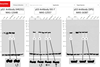
Trust is easily broken and hard to rebuild
Thermo Fisher needs to be open and honest about data manipulation to reassure researchers
-
 Business
Thermo Fisher antibody data manipulation is a breach of trust, say researchers
Science sleuths say the problem is impacting research progress and Thermo’s response falls short
-
 Opinion
Would mirror life really threaten our own?
New modelling suggests that even if we could create cells based on mirror-image biomolecules, their natural counterparts would outcompete them in the wild
-
 Research
Structure-led search tool set to refine how scientists explore metabolomics data
Platform can find molecules and substructures across massive public datasets
-
 Research
Stripped down bacterium functions with one less amino acid than the rest of life on Earth
Deep learning models used to understand how isoleucine could be replaced in proteins without disrupting their structures
-
 Opinion
The complicated legacy of J Craig Venter
By attempting to commercialise parts of the human genome, he sped up the development of gene sequencing technologies
-
 Research
First total synthesis of macrocycle with four stereocentres at the heart of bacterial photosynthesis
Technically daunting synthesis of bacteriochlorophyll a finally reaches completion
-
 Opinion
Collective interactions dominate gene regulation in eukaryotes
A new technique shows DNA binding domains are not central to transcription factor targeting in human cells, unlike in bacteria
-
 Opinion
Maxwell’s demon might lurk in enzyme behaviour
The controversial process of enhanced enzyme diffusion could enable living systems to resist local equilibrium
-
 Research
Self-synthesising RNA strand offers clues to life’s origins
RNA strand, made of just 45 nucleotides, performs two key reactions required for self-replication