

The EU is moving too slowly to protect its citizens from the health risks posed by ‘forever chemicals’ or per and polyfluoroalkyl substances (PFAS). In a report, the European Court of Auditors says the bloc’s chemicals regulation, Reach, is full of holes; current legal limits for food and drinking water are based on data almost 10 years old and enforcement of restrictions that are in place varies widely between countries.
Between 2020 and 2025 a third of member states didn’t carry out any compliance checks on PFAS. The auditors said the most common reason given was because the cost of PFAS testing was too high. Lead auditor Joëlle Elvinger told journalists at a press conference on 18 November that the EU had to act without delay to diffuse the ‘ticking time bomb’ posed by PFAS.
What are PFAS?
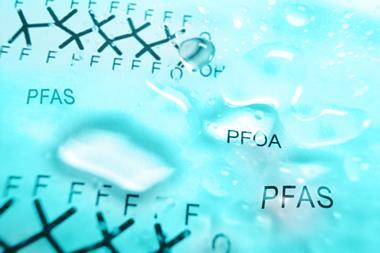
PFAS – also known as ‘forever chemicals’ – are a family of an estimated 15,000 synthetic chemicals that have been widely used in consumer products globally since the 1950s. They are a class of chemicals that contain at least one perfluorinated methyl (–CF3) or methylene (–CF2 –) group. They do not degrade easily in the environment because the carbon–fluorine bond is among the strongest in existence. The unique properties of these substances confer characteristics like repellence to oil, grease and water, as well as temperature resistance and friction reduction. This helps to create products that are non-stick and stain-resistant, for example.
However, PFAS are also highly mobile in the environment and they bioaccumulate, as well as biomagnify, up the food chain. PFOA and PFOS – the best studied of these substances – have been linked to serious health conditions like reproductive and developmental disorders, reduced immune function and certain types of cancer.
Written by the Chemistry World team
Although the EU was one of the first to act against PFAS, most of these restricted chemicals are not registered under Reach. This is because they’re either imported, produced in quantities under one tonne a year or take the form of polymers, such as polytetrafluoroethylene (PTFE) used in non-stick cookware and waterproof clothing, which are not covered by Reach.
The auditors say that the EU has a lot of data on PFAS in food that has not been used to update the limits for dietary exposure and that there’s been no monitoring of trifluoroacetic acid (TFA), which forms during the breakdown of some PFAS. TFA has become the most abundant PFAS in the environment and around 200 million tonnes is estimated to be in the world’s oceans.
On drinking water PFAS limits, the commission has been waiting four years for recommendations from the World Health Organisation, which are now due in 2027. Earlier this year, a report for the commission found that current limits are likely to be exceeded more frequently in future, with additional costs of water treatment that could reach €1.4 billion in 2050 if no action is taken.
The ECA has called on the commission to revise the PFAS limits in food and assess whether drinking water limits are adequate.
Auditors found that the process to restrict one PFAS can take 11 years on average. Even then a substance is not replaced by a less harmful one, but rather by a molecule of similar structure and properties that may pose similar health risks.
In 2023, five countries proposed an EU-wide restriction on all PFAS, but ‘the scale and complexity of the restriction have held up progress … and in the meantime, it is stalling other initiatives’, said Elvinger. The ECA urged the commission to expedite the process. A ban could affect 23 sectors including cosmetics, medical devices and food contact materials.
The day after the publication of the ECA’s report, the European Chemicals Agency gave its backing to the proposed ban following the findings of its two scientific committees. It said both committees ‘consider that existing regulatory measures are insufficient to control the emissions and risks arising from PFAS uses and therefore support further EU-wide action’.
However, the final opinion of its Socio-Economic Analysis Committee supports a ban with use-specific exceptions, where the societal costs of a ban would outweigh the benefits.












No comments yet