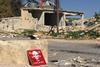
Warning sign in Syria in the aftermath of a chlorine attack

Source: © Ogun Duru/Anadolu Agency/Getty Images

Warning sign in Syria in the aftermath of a chlorine attack in 2017. The chemical weapons watchdog is planning to visit all sites that may have been involved in Syria’s chemical weapons programme

UN officials have welcomed Syria’s renewed commitment to eliminate the country’s chemical weapons programme that was developed under the previous regime.

Adedeji Ebo, the officer-in-charge of the UN’s Office for Disarmament Affairs, told the security council earlier this month that ‘the commitment of the new government in Syria to fully and transparently cooperate with the Organisation for the Prohibition of Chemical Weapons (OPCW) is both welcome and commendable’.

Engagement between Syria and the OPCW started over 10 years ago after the 2013 sarin nerve gas attack by the former Syrian regime on opposition held areas of Damascus, which killed hundreds of people. Syria signed the Chemical Weapons Convention treaty shortly after.

However, there were concerns that large amounts of chemical weapons and munitions may not have been declared by the former Assad regime, which collapsed in December 2024.

The latest report from Syria’s new government revealed that, in addition to the 26 previously declared chemical weapons sites in Syria, more than 100 other sites may have been involved in the programme.

OPCW teams have visited 19 locations since March, four of which were previously identified, with plans to visit all other locations, depending on site security. Collecting over 6000 documents, conducting interviews with former chemical weapons experts and reestablishing a continuous OPCW presence in Syria are other steps that the new government has also taken to gauge the extent of the chemical weapons programme.

Ebo called for other council members ‘to unite and show leadership in providing the support’ needed to completely destroy Syria’s chemical weapons programme.

The UK has so far contributed over $3.8 million (£2.8 million) to OPCW missions in Syria since December 2024. ‘This new Syrian government has provided hope that Assad-era chemical weapons will be verifiably identified and eliminated, once and for all,’ said Caroline Quinn, the UK’s deputy political coordinator.