Samples collected from the near-Earth asteroid Ryugu have been found to contain all five nucleobases, adding to evidence that life’s building blocks exist elsewhere in the solar system. The researchers think that such asteroids may have helped deliver these molecules to Earth, potentially kick-starting life.

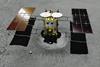
The Japan Aerospace Exploration Agency launched a spacecraft to the carbon-rich Ryugu asteroid in December 2014 as part of its Hayabusa 2 mission. The spacecraft made two landings on the asteroid’s surface in 2019, before returning to Earth in December 2020.
Initial analysis of a sample from the mission revealed the presence of the nucleobase uracil, as well as nicotinic acid (vitamin B3), its derivatives and several imidazoles.

Scientists in Japan have now analysed two other samples collected during the mission, using high-performance liquid chromatography and high-resolution mass spectrometry to determine the type and abundance of molecules in the sample.
Analysis revealed that all five nucleobases – adenine, guanine, cytosine, thymine and uracil – were present in both samples. The team also found that the ratio of purines (A and G) to pyrimidines (C, T and U) was roughly equal, which differs to samples from other asteroids and meteorites that are richer in one type of nucleobase over the others.
The team suggests that high-energy radiation may have been able to convert small nitrogen-containing molecules – like hydrogen cyanide – into nucleobases. Once formed, asteroids may have delivered these molecules to Earth, which may have ‘supported prebiotic molecular evolution and ultimately enabled the emergence of RNA and DNA on early Earth’.
References
T Koga et al, Nat. Astron., 2026, DOI: 10.1038/s41550-026-02791-z


No comments yet