After three relentless undergraduate years, the fourth year provided space to immerse myself in the subject
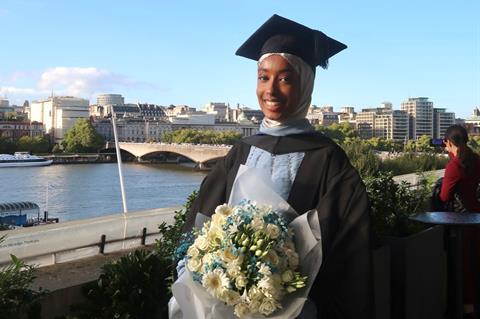
The wave of relief I felt after leaving my final third year exam is still ingrained in my memory. But that wasn’t related to how the exam went. Instead, my sense of freedom came from emailing my course organiser to ask how to transfer from the four-year master’s course I was registered on to the three-year bachelor of science. I thought I was finally done.
The previous three years had been an uphill battle. Close to the end of my first year at university the Covid restrictions were reduced and we had the opportunity to go in for our first set of wet labs. As I stood in an advanced laboratory space full of students I had not come across – each seeming to tackle our given assignments happily – my anxiety built up. The unfamiliar equipment conflicted with a sense of urgency to get everything right; I felt behind in every step of the methodology. This was a recurring trend that reached a crescendo in my third year of university.
Third year was by far the busiest year. My weekdays involved full days of laboratory requirements that overlapped with important lectures. It was a constant compromise between finishing the lab on time or skipping the lectures – knowing I would have to stay up in the evening to watch the recording. My weekends were filled with writing lab reports and working on pre-lab assessments. The concept of a day off was a memory and the rare evenings off were reserved for resting. There was no space for pondering chemical concepts; I was working on overdrive to meet deadlines. Throughout this experience, the only question on my mind was: Can I do this for yet another year?
But as the summer came and I had time to mull over my decision to withdraw from the master’s programme, there was a stubborn voice in the back of my mind. It was not lost on me that I was 20 years old with scholarship funding and no plan B. Giving up on my degree despite the experience of the past three years did not sit right with me. Afraid of future regret and impending uncertainty, I enrolled into the fourth year after all. The inevitable approach of September was unsettling. Looking back, it was the best decision of my life.
There was time to comfortably immerse myself in chemistry
That year allowed me to view chemistry from a completely different perspective. The modules were built up of application-driven topics that seamlessly tied in core chemical concepts. In person lectures were replaced by flipped learning sessions where student discussions served as a focal point – shaping my chemical worldview. The once anxiety-inducing laboratories were replaced with an extensive research project in an environment where master’s and PhD students each worked on their own unique projects – quietly existing in each other’s orbit. There was time to comfortably immerse myself in chemistry.
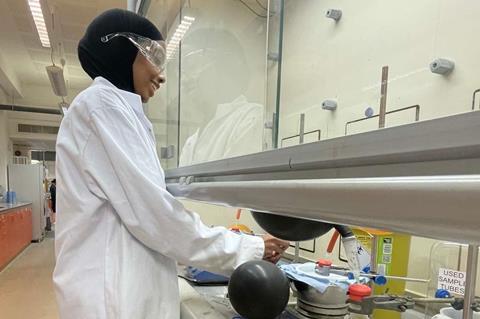
This environment not only felt comfortable, but it also improved my academic performance. My commitment to my research topic won me an award for the best performance in physical chemistry and the weekly project-centred discussions with my supervisor brought out the excitement I had for the subject back when I had first applied to the programme. I had finally found my feet in academia.
Now I am a graduate in my first full-time position exploring sustainability within the built environment, I look back at my university experience with fondness. I got to know what it felt like to research without forced compromise, to learn without pressure and to problem solve with a renewed sense of confidence – never mind how late that came.







No comments yet