In the early 1990s and 2000s there was a lot of excitement around the potential of vanadium compounds in the treatment of type 2 diabetes. At the helm of research efforts were Chris Orvig and the late John McNeill at the University of British Columbia in Canada. They faced insurmountable hurdles and over 30 years later, their once-promising compound – BEOV – is still collecting dust on the shelf. Orvig tells Julia Robinson their story

Just after I achieved tenure in 1990, I received a letter in the campus mail from the dean of pharmaceutical sciences at the University of British Columbia (UBC), John McNeill, asking me to meet him for lunch at the Faculty Club. John was a world renowned expert in the diabetic heart, and alongside his letter was a reprint of his 1985 Science paper on the effect of sodium vanadate on elevated blood glucose and depressed cardiac performance in diabetic rats. As a newly tenured faculty member, you take this kind of invitation very seriously.

We had lunch, and he explained to me that while sodium vanadate was great, it was an off-the-shelf compound and, thinking as a pharmaceutical scientist, it would be nice if we had something that was potentially patentable and bioavailable and simple to make.

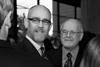
Chris Orvig and John McNeill

Source: Courtesy of Chris Orvig

Chris Orvig (right) and the late John McNeill, whose long‑standing collaboration at the University of British Columbia drove pioneering work on vanadium‑based insulin‑enhancing compounds

Prior to starting at UBC in 1984, I had completed a PhD in technetium chemistry and its applications in nuclear medicine, plus two postdocs with leaders in medicinal inorganic chemistry, so I was nicely primed for John’s question as I was focused very much on metal compounds in living systems.

I drew BMOV [bis(maltolato)oxovanadium(iv)] – a vanadium compound based on the approved food additive maltol – on a napkin, and we wasted no time in going back to my lab to put it together. We then tried the compound in John’s STZ-diabetic rat model and found it worked like a charm. This process took maybe three weeks.

We published our results in the Journal of Medicinal Chemistry in 1992 and it is still my most highly cited non-review article. At that time, we used the term ‘insulin-mimetic’ to describe the activity of the vanadium compound; however, over the years we decided that ‘insulin-enhancing’ was probably a better term, because vanadium compounds cannot entirely substitute for a lack of insulin.

Before we had published the 1992 paper, UBC filed a US patent for BMOV but immediately encountered a problem; a couple of papers published in the 1970s had used BMOV as an electron paramagnetic resonance probe.

So, it was suggested to us by the university’s patent office to make a close analogue of BMOV not known in the literature; and so we synthesised bis(ethylmaltolato)oxovanadium(iv) or BEOV, based on the food additive ethylmaltol. Similar to maltol, ethyl maltol is an approved food additive, making it very attractive as a ligand, and the bioavailability of the resulting vanadium compound was similar.

John and I made and tested dozens of different compounds with different ligands, basically chelating the vanadyl unit with two bidentate (often naturally-occurring) ligands around the base of it to make very simple, low molecular weight, small molecules. It was key that they were neutrally charged so that when administered, they would not simply be excreted by the urinary pathway.

As a result, during this time UBC undertook significant patent filings – John and I hold eight US patents on this technology, plus patents in many other countries – all for different compounds that we tried, but BEOV and BMOV were the two that worked the best.

BMOV and BEOV

The university also started out-licensing activities. In the late 1990s, Vancouver was arguably the third biggest biotech centre in North America, after the Boston and San Francisco Bay areas. There were a lot of companies looking for technologies and we had a bit of a field day getting funding from, and collaborating with, various Vancouver startup companies.

At that point we had done an initial phase I study of BEOV, which showed it worked well. But, between 1997 and 1998 the stock market crashed.

The companies we were working with – all small, venture capital-based entities – suddenly had no money and the technology got handed back to the university; we carried on with the basic research while we continued looking for other partners.

It took a while, but eventually we found another company, based in the US, and they helped us proceed through a small phase IIa clinical trial (including seven people with type 2 diabetes who were treated daily with BEOV for 28 days, and two diabetic controls), which happened from 2007–2008.

But then the stock market crashed again. Companies ran out of money and the technology was handed back to the university, once again. However, at that point we were running out of time – our initial patent priority date was 1991; we had 20 years of protection and 2011 loomed large. We knew there was really no way any company was going to be able to get a proper full phase II study done, then a phase III, then get it into production and make their money back. The arithmetic didn’t work.

So, John and I continued with some basic research, but eventually we each moved on to other things; there’s only so much you can do on the basic research end – at that point we had been out-licensed twice, so we knew that no basic science agencies were going to fund that work unless we came up with a completely new disease model.

Diabetes is a very complex disease, because it’s a disease of the whole organism, unlike a cancer, which you can target. You can look at efficacy quite easily, but to look at specificity becomes a whole different kettle of fish because basically, if somebody’s diabetic, they’re totally diabetic – that was one thing that made it difficult for us.

We did have an agreement in the late 1990s with one of the local biotech companies, who were interested in turning the technology on its head and seeing if they could develop any cancer compounds out of it. But again, the market crashed before they could really get that effort off the ground.

Various people in other countries have worked on BEOV (and still do) because it’s very easy to work on, but they’re never going to be drugs as the patent protection has expired, and nobody with money would be willing to advance that technology.

Having been involved with vanadium for the past 35 years, I would say if we were going to see a vanadium compound on the market, we probably would have already. But that doesn’t rule out the fact that some bright researcher might find a new way to encapsulate it, giving them patent protection and a different targeting system.

As told to Julia Robinson

Vanadium’s promise in medicine and the researchers who refuse to give up

Periodic table and people

It mimics phosphate, kills cancer cells in the lab and almost changed how we treat diabetes. So why has a vanadium compound never made it to the clinic?