All articles by Andy Extance
-
 Business
Protein degrader approval offers hope to relapsed multiple myeloma patients
Highly potent molecular glue drug iberdomide doubles the number of patients reaching fewer than one myeloma cell per 100,000 in bone marrow
-
 Business
Combining AI with experiments to solve real-world materials problems
CuspAI’s Materials Foundry partner network includes 45 technology, data and materials chemistry companies to make and test its predictions
-
 Research
Chemical treatment slashes emissions of making hydrogen from plastic waste
Process can produce hydrogen from polyethylene and polypropylene more cleanly than from natural gas
-
 Feature
AI agents accelerate catalyst discovery from simulation to scale-up
Artificial intelligence tools are transforming catalyst research, with new AI agents capable of completing in minutes what once took computational chemists days. Andy Extance explores how all scientists can benefit, from small groups to those at tech giants like Meta, Google and Nvidia
-
 Feature
The battery chemistry race shaping the future of electric vehicles
Science and global politics intertwine in the rivalry between lithium nickel manganese cobalt oxides and lithium iron phosphate
-
 Business
Clean hydrogen project cancellations point to narrower future
Plants actually being built tend to use hydrogen as feedstock, not fuel
-
 News
NewsOpaque UK funding changes herald cuts to facilities and research programmes paused
Projects face withdrawals and delays as UKRI prioritises economic growth and applied research over curiosity-driven areas
-
 News
NewsQuestions over microplastics findings don’t mean we are safe, scientists say
Researchers seek to overcome measurement issues arising from field’s youth, while some criticism has turned into harassment
-
 Business
Funding boost for Grangemouth whisky waste-to-chemicals firms
Governments hope £9 million in grants will help MiAlgae and Celtic Renewables replace oil-refining jobs
-
 Feature
The Antarctic manganese mystery
RRS Sir David Attenborough scientists are trying to measure the potentially crucial role of ocean manganese, finds Andy Extance. But how do you do cutting-edge science in the inhospitable Southern Ocean?
-
 Feature
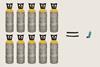
One medical inhaler can have the impact of 30kg of carbon dioxide
Propellants in asthma inhalers produce greenhouse gas emissions equivalent to driving 200 miles, yet most healthcare systems overlook this climate impact. New low-carbon alternatives are in development, Andy Extance reports, but barriers remain
-
 Business
Arvinas and Pfizer seek a new home for protein degrader drug
Companies offer bifunctional cancer drug vepdegestrant to new partners after disappointing trial results
-
 Research
First valence electron measurements capture fleeting reaction process
Femtosecond timescale x-ray laser measurements study how a hydrogen atom breaks off an ammonia molecule
-
 Business
Sarepta gene therapy deaths highlight tragic rare disease dilemma
Regulators block Duchenne muscular dystrophy treatment after fatal side-effects outweigh questionable efficacy
-
 News
NewsExplainer: The chemistry of permastink and how to prevent it
How to avoid throwing out smelly polyester sportswear
-
 Feature
How decarbonisation will help the UK’s last refineries survive
Carbon capture and low-carbon hydrogen are central to any possibility of supplying liquid fuels compatible with net zero, reports Andy Extance
-
 News
NewsWhat are the prospects for making green hydrogen straight from seawater?
Competing with better-established desalination coupled with electrolysis, direct seawater splitting technologies are targeting niches
-
 Research
Reprocess, reuse, repeat: greener recycling of perovskite solar cells cuts costs
Mainly water-based approach is also cheaper than using new starting materials
-
 Feature
The promise of drugs that send proteins to the shredder
Andy Extance charts how research into revolutionary targeted protein degradation therapies is moving from serendipity to strategic discovery
-
 Research
GPT-based AI tool predicts inorganic crystal structures
CrystaLLM uses GPT to arrange atoms, turning text-based data into numerical tokens