All Matter articles – Page 68
-
 Opinion
Chiral curiosities
The challenges posed by asymmetry go hand in hand with fascinating insights into developmental biology
-
 Feature
The discovery of graphene
Read how Andre Geim’s Friday night experiments led to the discovery of graphene, a single layer of carbon atoms
-
 Research
New tools direct reactions at specific C–H bonds in organic molecules
Elegant catalysts offer quicker routes to complex compounds
-
 Research
Liquid crystals shape up on demand
UV-cured liquid crystal polymers remember complex 3D structures and reversibly deform in response to temperature
-
 Research
Metal-bound hydrogen atom with extreme NMR shift discovered
Hydrogen atom bound directly to iron detected at ultra-low shift by paramagnetic nuclear magnetic resonance for the first time
-
 Research
Catalytically, is copper the new gold?
Approach for depositing copper on silica support influences how easily it oxidises, and in turn the reactions it catalyses
-
 Business
How many papers do you read a week?
Everyone needs a strategy to keep up with the literature
-
 Research
Nanoparticles assemble into first single-ingredient quasicrystal
Predicted a decade ago, the first one-component quasicrystal has been made from tetrahedral particles
-
 Research
Longest silicon—silicon double bond has two-faced reactivity
First hypercoordinated disilene’s extra-long silicon–silicon double bond gives it ambivalent reactivity
-
 Feature
The father of the periodic table
Mike Sutton looks at how Mendeleev’s patience revealed periodicity in the elements
-
 Research
Liquid analysis simultaneously checks for 71 elements
Technique delivers elemental fingerprint of everything from water to wine in minutes
-
 Research
Newest tetrel bond is five times stronger than its peers
First intermolecular three-centre four-electron bond could unravel fleeting intermediate’s nature
-
 Research
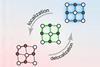
Bonding rethink called for as new metavalent bond proposed
Combination of elements in the metalloid region of periodic table produces a bond with both metallic and covalent characteristics
-
 Research
Dispute over reaction prediction puts machine learning’s pitfalls in spotlight
Two research teams’ argument over a reaction-predicting algorithm show that there is still a lot to understand when applying machine learning to chemistry
-
 Research
Chemists borrow biological instrument to sort polymer beads by shape
Cell sorting machine discriminates between spherical, disc-shaped and ellipsoidal polystyrene particles
-
 Feature
Science in microgravity
How does gravity affect chemistry and biology? More than you might think – and you don’t have to visit space to find out, as Rachel Brazil discovers
-
 Research
Foam catalyst performs hydrogen evolution in neutral conditions
Structure decouples water dissociation and hydrogen evolution processes
-
 Research
Light catalyst breaks mirror symmetry in first reverse racemisation
Transformation makes single mirror image molecules in a ‘completely different way of doing enantioselective chemistry’
-
 Research
Cluster fundamentals
Stefanie Dehnen discusses the exotic structures of inorganic chemistry’s middle ground
-
 Research
Catalyst predictor shows drug manufacturing promise
Joint industrial–academic team develops and validates force-field tool for identifying ligands for enantioselective catalysis