Rising atmospheric carbon dioxide is limiting the amount of nitrogen boreal forests can make use of, an analysis of archived tree cores from Sweden has shown. This finding suggests that as humanity’s carbon dioxide emissions continue to rise trees will struggle to compete with microorganisms for nitrogen, slowing the growth of forests and reducing their importance as carbon sinks.

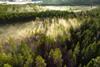
Boreal forest

Source: © Alexandre Patchine/Shutterstock

Rising carbon dioxide levels are limiting the amount of nitrogen available to boreal forests. This may mean these forests’ ability to absorb carbon dioxide may not keep pace with rising levels of the greenhouse gas

A key negative feedback in models of anthropogenic climate change is that more carbon dioxide in the atmosphere means photosynthetic organisms can absorb it more easily and therefore grow faster. However, to do this they need other nutrients such as phosphorus and nitrogen, and the extent to which these will limit faster growth is debated.

Many species of tree obtain nitrogen partly through symbiotic interaction of their roots with soil fungi called mycorrhizae that break down organic matter. As trees become less able to take up nitrogen from other sources they become increasingly dependent on this fungal nitrogen source. The fungi cause isotopic fractionation, preferentially retaining the rarer nitrogen-15 isotope and passing on nitrogen-14 to the tree. Nitrogen limitation can therefore be detected as a relatively reduced proportion of nitrogen-15 in the wood.

This has previously been observed in several large continental or global studies. However, the cause of this nitrogen limitation is obfuscated by the fact that multiple human activities such as the use of fertilisers and fossil fuel combustion causes nitrogen pollution. It is therefore difficult to disentangle effects arising from recent reductions in anthropogenic nitrogen pollution from those from still rising anthropogenic carbon pollution.

Ecosystem ecologist Kelley Bassett, a doctoral student in forest ecology and management at the Swedish University of Agricultural Sciences and colleagues studied samples of Norway spruce and Scots pine trees taken from all across Sweden between 1961 and 2018. ‘We have millions of samples just sitting there in the archive just waiting to be discovered,’ says Bassett. ‘The fact that, 60 years ago, someone had the foresight to hold on to these samples is really quite amazing.’ Atmospheric carbon dioxide is well mixed and has increased globally, whereas pollution from reactive nitrogen species increased and subsequently declined significantly in more densely-populated, highly-industrialised areas in southern Sweden, while barely changing farther north.

Throughout the country, by far the strongest influence on nitrogen isotope ratios in the wood in both species had been atmospheric carbon dioxide levels. These data, together with previous findings, such as that forest growth in some parts of Sweden has apparently levelled off, suggest that nitrogen limitation in boreal forests will become increasingly significant as carbon dioxide levels continue to rise, says Bassett. ‘Plants are in direct competition with organisms in the soil that are, by and large, much more efficient … a tree can only expand its mining for nitrogen with its roots and with mycorrhizae whereas the organisms are everywhere in the soil, taking up and immobilising the nitrogen.’ She sees no reason that the results should not be similar in other forest ecosystems, but says, ‘I hope one thing that could come of publishing this study is that we find that there are other archives.’

Ecosystem ecologist Andrew Elmore at the University of California, Merced is impressed. ‘They really put to rest, I think, the idea that nitrogen deposition can have a similar-sized effect on nitrogen cycling,’ he says. ‘Basically, they’re saying it just doesn’t matter in this landscape.’ He says an interesting extension of this work would be to study the effect of increased nitrogen immobilisation on other species in forests. ‘Declining nitrogen in leaves might lead to lower growth rates in caterpillars, and lower foraging success for birds, for example, and so if you play this out there could be many implications that start to affect things we care about.’