
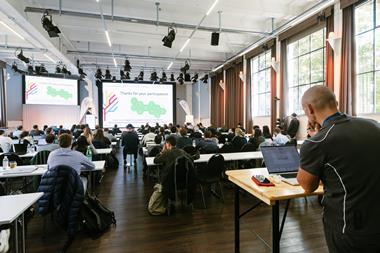
I recently had the pleasure of hosting a conference themed around artificial intelligence (AI) at the Lab Innovations trade show. Across the various presentations and panel discussions, there were a couple of topics that came up multiple times from different angles.
The first was around data. We may perceive chemical science as a relatively data-rich sector, but as various panellists explained, when it comes to the kind of data that is really useful for training AI tools and models, there is surprisingly little. There are islands of high quality, well-curated data – for example at the Cambridge Crystallographic Data Centre – but outside of those limited areas everything is much murkier. This in turn means there’s a risk that topics with better data get more attention, narrowing avenues of research.
Often the data exists, but it may not be in useful formats, or lacks the descriptive metadata and documentation that allows a machine (or a human) to contextualise it and properly integrate materials from different sources. Or the data may be stored or held in ways that make it inaccessible – either because of infrastructural or intellectual property restrictions.
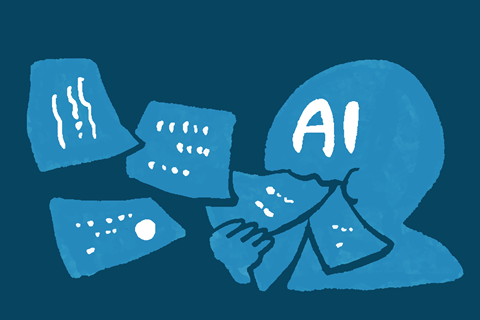
But equally, there is no universal way to make any given dataset ‘AI-ready’ – nor a concrete definition of what that really means. As Matthew Partridge from the UKRI-funded Physical Sciences Data Infrastructure project explained, there are definitely various steps one can take to ensure a dataset is more amenable to ingestion by an AI model. Investing the time and effort to annotate, clean up and curate legacy datasets – or to generate high quality data that is missing from the existing data landscape – is a huge opportunity for impact, as this kind of data can be highly valuable to people building new AI models. However, the precise requirements for ‘AI-readiness’ are strongly dependent on the questions we eventually want to ask of that dataset.
That leads on to a second theme that emerged across the conference – learning to ask the right questions. Understanding the capabilities and limitations of an AI tool (and the data on which it is built) is critical to extracting useful results from it. And like any other tool, we need to invest in developing the skills required to get the best out of them. The rapidly changing nature of AI implementation can make this a daunting prospect for young and old scientists alike – especially when it feels like leaders within industry are encouraging their teams to use AI for everything (regardless of whether it is relevant or possible), while university policies vary from total prohibition to allowing qualified use of certain tools.
But at the same time, it is important to ensure that the next generation of scientists are still developing their scientific and research skills of rigorous investigation, and an understanding of how the systems they are investigating work – so that they retain the ability to interrogate, critique and validate the outputs from the tools they will inevitably be using. Traditionally those skills are developed on simpler tasks, then honed on increasingly complex problems. If AI tools take care of some or all of those tasks, an important training pathway – of learning by doing, and overcoming real struggles – risks being lost.









No comments yet