
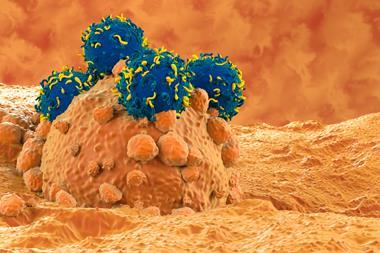


This time, we discuss implementing sustainable changes to the steel industry and the challenges it brings, and explore the gap between expectation and reality in cancer treatment progress – with Neil Withers and Andy Extance.
This week’s headlines
Featured stories
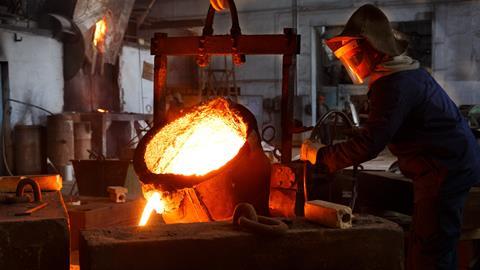
Take a walk and look around you, you’ll probably see the influence of steel somewhere in your surroundings. Hidden in the framework of our buildings, supporting our bridges, forming our railway tracks, and even in our cutlery, steel is an essential part of our lives. But it comes at an immense environmental cost: steel production alone accounts for up to 11% of global carbon emissions.
Fortunately, more sustainable options are being developed, from alternative power sources, new technologies and recycling initiatives. But aside from the practical challenges of implementing these changes, the industry faces economic barriers as well. High capital costs, electricity prices and global steel oversupply remain obstacles to the large-scale adoption of these new green strategies. How can the steel industry strike a balance between the opportunities and challenges?
And we’ve reported on many of the latest developments in cancer research therapies here at Chemistry World, from CAR-T cell therapy to the molecular glues revolutionising pancreatic cancer. There is undoubtedly some incredible work going on in the field, but for those currently living with cancer, or for their loved ones, contextualising the gap between research advances and treatment access remains a challenge. While people are surviving longer and progress is being made with new therapies, cancer is a complex disease and we are far from defeating it.
As a science journalist and ex-pharmaceutical industry expert, Andy Extance explains that his personal experience brought a new perspective on the way we communicate about cancer and a question around what ‘defeating’ or ‘beating’ cancer really means for such a complex and varied diagnosis. He found himself reevaluating the way he reported on advances after his partner, E, tragically passed away from cancer in 2022. To him, the positive statistics about patients surviving longer with novel treatments begun to ring hollow after E died. But her journey, and theirs together, inspired Andy to set up a new Instagram account to share the basics of how cancer and treatments work, and help address the gap between expectations and reality.
We would love to hear your feedback on this podcast, so if you have any questions or comments please get in touch.
Introduction
Mariana Kneppers
For more than a century, steelmaking has relied on carbon-heavy, coal-fired processes. We discuss how a new generation of technologies promises to transform one of the world’s most emission-intensive industries.
And for many, news of advances in cancer research can bring hope, but there are gaps between the expectation and realities of these advances. writer Andy Extance joins us to discuss his Instagram account dedicated to providing context for this gap.
I’m Mariana Kneppers, Chemistry World’s science media producer, and this is The chemical breakdown.
We’ll be diving deeper into these stories shortly, but first let’s take a look at this week’s news from the Chemistry World website.
Machine learning has found novel MXenes, a promising class of 2D inorganic materials, hiding in plain sight among pre-existing materials. Using insights from this data mining, the researchers created novel vaccines with properties not found in conventional ones, such as magnetism.
Generative AI models developed in the lab of 2024 Nobel prize winner David Baker have been used to design novel versions of two types of protease capable of cutting peptide bonds. The computational methods helped create entirely new cysteine proteases and zinc metalloproteases that could find use in cosmetics, consumer products, or medicines.
Researchers in China have developed a graphene-armoured anode designed to overcome sodium-ion batteries’ trade-off between charging speed and lifespan. The design uses ultra-thin nanosheets of titanium dioxide wrapped in a graphene-based protective shell. This offers a potential route to high-power sodium-ion batteries.
And researchers in Germany have discovered a molecule that receives quantum information precisely, potentially disrupting today’s leading quantum computing technologies. Designed by scientists at Envision Quantum Technologies and nearby Ulm University, this is the first such molecule to serve as a quantum bit or qubit individually connected by light.
You can find these stories and more online. Just visit chemistryworld.com for more of the latest stories in the chemical sciences.
Decarbonising steel production
Mariana Kneppers
Take a walk and look around you. You’ll probably see the influence of steel somewhere in your surroundings. Hidden in the framework of our buildings, supporting our bridges, forming our railway tracks, and even in our cutlery, steel is an essential part of our lives.
But it comes at an immense environmental cost. Steel production alone accounts for up to 11% of global carbon emissions.
Fortunately, more sustainable options are being developed from alternative power sources, new technologies and recycling initiatives. But aside from the practical challenges of implementing these changes, the industry faces economic barriers as well.
High capital costs, electricity prices and global steel oversupply present intimidating barriers for large-scale adoption of these new green strategies. How can the steel industry strike a balance between the opportunities and challenges?
Here to discuss today’s stories are features editor Neil Withers and Chemistry World contributor Andy Extance. Hello to you both.
Neil Withers
Hello. Hi there.
Mariana Kneppers
Lovely. So Neil, can you give us some stats here? Why is steel such a carbon intensive industry?
Neil Withers
The basic chemistry is why it is so carbon intensive because at the moment we basically use raw carbon in the form of coke to rip the oxygen off iron oxide to turn it into iron. And that of course gives off carbon dioxide.
So for every ton of steel that’s made, almost 2 tons of carbon dioxide are produced. Some of that is from the carbon that is going into reducing the steel from iron oxide to iron. And also a lot of it is for heating because this is all done in a, they call it a blast furnace because there’s a blast of air and heat.
And so the iron and the steel has to be molten. So this has to be at many hundreds of degrees celsius. So it’s an incredibly energy intensive as well as carbon intensive thing.
As I think you said, it’s 10% of all global carbon dioxide emissions is solely producing steel.
Mariana Kneppers
That’s insane. What are some of the alternative sustainable solutions that are being explored? I mean, the article mentions quite a few, but if you could maybe just touch on one or two of those.
Neil Withers
I think the most developed ones are probably the electric arc furnaces where you use electricity to both heat it and to reduce the iron oxide into iron. That’s probably the most advanced one.
How you produce your electricity depends on how green it is, but it will have a much lower carbon footprint simply because electricity is more efficient than burning coal or coke or gas.
And then there’s you can use hydrogen is another route as well. So hydrogen can reduce the iron oxide to iron and then you get water produced rather than carbon dioxide.
Mariana Kneppers
Gotcha. So that already improves, you know, air quality at least to the immediate area, right? You’re not kind of pumping out greenhouse gases. It’s just water vapour, is that right?
Neil Withers
Yeah, that’s right. And there’s already plenty of water vapour in the atmosphere.
Mariana Kneppers
Going back to electric arc furnaces. Or even hydrogen production, actually. How easily can we swap out current steel manufacturing? I mean, you’d be swapping out an arc furnaces, I guess you’re taking out the blast furnaces.
Neil Withers
Yeah, so that is the problem is that obviously we’ve been using, you know, blast furnaces, an incredibly mature technology. They’ve been around for, you know, hundreds of years in their modern form.
And there are enormous steelworks all over the world. And so to decommission those and to set up a new one is incredibly difficult and expensive.
And UK listeners might have heard of the Tata Steelworks in Port Talbot in South Wales, which closed down its last remaining blast furnace a couple of years ago. And they’ve been slowly working since then to produce an electric arc furnace.
And they’re still, even though this has been going on for several years now, they’re still not complete. There have been different setbacks about the national grid connectivity because this will be a huge drain on the electricity grid and then you have a slight change in certain fuel prices and it’ll have a knock-on effect on tons of things.
So it’s just it is just a slow and expensive process sadly.
Mariana Kneppers
Yeah and is there any chat of like where the electricity would be coming from this? I mean, as you mentioned, it’s only as green as how the electricity is generated, right?
Neil Withers
Yeah, so I think in South Wales, the grid is not as green as it is in other places. For instance, in Scotland, where there’s a lot of wind and hydro, it will just be the usual mix.
But again, if it’s done from gas generation and with a bit of wind and solar and nuclear, it’ll be greener than burning coal to do it.
Andy Extance
I think electric arc furnaces are relatively common. I think that’s one of the cool things people might not appreciate.
I think something like about 1/4 of steel is already produced with them, but they are also really good for sustainability in that they recycle scrap steel.
So electric arc furnaces have this really big advantage for green topics in general. And so it’s also relatively well established in the UK.
Mariana Kneppers
Yeah, that’s something that the article touched on that was really interesting is the idea that we can use scrap metal in these electric arc furnaces.
But there’s almost like an undersupply of scrap metal, which I thought that in itself was quite interesting, because as humans, we always have a problem with too much waste. Rarely is it that there’s too little scrap to be used, right?
Why is that? I mean, why is there such a shortage of scrap metal?
Neil Withers
Well, I think it’s probably partly because steel is a very good material. You know, if you imagine that the steel in a building is going to last the lifetime of the building, hopefully.
And also we’re using so much of it that the demand for new is outpacing the supply of the old, the recycled.
And there is also the slight problem that scrap steel can have different contaminants in it. So it’s not always the level that’s required.
Mariana Kneppers
Yeah, fair. Recycling is always complicated by, I mean, even plastic recycling. We’ve talked about it on the podcast before, where it’s not as simple as just putting all the plastic together.
There’s so many different kinds. They’re mixed with other kind of, you know, polymers in that case. But with steel recycling, I imagine it’s different kinds of metals. It’s not very easy to separate them out, is it?
Neil Withers
Yeah, that’s the thing. You’d think that scrap steel that’s very, very pure steel would be a lot better than, you know, iron ore, iron oxide that’s got whatever else has come in the rock.
But I think the fact that it’s potentially got pure metals in there as well, or other metals that are a reasonable amount, makes it a bit harder.
Mariana Kneppers
Yeah, definitely. Now, you also mentioned hydrogen-based steel making. That features heavily in the article.
Neil Withers
Yeah, so the key thing, as with all hydrogen as an energy source, etc., is Where does the hydrogen come from?
If the hydrogens come from methane from natural gas, then the byproduct of that is going to be carbon dioxide. So the greenness of your hydrogen is going to be what makes the overall process green or not.
Mariana Kneppers
Yeah, and that’s something that I believe you’re currently working on an article, Andy, about green hydrogen in general.
Andy Extance
Yeah, absolutely. So it’s really interesting. In Europe, they have introduced recently very tight rules around what constitutes green hydrogen.
And so everybody producing green hydrogen has to very closely account for where their electricity comes from.
And I’ve just recently got back from Germany a couple of weeks ago where I was visiting a green hydrogen plant. And there, part of the rules are that the renewable energy has to be additional. So it has to be new.
And so at the current point, it has to have been installed in the last three years. And the place where I visited, they are connected to a wind farm. and three of the turbines were built 38 months ago.
And so those ones don’t constitute sufficiently like new to count as green hydrogen.
So there’s some quite fiddly rules. The idea being is you’re not sucking out green energy from other uses. You know, it’s not competing with other uses of green electricity.
So the people who are producing green hydrogen have to install dedicated generation to be able to constitute green hydrogen rather than making other things less green and forcing other things to use gas or coal or whatever, electricity generation.
Neil Withers
Does that mean they have to keep adding more like, you know, every year as more comes off out of the thing?
Andy Extance
Yeah, absolutely. So it would be driving installation of renewables.
Neil Withers
Yeah.
Andy Extance
That is a big commitment though.
Mariana Kneppers
Really interesting. What about like, because some areas, I mean, especially up in like Scandinavia, you have so much hydroelectric power. I mean, are areas in Scandinavia, are they kind of looking towards that?
Andy Extance
That’s a really excellent point. In Francis’s article, it does mention this plant that’s called Stegra in Sweden.
And yeah, I don’t know, there is a lot of talk about Sweden has hydro, it has a lot of nuclear, so it’s got a good basis.
Obviously you can install new hydro, you can install new dams and that’s an option. So maybe that’s what they’re doing.
I wouldn’t be surprised if they’re adding wind, but I don’t know the details of how Stegra in particular is getting the electricity for its green hydrogen.
Neil Withers
I think what I find quite interesting, because I grew up not far from Ironbridge where they first developed, you know, blast furnaces and made the first things, is that was in a a wooded valley with a source of water power and the coal right there to make the coke.
And so it was all very geographically ideal. And now we’re sort of going back to that in a way that they might be building these new installations in places where there’s, again, lots of water power and wind power, et cetera.
So the geographical location again is going to be key.
Mariana Kneppers
Yeah, absolutely. I mean, why wouldn’t you? know, just reduce costs on transport of materials, things like that. So it makes so much sense, doesn’t it?
Now, all of these green solutions are classic initiatives, but what are kind of the biggest technical hurdles that researchers in the industry still need to overcome? I mean, what’s preventing us from adopting these?
Neil Withers
I think with so much green stuff sustainability, it’s not necessarily the technological issues that are the problem. It’s simply the cost, like Andy was saying, to build new installations, to have to build the wind power to do it every few years.
it is just more expensive. If you’ve already got a blast furnace there, are blast furnaces all over the world. If they’re already there, they’re already running. They’ve had this huge head start, the coal’s there, the coke’s there.
So it’s got to be economic levers to make it worthwhile to transition to green steel.
Andy Extance
I would add that the cost of the electrolysers is a really big factor. And if you could make the cost of the electrolysers much cheaper, that would certainly help a lot in terms of getting the costs down.
And an interesting thing, although the costs are high, you can do things with policy and that’s what the European governments and the EU are trying to do.
In the last couple of months, they’ve just changed the emission rules around cars to mean that it’s possible for them to count the use of green steel as a way of reducing their emissions.
And so that’s likely to drive demand for green steel from this plant in Sweden at Stegra from Germany and France. So the car makers in Germany and France will have specific legal motivation now to buy this green steel, even though it’s relatively expensive.
Otherwise they would face penalties around their emissions.
Mariana Kneppers
Yeah, that’s a very good point. The price of this green steel now, you know, obviously it sounds like this is going to change the price for the consumer, the people purchasing this steel.
Do we know how much more expensive low carbon steel is today compared to the steel that we typically use or we just know it’s going to be more expensive.
Neil Withers
Yeah I don’t really have a good sense of that. I think it’s just the capital investment means it is going to cost more for a certain amount of time and then when the older more carbon intensive plants start to wear out then the new ones will be there and hopefully it’ll be a relatively smooth transition.
Andy Extance
I do know that green hydrogen is up to four times as expensive as grey hydrogen, which is that from fossil fuels. So that’s definitely a challenge.
Germany’s a really interesting case study where I’ve recently visited. They have a lot of steel making, so they need to do a lot of decarbonisation of that. So they’ve got strong motivation to adopt hydrogen.
They also don’t have much of A nuclear sector, so they don’t have much of a base load electricity that is 0 carbon.
So they were wanting to adopt hydrogen to be able to power their gas power stations, but it’s super expensive.
So now they’re wobbling a bit and moving towards burning natural gas and adopting carbon capture, which is a long shot because they haven’t put any investment into that.
They’ve been investing in hydrogen for a long time. So there are a lot of tricky economic questions with hydrogen and green steel overall.
Mariana Kneppers
Yeah, fair enough. It sounds like there’s a lot of technologies, a lot of promising advances out there, but as with a lot of these things, the policy needs to be in place, the logistics need to work out, the economics of it all.
So there’s going to be definitely, it sounds like, some conversations among policymakers in the future on how best to incorporate these new technologies.
So gosh, well, thank you so much.
Cancer Research, Hope and Reality
Mariana Kneppers
Here at Chemistry World, we’ve reported on many of the latest developments in cancer research therapies, from CAR-T cell therapy to the molecular glues revolutionising pancreatic cancer.
There is undoubtedly some incredible work going on in the field, but for those currently fighting cancer or for their loved ones, contextualising this news can be a challenge.
While people are surviving longer and progress is being made with new therapies, cancer is a complex disease and we are far from defeating it.
Writer Andy Extance found himself reevaluating the way he reported on advances in cancer research after his partner E tragically passed away from cancer in 2021.
To him, the positive statistics about patients surviving for longer rang hollow. And he has since set up an Instagram account aimed at addressing the gap between expectations and reality in cancer research and is here today to discuss his journey.
Andy, can you tell us a little bit about what inspired you to start this account? Why now?
Andy Extance
Yeah, well, it’s been in gestation for over a year.
The motivating event for me was writing about vepdegestrant, which is a new protein degrading cancer drug that has been approved for use in hospitals earlier this year.
And I think I was writing about it last year before it was approved. And I had the sense that within the word count limit that I had for the article, it would be very difficult to get across some of the things that would be really important for users to know about things like the likelihood of them being able to get access to the treatment both in the sense of whether or not health systems would prescribe it for them, but also which types of cancer this particular drug was currently applicable to.
And that really made me think about how I’d written about cancer drugs and drugs in general coming to the market in the past.
And I wanted to be able to provide more context that and I then thought about what would be the best way to bring that context.
Mariana Kneppers
It’s interesting, reading your article made me reevaluate our role as science communicators.
You know, there’s a responsibility to report things in an unbiased way, but there’s also a certain amount of subtext to it, whether it’s overly positive, overly negative.
I mean, these things can shift people’s expectations without you realising, you know, reading these things.
I mean, do you think that patients and families are often given an unrealistic impression of the pace of medical progress?
Andy Extance
I think if you were to pay attention to just the headline news around cancer research, you could very easily think it’s a lot more positive than it actually is.
There really are some incredible treatments out there. What you can do with a lot of the immunotherapies that are currently available is really super impressive, but it’s not that easy to get access to them.
And I think that part of the picture is often left undiscussed.
So I think it can be a bit misleading if you’re just paying attention to that.
But there’s also a sort of psychological aspect to it. As someone who has cancer in your life, it’s just really hard to get your head around. And you sort of want to believe that things will work out for the best even when that isn’t strictly true.
And so you can pick up on stories about the latest scientific advance and say, OK, this is good. We’re covered. This is here. It’s all going to be fine.
And that was my experience, I think.
And having written about immunotherapies for about 10 years before E was diagnosed, at the point of diagnosis, it was really very intense and extreme, you know, heartbreaking.
But there was definitely a voice in my head. It’s like, but the immunotherapies are here. This is all going to be fine.
But in our case, the immunotherapies weren’t available. And so the treatment was basically relying on really very long established treatments that have been refined.
You know, the fact that they’ve been around for a really long time is a good thing. And it means that a lot of the really bad side effects are now much better manageable.
And I suppose that’s an aspect of science that we don’t often think about as journalists is that, actually we focus on the really new discoveries, but actually a lot of the advances that make a difference to people are maybe a little bit less famous, a little bit less glamorous.
Incremental progress and quality of life for those with cancer
Mariana Kneppers
Yeah. They don’t necessarily bring the headlines, but for somebody who’s going through cancer treatment and I mean, I’m just pulling an example, but a treatment is improved upon so that the patient isn’t as nauseous anymore.
I mean, the quality of life for that person during that period of time, it makes a massive difference, I’d imagine. But that’s not going to necessarily give a headline, is it?
Andy Extance
No, the first chemotherapies were so nausea inducing that they had people vomiting up to twelve times a day.
Cisplatin is the one and the nurses who were giving it, they called it cisflatin because it would just knock people out completely through the amount of vomiting that it caused.
Whereas, yeah, I think chemotherapy makes you nauseous these days, but the nurses and medics in general have an awful lot of anti-emetic drugs which make it a lot better.
My experience is that individually, that can vary a lot, what people need in order to get that under control. But that’s definitely much more manageable these days.
Mariana Kneppers
Yeah, absolutely.
Balancing Hope and Acceptance
Mariana Kneppers
And one of the themes in the article is that tension between hope and realism. How did you navigate that balance personally and has that shifted the way you report now?
Andy Extance
With great difficulty, I think, and in fact, probably not with balance, whatever.
Honestly, I think E was extremely amazing with the outlook that she brought to her cancer and relied on some advice from some ancient philosophers which really helped to ground us all, us and her family and loved ones in not hoping too excessively.
So I think at each point we were relatively realistic but you do always hope for the best. and at the point where you receive bad news, really hard, really, really hard.
Then it becomes less about hope and more about just accepting the situation as it is and working out how you make it the best of the situation as it is.
Mariana Kneppers
Yeah, you get to a point where you just have to deal with, the realities of the situation.
I mean, I know probably many people listening to this have probably faced, unfortunately, very similar situations where, you kind of go into survival mode, I imagine, and you just kind of are thinking of, right, these are the facts at hand. This is how we approach them.
I guess you approach them a bit clinically, don’t you?
Andy Extance
Yes, and also the acceptance of the reality of it becomes such that we were able to create a time and space to make the most of life as it was available.
And I think that can be quite challenging.
I think in our case, that was the joy of acceptance in some ways in that it did create time and space, whereas in researching the Widower’s Guide and otherwise talking to people with cancer and other widowers.
There’s a tension between acceptance and fighting, where people often have this view that they want to ’fight’ the cancer.
They obviously have a very great passion for life, which is totally understandable. But to fight in that way is often extremely demanding of energy and you can put yourself through some gruelling treatments.
So maybe you put yourself forward for clinical trials and then perhaps those clinical trials have extremely challenging side effects.
I think that’s true of the immunotherapies and that’s really tiring. And then if it doesn’t work out, you’ve done that and you know, still…
Mariana Kneppers
…you’re left a bit battered and bruised and you’re still at the same starting point.
Andy Extance
And you’ve used what energy and time that you have available in a futile fight.
And We were much more along the lines of actually at this point there is no evidence-based treatment that is available.
So then we’re going to use the time we have to provide as much joy as we can in this time rather than expending what little energy is available in a fight that looks very unlikely to be winnable.
Advice for Patients and Families
Mariana Kneppers
Yeah, and that’s an incredibly difficult decision.
I mean, Having experienced all of this, you’ve made the decision now to share your experience through this Instagram account, which is I imagine very, very helpful for a lot of people going through similar situations.
And you offer really interesting pieces of advice as well for people going through the process.
Is there a single piece of advice that really helped you during this time that you kind of are sharing now with others?
Andy Extance
I mean, it seems obvious, but ask for help.
And in particular, what I have already shared on the account is that one thing that really surprised us was the quality of the support available from local charities.
There are local cancer charities all around the country who provide really high quality support on things like side effects like nausea, and other aspects of being able to be comfortable, but also things like therapy are available for free, complementary therapies like massage that help make you comfortable.
And then palliative care as well as and when that’s required.
I wasn’t even aware that was a thing.
So I would definitely really encourage people to go towards those charities.
As I say, I’ve already done that on the Cancer Widower account.
But then just a general principle is people struggle to ask for help, but actually when someone has cancer, you will be overwhelmed with people offering that help and I think it’s well worth doing whatever you can, trying to be inventive as possible to take advantage of that.
Mariana Kneppers
Yeah, absolutely.
Neil Withers
It’s a fantastic thing you do, Andy.
Why share the experience?
Mariana Kneppers
It is, and I can only imagine how difficult, of course, this whole experience has been, but I experienced a bit of loss last year with one of my friends who passed away unexpectedly from acute leukaemia and something that really helped me was, you know, putting that energy into a project.
And I imagine this is probably a really good way of doing that. I mean, have you, is there something fulfilling about this experience?
Andy Extance
I have had some really lovely discussions with E’s mum in particular around this, but also other friends and even colleagues.
It’s opened up discussions that I would not have otherwise had.
As you say, cancer has affected so many people’s lives. And it’s not something that you talk about on a day-to-day basis.
This all feels extremely vulnerable.
Not everyone in my life is happy that I’m doing this. He was a very private person and I have mixed feelings about saying even the stuff I’ve said today and my family and friends are not wholly on side with that either.
But I do think it’s worth it.
And I think a lot of the conversations that it’s opened up have been worth it and just sort of making myself vulnerable and putting myself in this space where it is scary and emotional.
And I don’t know whether setting up an Instagram account is the right thing to do for this, but it is something that I really want to do.
It has paid off in terms of those lovely discussions that just we wouldn’t have had on a day-to-day basis, people come up to me and talk about their loss or their challenges or their memories in ways that they otherwise wouldn’t.
So I’m glad that I have braved the scary step.
I’m doing this thing that I don’t even know if it will help anyone really, but I suppose the conversations I’ve had are showing that it is of value to at least some people.
Science communication is changing and I think it’s really important to think about who your audience is and where they’re at.
And that’s been a big part of doing this for me.
I’m so used to writing in magazines like Chemistry World. That’s sort of why it’s scary because I’m sure that there are plenty of people who are chemistry enthusiasts who’ve experienced cancer in their life.
But actually, most people are not chemistry world readers.
So to go out into this world and try and figure out how to provide what help I can is a challenge intellectually, emotionally, and just thinking about the best way to do it.
It’s really interesting and challenging.
Yeah, and it reflects the way in which our world is changing. People are consuming information in podcasts, on social media, And so that’s another aspect of the challenge for me.
Neil Withers
And I think it’s something for us as we work on the magazine and we’re sort of going from taking in press releases and journal articles and it’s all about the numbers and the molecules and ChemDraw.
But the reason behind it is because of people and I think maybe we don’t always we don’t always appreciate that and it’s good to be reminded.
Mariana Kneppers
Yeah, absolutely. It’s a really good point.
Yeah, well, I think I speak for all of the Chemistry World team when I say we all think what you’re doing is incredibly brave.
And I think, you say you’re not sure if it’s helped people. I’m sure it already has.
With a lot of these things, just sharing your experience or just, you know, letting other people know that they’re not alone, even that in itself is so helpful.
But yeah, I think A lot of people do really appreciate what you’re doing.
So thank you so much for that and for taking the time to talk about it. Really, really appreciate it.
Andy Extance
You’re welcome.
This week in chemistry history: the Drummond lamp
Mariana Kneppers
And finally, this week in chemistry history, Thomas Drummond pioneered the use of the Drummond lamp, a device that heated lime to generate a blinding white light, giving us a new way to light up the dark in 1826.
In the 19th century, life was not quite stuck in the dark ages, but perhaps the dim ages. People relied mostly on open flames from candles, oil lamps, and early gas lights for lighting.
This meant spaces like theatres relied on hundreds to thousands of candles to illuminate the stage, making rooms hot and smoky and posing a massive fire hazard.
But a solution would soon arise from an unlikely source.
Thomas Drummond was a Scottish engineer working on a project mapping out the regions of the rugged Scottish highlands.
One of the jobs involved setting up observation spots with lamps on peaks and other elevated areas as high visibility target points.
Surveyors typically used argand lamps, which were oil-powered flame lamps, with reflectors. However, these lamps simply weren’t bright enough in the characteristically misty Scottish highlands.
Drummond knew they needed something brighter.
His duties required him to stay in London over the winter, during which he took up a course in chemistry.
During a lecture by Michael Faraday, Drummond was introduced to the concept of the quicklime effect.
This was originally discovered by Cornish inventor Goldsworthy Gurney.
Gurney had tried heating various metal oxides with a hydrogen-oxygen blowtorch and found that calcium oxide, also known as quicklime, produced an incredibly bright glow.
Drummond’s wheels began to turn, and he began experimenting with quicklime in preparation for the survey.
According to his recorded observations, he estimated that quicklime burned with a light intensity around 83 times that of traditional argand lamps.
He refined his design, powering the torch with a mix of oxygen and alcohol vapour, which was a safer alternative to hydrogen.
He shaped the lime into a perfect sphere and placed it at the focal point of a parabolic reflector.
The result was a spotlight brighter than any flame could produce.
According to Drummond, quote, its light could be observed 68 miles away and would cast a strong shadow at a distance of 13 miles.
The contraption became known as the Drummond lamp and it quickly became the standard for surveying.
But soon the theatre community realised its potential as a way to illuminate actors on stage and provide a focal point to draw the audience’s attention.
It was first used indoors in Covent Garden in London in 1837.
It was an instant hit and the limelight soon entered into our vernacular as a way of describing something or someone in the public eye.
Limelight and theatre safety
Mariana Kneppers
While Drummond’s limelight was a significant improvement on previous ways of lighting theatre spaces, it did not improve on the fire risk.
Heating lime to such a high temperature while storing highly combustible oxygen and hydrogen gases nearby as you can imagine, led to countless incidents of devastating fires, adding to those caused by open flame lighting in theatres.
Consequentially, theatres and gathering halls around the world created laws to make these spaces safer, including adequate amount of fire exits and fire safety curtains on the stage.
Scientific legacy
Mariana Kneppers
Beyond the theatre, Drummond’s lamp was used in a number of optical experiments, perhaps most notably in French physicist Hippolyte Fizeau’s famous measurement of the speed of light.
Drummond’s lamps were a staple of science education around the world, and many can still be found in some of these schools today, in Florence, Italy, Coimbra in Portugal, Alexandria in Egypt, and in Haarlem in the Netherlands.
Outro
Mariana Kneppers
That’s all for this edition of the podcast.
If you’re interested and want to hear more about any of the items we’ve covered, check out chemistryworld.com for more of the latest stories in the chemical sciences.
You can also sign up for our weekly newsletters like Re:action, giving you a handpicked selection of stories from Chemistry World and beyond from newsletter and research editor Jennifer Newton, or our Industry Brief, containing essential analysis and insight on the industrial side of chemistry from business editor Phillip Broadwith.
I’m Mariana Kneppers, we’ll see you next time.
This transcript was generated by AI and checked by a human editor













No comments yet