



In this episode, we discuss the difficulties in finding a safer replacement for a chemical in tyres that has been causing extensive salmon deaths in North American streams, along with the first known naturally synthesized MOFs with Phillip Broadwith and Patrick Walter.
This week’s headlines
Featured stories
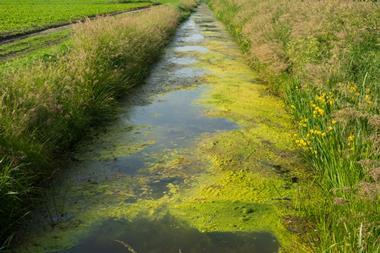
Think about the last time you drove through the rain. While your tyres smashed through the puddles, a little bit of that tyre rubber got left behind, washed off of the road and into the drain with the rest of the stormwater.
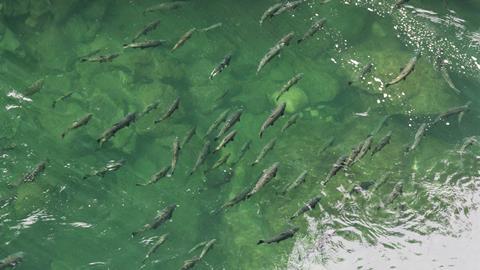
That rubber contains a preservative called 6PPD, which has been used in tyres for around 60 years. It’s great at stopping rubber from degrading. But when it reacts and breaks down, it forms a byproduct called 6PPD-quinone, which is deadly to some species of salmon and other fish.
Virtually every tyre on the market contains 6PPD, and tyre chemistry is a delicate balance of multiple ingredients working together. So how do you replace this chemical without creating a new problem?
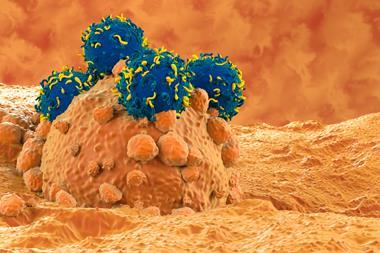
And for the first time, researchers have discovered a microorganism that makes metal–organic frameworks (MOFs). Cable bacteria are filamentous microorganisms that can move electrons over distances of several centimetres. It may not sound very far, but in reality this distance is about 10,000 times the width of the bacteria itself.
Facilitating this transport are naturally biosynthesized nickel-organic frameworks. It’s the first example of naturally synthesized MOFs known to us, and this it conducts electricity with a similar efficiency to some of the best synthetic polymers and MOFs currently used. How did we discover them, and can we learn something from this structure?
We would love to hear your feedback on this podcast, so if you have any questions or comments please get in touch.
Introduction and Chemistry News Roundup
Mariana Kneppers
A chemical that keeps tyres from cracking is also killing salmon when it washes into rivers. We discuss the difficulties in searching for a safer replacement for 6PPD. And researchers have identified a living organism that produces and uses metal organic frameworks at the bottom of the sea floor. How is it possible and what can we learn about it for our own design of materials?
I’m Mariana Kneppers, Chemistry World science media producer, and this is the Chemical Breakdown.
We’ll be diving deeper into these stories shortly, but first let’s take a look at this week’s news from the Chemistry World website.
A warning has been issued that England’s current student loan system could drive talented science graduates away from research, as many face the choice between pursuing lower-paid scientific careers or moving into higher-paying sectors to manage their debts. Critics argue that the growing financial burden risks undermining the UK’s future scientific workforce and widening inequalities in who can afford to stay in science.
Researchers in China have shown that covalent organic frameworks can be used to rearrange water molecules, increasing the efficiency of the reduction of nitrate to ammonia. This could both reduce the energy intensity of ammonia production and help to remediate water pollution.
Chemists have tracked the fleeting intermediates in the natural synthesis of penicillin using ultra-short X-ray pulses. The research could usher in improvements in ring-forming reactions on useful intermediates for the pharmaceutical industry or aid enzyme engineering.
And the annual Small World Microscopy Competition has announced its photography winners, but this year’s video champion was stripped of the title after judges discovered the entry had been created using AI-generated imagery. The incident has reignited debate over how scientific imaging contests can verify authenticity as AI tools become increasingly sophisticated.
You can find these stories and more online. Just visit chemistryworld.com for more of the latest news in the chemical sciences.
Think about the last time you drove through the rain. While your tyres smashed through the puddles, a little bit of that tyre rubber got left behind, washed off the road and into the drain with the rest of the storm water. That rubber contains a preservative called 6-PPD, which has been used in tyres for around 60 years. It’s great at stopping rubber from degrading, but when it reacts and breaks down, it forms a byproduct called 6-PPD-quinone, which is deadly to some species of salmon and other fish.
Virtually every tyre on the market contains 6-PPD, and tyre chemistry is a delicate balance of multiple ingredients working together. So how do you replace this chemical without creating a new problem?
Here to discuss today’s stories are business editor Phillip Broadwith and news editor Patrick Walter. Hello to you both.
Searching for a Safer Replacement for 6PPD
Phillip Broadwith
Hi Mariana. Hello.
Mariana Kneppers
Hi, thanks for being here. So Philip, how did this all start? When did we first realise that this was even an issue?
Phillip Broadwith
Well, people have been finding these strange deaths of salmon for about 20 years and they’ve been trying to work out what it was and it’s taken a lot of investigation and it wasn’t until about 2020 that we found out that it’s this particular tyre additive that’s causing the problem. There’s now moves to regulate that chemical in the US, in Canada, in the EU. And so we need a replacement.
Mariana Kneppers
Yeah, fair. And what is the role of 6PPD? On a chemical basis, how does that work?
Phillip Broadwith
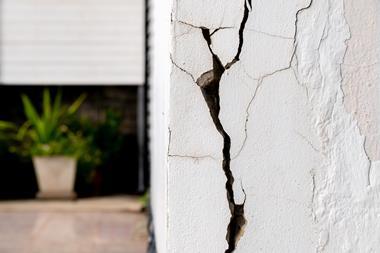
Well, tyre rubber has carbon-carbon double bonds in it, alkenes. If those are exposed to ozone, they can be attacked by the ozone and degraded. That causes the rubber to crack, which means it doesn’t perform its job as a tyre. It loses grip, it can fail, and then you’ve got a big problem.
So what 6PPD does is preferentially react with the ozone at the surface of the tyre and stop it from degrading the rubber. But that means that the 6PPD also has to be able to move through the rubber of the tyre, because it’s just in all of the rubber, but it only acts at the surface.
And that’s one of the problems when you’re finding a replacement. You need something that reacts with the ozone and protects the rubber, but can also move through the solid matrix of the rubber of the tyre and diffuse around it. So it can’t just be covalently bonded to the tyre rubber. It needs to be mobile as well.
Mariana Kneppers
I see. This might be a really silly question, but how does it get to the surface of the tyre? Is that just kind of like it diffuses out towards where the ozone is?
Phillip Broadwith
Yeah, it’s just diffusion. So as the 6PPD at the surface is reacted, you get a concentration gradient and the stuff that’s deeper in the tyre moves out to the surface.
Mariana Kneppers
I see. Okay, so in 6PPD is kind of the chemical of concern here. Now, is it just 6PPD or are there other chemicals? Maybe is it the whole family of concern?
Phillip Broadwith
So the bit that reacts with the ozone is kind of in the middle of the molecule. It’s called a paraphenylenediamine. It’s an aromatic ring and it gets oxidised.
And then on the periphery of the molecule, attached to some amine groups, there are some alkyl groups. And there’s a whole variety of different variations of this family available, and some of them are used elsewhere in rubber, in aircraft tyres when you need a slightly different performance or for other rubber applications.
And it turns out that not all of those are anywhere near as toxic to fish. And part of the problem is we don’t really know how this toxicity works. We don’t know why it’s only toxic to this very specific species of salmon, coho salmon and a few other things like rainbow trout.
For other fish, it’s nowhere near as toxic. And some of the other PPDs definitely aren’t toxic to coho salmon or rainbow trout. But then we don’t know if the other members of this family are going to be toxic in different ways to different kinds of fish.
So there’s a lot of toxicology to do to understand this whole family of chemicals. Because the main front runners for replacing 6PPD are other PPDs, other paraphenylenediamines, and they’re set in the same, but with different alcohol groups on the side. So they retain a lot of the same properties.
They’re relatively easy replacements because they’re already in use in some places. So that would be probably the path of least resistance, if you like, as long as they’re not super toxic to fish, which they don’t appear to be toxic to the same kinds of fish, but we don’t know about other kinds of fish.
And in Europe particularly and Canada, there are moves to regulate the family of PPDs as a whole. So if they end up restricted, then that’s going to mean none of them are really suitable to be tyre additives.
Mariana Kneppers
Yeah, fair enough. Yeah, it’s a challenging situation because as you say, like this family of chemicals, we know that it works. You need a very specific kind of chemical for this very unique process to work.
But with chemistry and a lot of biochemistry in particular, one small change could make it safe for one thing, but toxic for a load of other things. Like it’s that really fine, nitty gritty balance that you only really know the results once you’ve kind of tested through all of the candidates, I guess.
I mean, is that the approach that they’re taking? Are they kind of just going through the family and just seeing one by one what works, what doesn’t?
Phillip Broadwith
So a lot of this work is being done by a group of companies in the US, a group of tyre manufacturers. And to start with, they’ve tested a load of possible alternatives to see if they work in the tyres, because that’s their priority. They want something that works and retains the performance of the tyres.
They’ve ruled out a whole load of compounds based on that. And they’ve now got left with about 40 compounds that they’re still looking at. Some are PPDs, some are not PPDs, completely different families of molecules and materials.
But they’re now taking the kind of most promising of those and looking in much more detail at the toxicology.
Patrick Walter
So Philip brings up a really interesting point there that is an issue that has been affecting industry on the whole. This concept of regrettable substitution.
So this is the idea that you identify a chemical that is a known problem, perhaps it’s toxic to animals, and you try to replace it with something else. Often the chemical is similar because you need that chemical to perform a certain role.
But what often happens is you replace it with one and then you find it causes different problems, somewhat similar. So one example could be bisphenol A. So BPA was replaced with BPS and this was found to cause other but similar toxicity issues in humans and animal models.
Mariana Kneppers
I see, fair enough. Yeah. That’s a really, really good point.
What about the 6PPD that already is in the environment? Is this like a situation like PFAS or these other forever chemicals where it’s in the environment, it’s stuck now? Or are there efforts being done to maybe try and like clean the rivers? Or I don’t know, how long does it actually last?
Phillip Broadwith
That’s one of the interesting things. When it’s in contact with the air, it doesn’t last very long at all. It’s broken down by ozone, it’s broken down by oxidation pretty quickly. And that’s one of the reasons it was assumed that it probably wasn’t a problem.
But as it turns out, when it gets into the river sediments, when it gets into an anaerobic environment where there’s no oxygen to break it down, it can last for much, much longer.
It’s not super persistent. We’re not talking like PFAS levels of lasting for hundreds of years, but it can definitely last for a much longer time. And as things get stirred up, it gets released back into the river, it gets oxidised back to the quinone.
And the quinone is so toxic at such tiny concentrations that it really doesn’t take very much to have a significant effect on these particular salmon and trout populations. And that’s why there’s an issue, because because it’s toxic at tiny concentrations and those concentrations are easily achievable under the conditions that it gets into the environment.
Mariana Kneppers
I see. Fair enough. And is this, I think this was mainly focused in America, right? America and Canada. But is this a problem elsewhere?
I mean, presumably these tyres, tyres around the world use 6PPD or something similar. So is this, are we seeing this in Europe? Are we seeing this in Asia?
Phillip Broadwith
There’s definitely moves to regulate it in Europe, and partly I think that’s down to where the populations of the fish that are particularly susceptible to this chemical are.
So we’ve seen it in the coho salmon, which is mostly in the northwestern US. It’s not so toxic to salmon that are present in Europe, but it is toxic to rainbow trout, which is why we’re seeing some moves for regulation in Europe as well, because there are rainbow trout populations there.
And in some ways, when we get to replacements, we don’t know what effects they might have on other fish that are elsewhere. So partly it’s focused on the areas where there are populations of the kind of fish that are most strongly affected by the chemical.
Mariana Kneppers
Sounds like people are trying to find a solution. Fingers crossed that they find one soon, but definitely developing stories. So we’ll have to keep our eyes on this one. So thanks so much, Philip.
Natural Metal Organic Frameworks in Cable Bacteria
Mariana Kneppers
For the first time, researchers have discovered a microorganism that makes metal organic frameworks or MOFs. Cable bacteria are filamentous microorganisms that can move electrons over distances of several centimetres. It may not sound very far, but in reality, this distance is about 10,000 times the width of the bacteria itself.
Facilitating this transportation are naturally biosynthesised nickel organic frameworks. It’s the first example of naturally synthesised MOFs known to us, and these MOFs conduct electricity with a similar efficiency to some of the best synthetic polymers and MOFs currently used.
How did we discover them, and can we learn something from this structure?
So Pat, give us some context here. How did the researchers come across this discovery in the 1st place? I mean, did we always know that this was out there or was this an accidental discovery?
Patrick Walter
Well, we’ve known about cable bacteria for some time now, but what hasn’t been known is what these incredibly long filaments are made out of.
I mean, these filaments are just one to two micrometres thick, but can be up to two, 3 centimetres long. That’s like 20,000 micrometres.
So while we were interested in these bacteria, while we knew what they were up to, what we didn’t know is we didn’t have a detailed idea of what these filaments were actually made out of. And it’s been quite a surprise to discover that they’re made out of MOFs.
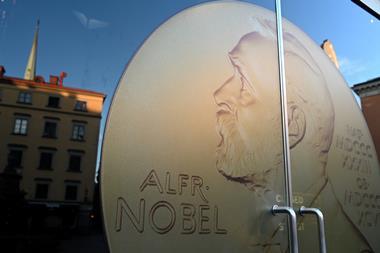
Up until now, it was always thought that MOFs were a purely human invention. I mean, there’s a lot of interest around MOFs. Last year, the Nobel Prize in Chemistry went to three researchers for the discovery and development of MOFs.
Mariana Kneppers
Yeah, that’s such a good point. MOFs have been such a hot topic lately. You know, they’ve been a hot topic for a while, but particularly with the Nobel Prize last year.
Can you break down the MOFs that are being used in this context? What is the difference between, you know, the MOFs that we’re familiar with and we’re creating versus what we’re seeing with these bacteria?
Patrick Walter
I mean, there’s been a lot of interests around MOFs because they’re so versatile, so they’re composed of a metal iron and a linker, and you can swap these out to create all sorts of different structures. There’s thousands and thousands of different MOFs that have now been created.
Now what’s great about MOFs is this versatility, but they also have a huge surface area. So this interconnected network has a vast surface area, so people have been very interested in looking at them for storing things like gases, so capturing carbon dioxide for instance.
An often repeated fact is that a gram or so of a MOF might have the surface area around a football field.
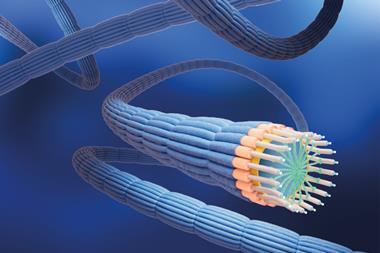
So what is going on in this case? The bacteria are making MOFs from something similar, a similar process to what we use. In this case they’ve used nickel and dithiolene ligands and what they do is they’ve connected them up into these long kind of strings and that’s what’s acting as the wire.
Although they are doing something interesting and a little bit different in that they’re twining these MOFs into nanoribbons. So they’re making these great long structures of MOFs and these MOFs are also electrically conductive so that’s what’s important to them for surviving on the ocean floor.
Mariana Kneppers
So how are they using the MOFs? in this context.
Patrick Walter
So these bacteria live in a pretty harsh environment. They’re living on the sea floor. There’s no sunlight, not much energy, not much lives there. So where are they going to get their energy?
Well, they look to the sediment. So in this case, they worm their cables into the sediment. The cables are able to, they’re making use of chemical energy there. So they metabolise sulfides they find in the sediment.
And then what they do, as we’ve said, they’re highly electrically conductive, these cables, so they’re transferring the electrons from sulfides when they oxidise them, and they’re moving them up like power lines, directing the energy into the bacterial cells.
And from there, they use these electrons to power metabolic processes like glycolysis or respiration.
Mariana Kneppers
Oh, wow. So this would be like an example of chemosynthesis. Is that fair to say? Versus like normally things get energy from light, for example, and that’s where you get photosynthesis. But would this be an example of chemosynthesis?
Patrick Walter
Yes, I believe that is the correct word. So you got photosynthesis, so making use of light, chemosynthesis tapping into chemical energy.
Mariana Kneppers
Yeah, so cool. Wow.
So looking at the design of these morphs, it’s quite, as you say, really cool, almost like this power line structure that they’re using them. Is that similar to how we’ve been using morphs? Or I mean, is there something that we can learn from this?
Patrick Walter
It’s not really. There’s some similarities with 2D MOFs, but there’s a lot more interest, I think, right now in the chemistry community with three-dimensional MOFs.
But in this case, the bacteria are kind of layering up all these MOFs to create these nanoribbons. And that’s what’s interesting here.
There hasn’t been so much focus, I don’t think, on electrical conductivity in MOFs and what we’re seeing here is MOFs that have a similar electrical conductivity, like you said, to conductive, the best conductive polymers or even some metals.
And what’s quite interesting here, we mentioned that bacteria make use of nickel and dithiolene ligands. These kind of complexes already exist in other species of bacteria but they’re not all chained together into these big long structures.
So they’re just acting as a simple cofactor and they use them to transfer electrons between proteins in metabolic processes.
So this is a case of nature once again repurposing something. So it seems likely to me that in the past this nickel base complex was used purely as a cofactor for transporting electrons around and then it’s been repurposed.
So it’s evolution in action again. So just like bacteria, just like multicellular cells, they often take a motif, a process that works for one thing, but it can be adapted. It might not be very good at doing something else, but it’s okay enough to make a start and then it’s improved upon from there.
Mariana Kneppers
Yeah, really, really interesting.
Phillip Broadwith
Pat, you mentioned that these are nearly as conductive as some of the conductive polymers that we’ve seen. And if I remember rightly, there are conductive polymers that use similar kinds of chemical motifs, these kind of dithiolenes using sulphur-based chemicals to integrate it into the polymer.
So it’s kind of interesting that there’s that parallel that we’ve almost independently come to a similar arrangement of molecules to do a similar job, but without knowing that this has been going on for hundreds of years or hundreds of millions of years in bacteria.
Patrick Walter
So it’s almost like a convergent evolution, except we’re going through a different way. So science, it works, I think is the phrase often bandied about. And in this case, it’s found a very similar way to the same process.
Mariana Kneppers
Fair enough. Do we see any kind of applications for, I don’t know, has it gotten the wheels turning, I guess, in chemist minds of future BOF design?
Patrick Walter
Oh, definitely. I think the team working on this are now looking into concepts like sustainable and biologically grown electronics. So these structures would be really interesting for that.
And as I said, this kind of nano ribbon structure is unusual in MOF construction.
Phillip Broadwith
Yeah, I mean, I guess we’re going to have to find a way of replicating that. I mean, either you get the bacteria to grow it for you, right? Or you’ve got to find a chemical way, because so far when we’ve chemically made MOFs, it’s mostly as kind of crystals, it’s not as these long ribbon structures.
So it’s going to take some thinking to work out how we can make those on a bigger scale or just get the bacteria to grow them for us. But I don’t know how well they ferment.
Patrick Walter
I mean, it’s certainly quite an unusual structure for a MOF, but what I did think it was reminiscent of is proteins.
So bacteria found another way to produce a structure that’s similar to proteins that are used in long filaments, very reminiscent of actin, which acts as a skeleton for cells and helps them to do things like divide.
So really interesting that the bacteria have come up with another way of doing something that other bacteria have also found similar ways to do.
Mariana Kneppers
Yeah, it’s really interesting. I thought, yeah, that’s a really good point. It did remind me a bit of the actin filaments as well. And it’s almost like the way they’ve designed it feels very like almost like morph section. I don’t know if you can term that, but it’s just morphs on morphs on morphs.
Patrick Walter
It’s they’ve kind of literally no one has used that word before.
Mariana Kneppers
They’ll never use it again after this. But yeah, it’s amazing. It’s kind of looking at morphs in a different way that maybe we hadn’t thought of yet.
So yeah, really interested to see how this can be applied in the future. Well, thank you both so much.
Patrick Walter
Good stuff.
Chemistry History: Christopher Ingold
Mariana Kneppers
And finally, this week in chemistry history, Christopher Ingold was born on October 28th, 1893 in Ilford on the outskirts of London.
Ingold would go on to coin some of the vital chemistry concepts used in reaction mechanisms. In the early 20th century, organic chemistry was largely a science of recipes. Chemists knew what went in and what came out, but what the electrons were doing in between was anyone’s guess.
Ingold set out to change that.
At Leeds, Ingold became fascinated by the nature of chemical bonding and began developing ideas that would eventually clash with those of Robert Robinson, a professor at the University of Manchester.
In a 1922 paper, Robinson described reagents, borrowing terms from Arthur Lapworth, as either cationoid, meaning they behaved somewhat like a positive ion, and anionoid, meaning they behaved like a negative ion.
He began to think about reactions in terms of shifting electrons within molecules, and pioneered the use of the curly arrows we still use today as a symbol describing electron movement during a reaction.
Ingold, on the other hand, took these ideas much further, formalising, expanding, and categorising these ideas into the terminology we still use today, including examples like resonance and the inductive effect.
The terms cationoid and anionoid were replaced with electrophilic and nucleophilic to describe a reagent as electron attracting or repelling.
He also disagreed with Robinson on the sign to be attached to the substituent effects, designating electron-donating substituents as positive and electron-withdrawing substituents as negative, while Robinson’s convention was the opposite.
So chemists at the time thus had two similar versions of an electronic theory of organic chemistry characterised by different terminology and convention, and they had to decide which one to use to write up the results.
Ingold’s approach quickly became the favourite, perhaps due to his notoriously rapid rate of publication in the field.
Robinson, despite having moved from electronic theories towards biosynthesis, grew bitter over what he perceived to be a lack of credit. However, his curly arrow is still a staple of chemical notation to this day.
Ingold made a number of other contributions to the field across his career. Perhaps his most well-known was during his time at the University College of London.
Here, Ingold partnered with Edward Hughes to describe for the first time the two different forms of nucleophilic substitutions known as SN1 and SN2.
It’s one of the most common reactions in organic chemistry, and this work established a language for discussing the mechanism of organic reactions in solution and became widely accepted by the field.
Ingold was knighted in 1958 for his extensive contributions to the field, and he died in 1970.
He’s remembered as being a kind and courteous man. In the 1930s, he worked closely with Frederick George Donnan to help Jewish scientists and refugees escape Nazi Germany and resettle in Great Britain.
Today, UCL’s chemistry building bears his name as a reminder of his landmark work conducted at the university.
Outro
Mariana Kneppers
That’s all for this edition of the podcast. If you’re interested and want to hear more about any of the items we’ve covered, check out chemistryworld.com for more of the latest stories in the chemical sciences.
You can also sign up for our weekly newsletters like Reaction, giving you a hand-picked selection of stories from Chemistry World and beyond from newsletter and research editor Jennifer Newton, or our industry brief containing essential analysis and insight on the industrial side of chemistry from business editor Phillip Broadwith.
I’m Mariana Kneppers. We’ll see you next time.
This transcript was generated by AI and checked by a human editor













No comments yet