





This week, we discuss the latest challenges facing US science outlined by president of the US National Academy of Sciences Marcia McNutt in her outgoing address, as well as the unique chemistry underpinning wool’s incredible properties – with Neil Withers and Rebecca Trager.
This week’s headlines
Featured stories
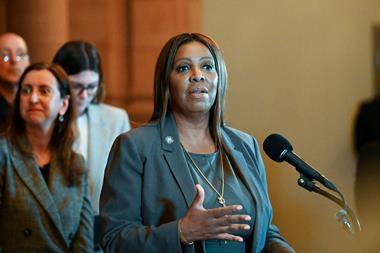
On 2 June, Marcia McNutt delivered her final address as president, highlighting the problems currently faced by the sciences in the US including the growing ‘uncertainty in federal support’ and ‘abrupt downsizing’ of US science agencies. Her address comes just days after the White House released a proposal designed to give political appointees power over federal research grant funding decisions, sparking new waves of concern amongst the scientific community. What options do scientists have in the face of these political challenges?
Have your say: you can submit your comment here until July 13 for the latest White House proposal.
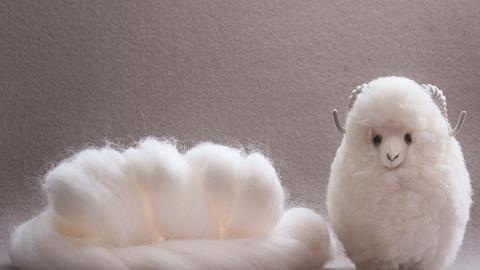
And, from merino to cashmere, this modest fibre has formed the basis of many of our household textiles for over 3500 years, and it’s easy to see why. This material possesses an incredible range of unique properties; it’s naturally flame-retardant and stain-resistant, it can stretch to around 70% of its natural length, and can absorb up to 30% of its own weight in water without feeling wet. In the age of fast fashion and increasing environmental concern, it’s no wonder we are returning to reliable wool as our fabric of choice. But what is the chemistry underlying these characteristics?
We would love to hear your feedback on this new podcast, so if you have any questions or comments please get in touch.
Introduction and News Roundup
Mariana Kneppers
Marcia McNutt gave her final address as president of the US National Academy of Sciences earlier this month, warning of turmoil for science in the wake of further proposals by the White House to restrict funding. We discuss highlights from the event. And how does the chemical composition of wool contribute to its material properties? We explore this staple fabric and its uses beyond clothing.
I’m Mariana Kneppers, Chemistry World’s science media producer, and this is the Chemical Breakdown. We’ll be diving deeper into these stories shortly, but first, let’s take a look at this week’s news from the Chemistry World website.
Mariana Kneppers
Scientists have developed a photochemical reaction that converts pyrosoles into imidazoles by swapping a nitrogen and carbon atom in a single step. The method leaves the rest of the molecule untouched, opening a straightforward route to compounds that are otherwise expensive or require bespoke synthesis.
A new generalised mass spectrometry method leverages electrophilicity to rapidly rank reaction outcomes in experimental screens. This method evaluated samples more than 60 times faster than conventional analytical methods, and addresses a key bottleneck in high-throughput experimentation and compound library generation.
Specialty chemicals manufacturer Evonik plans to cut 3,200 jobs between 2027 and 2029 and will discontinue its global polyester business. Evonik attributed the cuts to the uncertain global political situation, weak economic growth, and increasingly fierce international competition.
An artificial intelligence model is able to fill in missing or incorrectly placed atoms, such as hydrogen, in the crystal structures of inorganic materials. Refining atomic positions in this way may allow chemists to better simulate material structures or help design new materials such as superconductors.
You can find these stories and more online. Just visit chemistryworld.com for more of the latest news in the chemical sciences.
State of Science Address and Policy Concerns
Mariana Kneppers
On June 2nd, the outgoing head of the National Academy of Sciences, Marcia McNutt, delivered her final address, highlighting the problems currently faced by the sciences in the US. Among others, she discussed the growing uncertainty in federal support and abrupt downsizing of US science agencies.
Her address comes just days after the White House released a proposal designed to give political appointees power over federal research grant funding decisions, sparking new waves of concern amongst the scientific community.
We’ll be breaking down McNutt’s speech and reviewing the reactions to the latest White House proposal. Here to discuss today’s stories are Chemistry World’s senior US correspondent, Rebecca Trager, and features editor Neil Withers.
Mariana Kneppers
Hello to you both.
Neil Withers
Hello.
Rebecca Trager
Happy to be here.
Mariana Kneppers
Now, Rebecca, this all took place at the State of Science Address, which is hosted by the U.S. National Academy of Sciences. Can you give us a bit of background? What exactly is this agency?
Rebecca Trager
Sure. Well, first of all, Marsha Ring-Nutt is a geophysicist, and she directed the U.S. Geological Survey under former President Obama from around, I think, 2009 to 2013.
And since 2016, She has served as the president of the U.S. National Academy of Sciences. It’s A non-governmental, non-profit society of scholars that was established more than 160 years ago to provide independent, objective science and technology advice to the government.
So her second five-year term as head of NAS ends on June 30th, and she’ll be succeeded by University of Chicago, Neil Shubin. He’s an evolutionary biologist.
Mariana Kneppers
Now, Rebecca, Marcia McNutt touched on quite a few subjects in this address. So let’s break some of those down here today.
She said that in this year, science policy has been, quote, filled with turmoil. Can you give some context here? What are some of the things she touched on in this regard?
Rebecca Trager
She was referencing really. these dramatic budget cuts that the Trump administration has proposed for key research agencies for the current budget year, fiscal year 2026, as well as the upcoming fiscal year 2027, which begins on October 1st.
And she thanked Congress for rolling back those steep reductions for 2026. Obviously, 2027 is yet to be determined, but I covered how Congress reversed those as they had during Trump’s first administration. And the research community is really hoping that Congress will do the same for this upcoming 2027 budget cycle.
Mariana Kneppers
Yeah, that was a really big win, wasn’t it, for science supporters everywhere in the US?
Rebecca Trager
Yeah, it happened last time around, but given the current makeup of Congress, there was some concern that it might not happen this time around, but it did.
So besides these budget uncertainties, she also expressed concern about what she called the abrupt downsizing of US science agencies under the current administration.
And she pointed to estimates that have really indicated about 100,000 or more even employees at US research agencies have left between late 2024, after Trump was reelected but had not started to serve as president again, and now mid-2026.
She said they’re very lean and unable to fulfil their ambitions. And she also talked about how key personnel leaving undermines institutional knowledge, takes that institutional knowledge away.
And she’s worried that leaders have been installed at some of these agencies. since Trump was inaugurated for the second time, lack scientific backgrounds and training. So that was another concern she raised.
Mariana Kneppers
Now, something else Marshall McNutt mentioned was this loss of international talent. Can you elaborate a bit on that?
Rebecca Trager
There was recent analysis from the National Science Board that foreign student enrolment in S&E fields and in higher education in US institutions dropped. 9% since this past autumn compared to the previous year. And she’s worried about maintaining the pipeline of researchers here in the US as well.
Mariana Kneppers
Yeah, of course. She covered quite a bit in that address and a lot of things that have been on, I imagine, a lot of our minds.
Now, she also had some suggestions with how to address. some of these things, one of which was realigning the academic reward system. Can you break that down for us? It was quite an interesting approach that she suggested.
Rebecca Trager
Yes, you’re right. She called for the promotion and tenure system to be updated at US universities. She doesn’t want them… to rely anymore on the sort of traditional and maybe suboptimal indicators of academic success.
So we’re talking about research grants awarded, scientific publications, citation counts. She wants that system to move more towards metrics that kind of demonstrate, illustrate the broader scholarly contribution of a researcher’s work.
And this, she says, would make it easier to recruit junior faculty and encourage more senior faculty to stay. And she pointed to a few examples of universities that have had success piloting this idea.
White House Proposal and Scientific Response
Mariana Kneppers
Now, the backdrop of much of this speech, of course, was the White House’s recent proposal to give political appointees power over federal research grant funding decisions. Was this being discussed at all during the event?
Rebecca Trager
So she did actually specifically bring up this very controversial proposal. It came out of the White House Office of Management and Budget at the end of May. And as you correctly described, it would give political appointees power over who receives federal grants.
And it actually asserts that, and this is a quote, peer review remains advisory and does not replace agency discretion, which is a change in perception and in the concept of…
Mariana Kneppers
It’s quite strong wording as well.
Rebecca Trager
Correct. And she almost started off her address by warning that if this proposal is enacted, politicians can decide what research is funded by US science agencies and what meetings that those who are funded with government dollars are allowed to attend and whether and where the results can be published.
So very significant stuff. And she brought that up as one of the first topics.
Neil Withers
What’s the sort of time frame for this going forward? Is it going to be in this year’s grants, in next year’s, or? Do we know more about it?
Rebecca Trager
The proposed changes are slated to take effect at the beginning of October when the financial year begins, but they’re accepting comments through next month. It’s gotten more than 26,000 comments so far. So there’s obviously reaction to it.
Mariana Kneppers
Are there any details on how this practically would be enacted? I mean, or is it, at the moment, is it just a very big announcement and, it’s just reactions are being received?
Rebecca Trager
The administration has made this sort of proposal in a couple of different forms. This is the first time it was codified in actual proposed rule.
And it would fundamentally change the focus of deciding who gets funded with federal dollars from the system we’ve all known, peer review and so forth, to political appointees who don’t necessarily have any scientific background making those decisions directly.
I don’t know the sort of structural ways that would occur if this is enacted, but at least it would be a very significant shift in the process and obviously be very concerning to the research community that’s undermining merit review.
Neil Withers
I mean, you say there are 20,000 comments on this proposal. Will they pay any attention to that?
Rebecca Trager
Remains to be seen. I mean, I’m from what I’ve seen, it’s hard to find some anything positive among those comments. The research community really mobilised not, you know, beyond Marsha McNutt talking about it.
Mariana Kneppers
The interesting thing about it as well is the fact that it was released quite quietly. Like there wasn’t much fanfare with, you know, this proposal being released.
And yet, There are so many comments already submitted against it. That, to me, says that people really are switched on and paying attention. And I think we’ve all, I say we because I grew up in the US, but I think scientists within the US have had to become accustomed to keeping an ear out for these kinds of announcements and being able to make their voices heard.
Yeah, as you say, this isn’t the first time that something like this has been announced.
Introduction to Wool and Its Properties
Mariana Kneppers
Humans have been wearing wool for centuries. From merino to cashmere, this modest fibre has formed the basis of many of our household textiles for over 3,500 years.
And it’s easy to see why. This material possesses an incredible range of unique properties. It’s naturally flame-retardant, stain-resistant, it can stretch to around 70% of its natural length, and it can absorb up to 30% of its own weight in water without feeling wet.
In the age of fast fashion and increasing environmental concern, it’s no wonder we are returning to reliable wool as our fabric choice. But what is the chemistry underlying these characteristics? So Neil, what are these properties of wool that make it such a suitable fabric?
Neil Withers
Like you say, it’s all in the chemistry, and a lot of it is to do with coils and spirals. So at the very basic level, it’s made-up of sort of these alpha helices with these proteins, and these are then twisted together, and then there’s other bits that twist, and so it’s all these twists, and that gives it a lot of air pockets, which is what makes it so insulating.
So it’s got this structure that allows it to keep these little, tiny little bits bits of air, and then on a bigger scale, slightly bigger bits of air, which makes it really well insulating. And a lot of these proteins are quite high in sulphur, which give you slightly different properties to oxygen and nitrogen bonds. They give a bit more strength, and they’re also responsible for, as you say, wool’s property to absorb water.
Water Absorption and Resistance
Mariana Kneppers
I see, okay. And what is it about wool in terms of, it’s, you know, we mentioned that it can absorb loads of water without feeling wet. What underlies that? You mentioned the sulphur, but without the feeling of actual wetness, where’s the water going?
Neil Withers
Well, I think it’s just going in the structure and in amongst it. But actually, if you think about wool as a, you know, on a bigger scale as a fabric, each strand has actually got this lanolin, this sort of natural waxy material. which actually gives the exterior of the wool a sort of almost slightly water-resistant property.
If you imagine a bit of wool cloth stretched out, if you put a drop of water on it, would actually bead up for quite a long time before it absorbed into it. So although it can absorb it on a micro level, on a sort of a closed… level, it is actually naturally slightly water resistant because of this oil, these natural oils from the sheep, the lanolin, which gives it, yes, slightly water resistant property as well.
Mariana Kneppers
That’s so interesting. So it can do both. It absorbs water and repels water.
Neil Withers
Yeah, and that makes it more breathable because it means that it can absorb it on a sort of small scale structural level, but on a bulkier scale, on a piece of cloth, then the water vapour can get through those pockets and the tiny droplets don’t want to stick to it so it can go through, which is why it’s so prized for more technical fabrics for that warmth with the breathability.
Merino Wool and Sheep Breeds
Mariana Kneppers
Speaking of technical fabrics, merino wool is obviously kind of the latest craze when it comes to wool. Everybody speaks of It’s very highly for its use in technical fabrics and sports materials, things like that. Now, where does Merino wool come from? Is that like a specific sheep? Is there a Merino sheep?
Neil Withers
Yes, that’s just that’s just a breed of sheep and different breeds of sheep produce different types of wool and they have different properties.
And so Merino sheep produce what they call high crimp type of wool, which I think is more those coils are more tight and that results in a softer, stretchier wool because those tight coils can then be stretched. and relaxed back.
Whereas other type of sheep, Lincoln long wools, an example in the article, produce longer, straighter fabric molecules, that’s perhaps not the right word, but in individuals, tiny threads, that makes it stronger, but makes it rougher and coarser and so less pleasant, more suitable for things like rugs and carpets, which is another thing that wool is still used for in many houses around the world.
Itchiness, Texture, and Allergies
Rebecca Trager
So I’m curious, when you think of wool, the concept of scratchiness, of itchiness comes to mind, is that a deserved reputation? And if so, why or why not?
Neil Withers
I think it depends on the type of wool because things like merino and cashmere are very, very soft, very comfortable against the skin.
Whereas yeah, absolutely, there are some types of wool that I, oh, I can’t stand the thought of it, that sort of itchiness against the skin. And I think that’s again about the structure within these cortical cells and the longer, the less wavy, the less crinkly the fabric is, then that makes it stronger and stiffer and probably more prickly against the skin.
Whereas the more curly, shorter, softer ones are much better against the skin. So again, it’s just down to the different type of breeds.
And I did mention the lanolin earlier, and I think some people can have allergies to that, I think, because it’s a natural animal product. And I think some people can have allergies to it, and it can be used in, I think, lipsticks and other cosmetics. another useful wool.
and I know that I think some people can get a reaction to that, so I guess some people might have a reaction to the lanolin, but I think for most people it’s just that, if you imagine the longer, stiffer fibres are just a bit more prickly and a bit more annoying, whereas the curly ones, strangely, are smoother and softer, which is where the merino and cashmere comes on.
Rebecca Trager
That’s so interesting. I never thought of that itchiness related to wool as possibly having to do with an allergy. Fascinating.
Mariana Kneppers
Yeah, that’s an interesting bit, because before I was reading up for the story and I did see online, I think that lanolin thing is definitely, there is definitely an analogy for it, but a lot of people…
almost misdiagnose themselves with an allergy exactly for that reason, Neil, because of the texture of the particular wool they’re wearing. I think people, they imagine wool as one kind of uniform fabric, but the fact is you have things like cashmere or merino, which can be very soft to the touch, but some of the scratchier wools, sometimes they do use them in sweaters and they give it that really cool fuzzy texture, but can be a bit more irritating on the skin. And maybe that promotes an irritation, but maybe less of an allergy. It’s more of like a surface irritation, I guess.
Neil Withers
I mean, it just, as you’re talking about it, it’s incredible to think that, you know, the same basic material you can have from something like a… soft linen or cashmere base layer all the way to a woolen overcoat or even a carpet. And that’s just the difference in the structure of how it’s made in a sort of a, not the micro level and not the, not how it’s woven, but sort of in between the two, that sort of meso scale difference.
Synthetic Fabrics vs Wool
Mariana Kneppers
Yeah, absolutely. So we’ve used wool for centuries and centuries and centuries, but as time has gone on, we’ve moved towards more synthetic fabrics, which when they first came into the picture, started to out-compete wool.
But wool does have all these incredible properties. So I do wonder why these synthetic materials, why people even needed to invent them when wool already does so much.
Neil Withers
I think like so many things, it’s probably just cost. You know, if you think you don’t have to rear the sheep, you don’t have to feed the sheep, you don’t have to shear them, you don’t have to spin the cloth.
If you can create polyester or nylon in the lab, and I’ve seen pictures of these incredible machines where it’s all being spun out to form the filaments all ready so it doesn’t have to go through two or three spinning processes. And so it’s, as with so many things, it’s just a case of cost. And these synthetic fabrics are just much cheaper to produce.
Mariana Kneppers
Yeah. Are they filling any other shortcomings of wool? I mean, do things like nylon or polyester, aside from being cheaper, is there anything else that they’re kind of, they do better than wool?
Neil Withers
I think it depends on the application. I mean, there are certain fabrics, polypropylene that doesn’t absorb any water at all. And so that’s very good as a kind of a base layer material in that the sweat and vapour passes straight through it to the next layer.
But of course, a lot of these synthetic fabrics, they don’t shrink, which is one of the big problems that wool has. I’m sure we’ve all had a favourite woolen jumper that now no longer fits.
Why Wool Shrinks
Mariana Kneppers
Yeah, exactly. So what happens behind the scenes? I mean, is that just… the proteins within the wool, are those, structurally changing.
Neil Withers
That’s actually, again, that’s not a microscopic thing and it’s not the woven nature again, it’s that sort of in-between level. So an individual thread of wool has got scales on, that’s just how the keratin fits together.
And when things go in a washing machine, imagine they’re getting messed around, they’re rubbing against each other, there’s heat and water. And what happens is the scales actually kind of overlap and cross into each other. And that just causes it all to sort of tense up a little bit. And that’s what causes the shrinkage. It’s the scales overlapping and gripping onto each other.
Mariana Kneppers
Does that mean there’s a way to reverse it? Like if you…
Neil Withers
Well, I’m just wondering that, because you know, I’ve got some jumpers that no longer fit that. I’d love to, but I don’t think there is, because it wouldn’t even be between different strands on, say, a jumper or whatever, but it would be within the strands that they’ve just all got a little bit too close together, a little bit locked.
They’re obviously not all perfectly in line in the same direction. So I think if you imagine that in every single fibre, in every single warp and weft of something, then it’s very hard to undo that, isn’t it? There’s a huge metropic leap to try and do that.
Mariana Kneppers
Yeah, definitely. Oh gosh, stresses. It reminds me of having like a bundle of headphones that are all tangled together. It’s just, there’s no way you can undo that once it’s happened.
Neil Withers
Yeah, And then imagine that across a jumper’s worth of threads. It stresses me out.
Biotechnology and Wool Production
Rebecca Trager
So Neil, I’m wondering if you can talk a bit more about how advances in biotechnology have affected the production and the characteristics of modern wool?
Neil Withers
Interestingly, I don’t think on the level of ordinary wool clothing that we’re buying, I don’t really think it has much.
I think that It’s just down to the breed of the sheep and how it’s woven together. And we’ve been breeding different types of sheep for thousands of years. So I think it is just at that level that you breed the specific characteristics that you want into sheep, or we have done that over the past hundreds of years.
Yeah, it’s not like it’s being grown in a lab, it’s still grown on the back of a sheep in a field. So perhaps there is a scope out there for people to be engineering improved sheep. with anti-shrink wool, for instance. I mean, that’d be amazing, wouldn’t it? So maybe that’s what we should all be looking out for.
Rebecca Trager
But for now, it’s just a natural process.
Neil Withers
Yeah, I think so. I think on the scale it’s done. Yeah, I think it’s all just sheep being sheared and wool being spun and woven.
Future Applications and Recycling Challenges
Mariana Kneppers
It really brings to mind, if it ain’t broke, don’t fix it. You know, like wool has… been such a reliable material for us for years and years and years. What are kind of the more futuristic applications of wool that are out there or maybe are already being used nowadays? Things that we wouldn’t think of initially.
Neil Withers
Some of these properties are also useful for other things, not just clothing and carpets. And one thing is like a water filter. Because if you can imagine, we’ve been talking about pores and we’ve been talking about water going through it and these sulphur-sulphur bonds.
There’s lots of hydrogen bonds in there as well. And so that means that water can pass through it, but certain things stick to it. I think there’s one group where they used electron beam irradiation to slightly tinker with these sulphur groups. And then that means that they’re able to bind to metal ions as they pass through a woolen filter.
and it can distinguish between copper 2 and chromium 3 if you have those two in a mixture. And that’s the kind of thing that you would want to try and be able to separate those, say on an industrial scale or for environmental remediation. And so, yeah, there’s more to wool than just the clothes.
Mariana Kneppers
So nowadays we have these modern fabrics like nylon, polyester, all these things, but there’s also an emerging of blended fabrics. How does this affect things like fabric recycling where, you know, pure wool is more or less, it’s a simple process to recycle. But when you mix it with these other artificial materials, how does that affect the process?
Neil Withers
Yeah, that’s, well, with a lot of plastic recycling, polymer recycling, the problem is that they’re blended. And so you need to use several different processes and it becomes incredibly difficult.
And of course, one thing with wool is that as it’s a natural material, it would biodegrade at the end of the day as well, which is fine. So it wouldn’t, you know, be sticking around forever. But so blended fabrics, like everything else, can be a problem.
So most blended fabrics, kind of polyester and wool mix, will end up having to be degraded mechanically. Most of it will end up not being used in clothing again, because that’s quite an intensive process that damages everything. And so people are looking at enzymes to try and recover some of the bits of the wool blends because the enzymes, natural things, will go for the natural fibres, the wool, and will sort of give you back the virgin wool, leaving behind the polyester to be then recycled in a different way.
Mariana Kneppers
Oh, I see. Okay. So because it is a natural fibre, it’s easier for an enzyme to distinguish between, you know, something that is quite structurally different.
Neil Withers
Yeah, so because there are presumably enzymes out there that are used to dealing with wool and natural things, then they’re able to go for it.
Conclusion
Mariana Kneppers
Yeah, gosh, really interesting. Wow. Well, it’s definitely a material that has served us for many, many thousands of years and hopefully many thousands of years to come as well. So thank you both so much.
This Week in Chemistry History
Mariana Kneppers
And finally, this week in chemistry history, Fred Hoyle, the father of nucleosynthesis, was born on June 24th in 1915. Hoyle was a precocious boy from Gilsted, Yorkshire, fascinated by chemistry and the universe.
By age 9, he was navigating by the stars. By age 13, he was spending his evenings exploring the cosmos by telescope. And by age 15, he was running explosive chemistry experiments in his mother’s kitchen, using chemicals from the local pharmacy.
His studies took him to Cambridge, where he published his first papers on what makes stars shine. leading him to his hypothesis that stars evolved by accreting interstellar gases.
But his service during World War II is where Hoyle met Hermann Bondi and Thomas Gold, with whom he collaborated on his steady-state theory of the universe.
At the time, science was searching for an explanation for the start of the universe and the origin of the chemical elements.
The prevailing belief was theorised by Belgian cosmologist and Catholic priest Georges Lematre, who claimed it began with the explosive expansion of a single primordial point.
Hoyle was staunchly against this notion. As A passionate atheist, he felt this, quote, Big Bang theory mirrored the religious idea of a single moment of creation.
In fact, he was the one who accidentally coined the term Big Bang theory himself during a radio interview, intending it as a pejorative name.
Instead, Hoyle promoted the steady state theory, the idea that the universe had no beginning or end.
Instead, it maintains a constant average density because matter is continuously created to fill the expanding space.
While this theory acknowledged that yes, the universe was expanding, it didn’t account for the creation of the elements. Without the intense heat of this Big Bang explosion, how were the elements created?
Hoyle’s answer was that they were created in the stars, acting as cosmic cookers.
As heavy stars exhaust their hydrogen and helium fuels, the cores contract, reaching temperatures high enough to fuse progressively heavier elements. He called the process nucleosynthesis.
It was a convincing argument, but one link was missing, the creation of carbon, the chemical backbone for all life on Earth.
Even the Big Bang Theory struggled to explain this, as it only accounted for the creation of elements up to lithium.
Scientists knew that two helium nuclei could combine to form beryllium-8, but this was highly unstable and broke down almost instantly before a third helium could be added.
Hoyle knew for his steady state theory to stand, he had to determine where carbon came from.
After extensive work, he calculated that for carbon to form within stars, the carbon-12 nucleus must have a highly specific excited state that acts as a catalyst.
He urged physicists to put his calculations to the test, and sure enough, in 1957, it was confirmed. They termed this state the Hoyle state.
This discovery explained this fundamental gap in our understanding of the universe and single-handedly explained how life formed as we know it.
Hoyle’s contribution earned him the title of the father of nucleosynthesis, and his work formed the foundation of several core pillars of the discipline.
As for his steady-state theory, Hoyle refused to give up this idea despite growing observational evidence. He stood by the theory until his passing in 2001.
Outro
Mariana Kneppers
That’s all for this edition of the podcast. If you’re interested and want to hear more about any of the items we’ve covered, check out chemistryworld.com for more of the latest stories in the chemical sciences.
You can also sign up for our weekly newsletters like Reaction, giving you a hand-picked selection of stories from Chemistry World and beyond, from newsletter and research editor Jennifer Newton, or our industry brief containing essential analysis and insight on the industrial side of chemistry from business editor Philip Broadwith.
I’m Mariana Knepers. We’ll see you next time.
SEO Keywords
Marcia McNutt NAS speech, US science policy funding, White House research grants proposal, National Academy of Sciences address, wool chemistry properties, merino wool structure, lanolin water resistance, synthetic fabrics vs wool, wool recycling enzymes, Fred Hoyle nucleosynthesis, Hoyle state carbon, chemistry podcast transcript
This transcript was generated by AI and checked by a human editor
















No comments yet