
Moisture analysis underpins quality control across industries from battery manufacturing to food safety. Karl Fischer titration remains the gold standard for water content determination, but accuracy depends critically on reagent selection. When standard formulations encounter reactive matrices, from lithium-ion electrolytes to non-polar oils, side reactions can compromise results, with consequences extending far beyond the laboratory.
Every analytical method carries a weight of consequence. Often, that weight is manageable: an out-of-spec result triggers a repeat, a review, or a corrective action. But in some applications, inaccurate moisture determination has far broader consequences beyond slowing operations down. It contributes to batteries that degrade faster than they should, oils or fuels that fail in service, and food products that spoil well before their stated shelf life.
Karl Fischer titration has been the accepted standard for moisture analysis for nearly a century, and the underlying chemistry hasn’t changed. What has is the range of materials scientists are now being asked to test and the cost of getting it wrong. That cost rarely presents itself as an analytical problem. It shows up much later, as a product problem with real safety repercussions.
Lithium-ion batteries
The electrification of transportation depends on, among many things, the reliable performance of lithium-ion batteries. They need to be produced with moisture control at a level of quality that meets stringent safety requirements, from raw materials through to the final cell assembly.
Water reacts with lithium hexafluorophosphate, the conducting salt used in most commercial lithium-ion electrolytes, to generate hydrofluoric acid. Even at trace levels, that reaction reduces battery capacity, accelerates degradation, and introduces a genuine safety hazard. Accurate moisture analysis at parts-per-million concentrations, is a non-negotiable capability for the manufacturers and researchers developing next-generation battery cell chemistry.
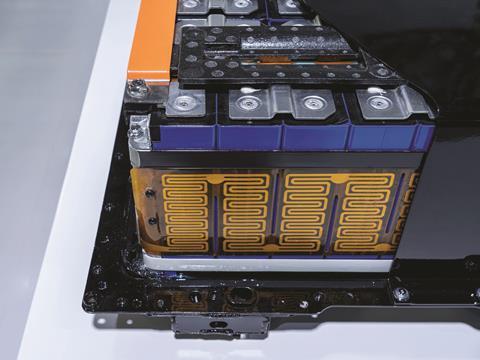
Karl Fischer titration, particularly coulometric Karl Fischer titration, is well-suited to measurements at those concentrations. However, materials in modern battery electrolytes are complicated as they behave unpredictably in conventional Karl Fischer reagents.
Electrolyte additives such as vinylene carbonate and fluoroethylene carbonate undergo side reactions with the alcohol present in standard formulations, producing unstable endpoints and results that bear little relation to the actual water content of the sample. Lithium borate salts, increasingly used to improve high-temperature electrolyte performance, present the same problem. Using an alcohol-based reagent with these materials produces an inaccurate result that that looks plausible instead of flagging as suspect.
Alcohol-free formulations provide an answer. Hydranal Coulomat A-FA and C-FA, from Solstice Advanced Materials Research Chemicals, are the only commercially available Karl Fischer reagents that are both alcohol-free and imidazole-free, removing the side reactions that compromise accuracy in reactive matrices.
Oils, lubricants, and fuels
The same principle applies across a wide range of industries making innovative breakthroughs and the safety implications:
- In transformer oils, water content is a direct indicator of remaining service life, and monitoring it accurately is part of protecting infrastructure that is expensive to replace.
- In lubricants, water contamination accelerates mechanical wear.
- In crude oils and fuels, moisture affects both quality specifications and commercial value. In high-stakes applications such as aviation fuels, even trace water can separate and freeze at altitude, forming ice crystals that compromise fuel system integrity and performance.
Many of these applications require detection below 10 ppm, placing the measurement in territory where reagent quality and formulation have a direct bearing on outcome.
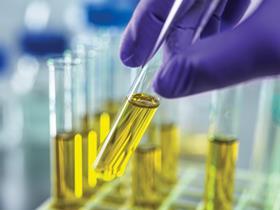
The challenge in oil analysis is a polarity mismatch. Standard Karl Fischer reagents are alcohol-based, while oil samples are non-polar and won’t dissolve cleanly in that medium. A reagent formulated with appropriate solubilising agents allows accurate analysis across a range of oil types while maintaining the conductivity that coulometric cells require.
Hydranal Coulomat Oil is designed specifically for this application. Across matrices as varied as crude oil, silicon oil, transformer oil, and unleaded fuel, water recovery rates consistently above 99% have been demonstrated with Hydranal Coulomat Oil (with relative standard deviations that reflect the reproducibility process monitoring demands).
Food and beverage
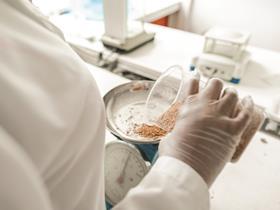
Inaccurate moisture determination can push food and beverage products beyond critical stability limits, creating conditions for microbial growth, shortening shelf life, and exposing manufacturers to quality failures, recalls, and regulatory risk.
Whether the sample is an edible oil, a dehydrated ingredient, or a food-grade solvent, Karl Fischer titration is the method most commonly specified in these workflows, and the same logic applies: the reagent needs to match the matrix. Hydranal volumetric KF reagents, such as Hydranal Composite 5, Hydranal Methanol rapid, and volumetric Hydranal Titrant 5 with Hydranal Solvent FIare are engineered for stability and accuracy across complex food matrices, helping ensure moisture results you can defend with confidence.
Hydranal is engineered for the science of tomorrow
Across industries and innovations, an unsuitable reagent can introduce much more than uncertainty. It can produce results that appear valid while misrepresenting the moisture content of the sample, and those results move along the supply chain before the problem surfaces. The analytical method is only as reliable as the chemistry behind it.
For more than 50 years, Hydranal has set the global benchmark for Karl Fischer titration. The portfolio comprises volumetric and coulometric reagents, certified water standards, and auxiliaries designed for the full range of sample types, from routine aqueous matrices to the most chemically demanding. Specialist formulations address the specific challenges of non-polar samples, reactive ketones and aldehydes, and sensitive electrolyte chemistries where standard reagents fall short. Every batch is tested for water content, reactivity and stability, while certified water standards are traceable to pure water, giving laboratories calibration confidence at both ends of the concentration scale.
Reliable moisture data goes well beyond meeting a specification. The real value lies in producing results that can be trusted at each stage of a manufacturing process, so that the decisions made on the back of that data are sound. The science behind next-generation batteries, cleaner fuels, and safer food depends on that assurance. When the measurement is the control point, getting it right is what safe innovations — and the labs that lead them — rely on.
Explore Hydranal Karl Fischer titration reagents, certified water standards, and auxiliaries from Solstice Research Chemicals




No comments yet