Inorganic chemistry – Page 4
-
 Research
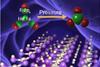
Reactivity of helium could be unlocked by a combination of fluorine and extreme pressures
Computational studies reveal covalent helium-fluorine bonds
-
 News
NewsScience retracts controversial ‘arsenic life’ paper 15 years after it was published
Contentious study continues to make waves as authors and researchers argue over whether action is proportionate and beneficial
-
 Opinion
The atomic weights of most chemical elements aren’t constant
But those values are constantly refined
-
 Feature
How atomic weights change with scientific understanding
Why do the atomic weights on the periodic table keep changing? Kit Chapman meets the team behind the decimal places
-
 Research
Evidence found of nanocrystals lurking in low-density ‘amorphous’ ice
Findings may have wide-ranging implications, from the origins of life to the characterisation of technological glasses
-
 Research
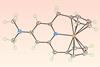
Organometallic compound found to break textbook principle
A ferrocene-derived complex is a further exception to the 18-electron rule
-
 Research
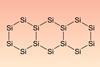
Silicon-based ‘ladder molecules’ take a step up in complexity
New compounds are ‘among the most complex organosilanes ever synthesised’
-
 Research
Lanthanide–carbon triple bond synthesised and characterised
Cluster stabilised within a C80 fullerene cage
-
 Research
Centrosymmetric crystal displays chiral optical responses previously believed to be impossible
Crystal with perfect symmetry around its centre surprises scientists with its asymmetric response to light
-
 Research
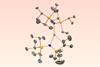
Linear structure gives dysprosium complex record-breaking magnetic properties
A new dysprosium-based single-molecule magnet works at higher temperatures than others in its class
-
 News
NewsHow to find out if your magnetic stirrer is affecting your results – and how to fix it
Valentine Ananikov explains how the humble stirrer bar may be altering your results
-
 Research
New seaborgium isotope detected at German accelerator
Findings offer ‘exciting hints’ on the impact of shell effects on the fission properties of superheavy nuclei
-
 Research
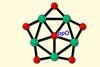
Unprecedented pentacoordinate oxygen cluster isn’t so new after all
Scientists design a star-shaped dianion only to discover it had probably been synthesised nearly two decades ago
-
 Research
There is unexpected chemistry going on in lithium deposits
After decades understanding pH controls boron speciation in seawater and other saline waters it turns out the opposite is true with lithium brines
-
 Research
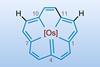
First planar annulene compounds with metal centres synthesised
Flat structures add a new building block to organometallic chemists’ toolkit
-
 Research
Trithorium superatom confounds with its unexpected and ‘mind-blowing’ diamagnetism
Nanocluster behaves like a ’super alkali-metal’
-
 Research
Actinide bonding could be tweaked by adjusting oxidation states
Modelling reveals that control of mysterious phi bonds could change behaviour of f-block elements
-
 News
NewsAustralian who ordered radioactive materials over the internet walks away from court
Emmanuel Lidden had been attempting to collect every element on the periodic table
-
 Research
Mercury-free electrochemical lithium isotope separation could fuel a fusion future
Vanadium oxide pores selectively sequester sieve lithium isotopes
-
 Research
Robot ramps up accuracy of AI salt stain identifier
Database with three times as many images as before boosts accuracy of technique to almost 99%