Future talks between Iran and the US are unlikely to rescue supply shocks to chemicals. Even if successful, negotiations will not quickly solve problems with fertilisers and commodity chemicals. This is a consequence of far fewer ships transiting the strait of Hormuz for weeks, as well as the targeting of energy and chemical infrastructure during the war with missiles and drones.

‘It seems like a lot of damage has already been done,’ says Seth Goldstein, a chemical equity analyst at Morningstar. ‘Even if the strait fully reopened, the bigger part of the supply shock has yet to really take hold.’ This is in part because the last cargoes that left the Gulf before the war will now mostly have arrived at their destinations, with little indication of when future shipments might reliably resume.

A small grey US military ship sailing near an outcrop of rocks. A helicopter flies above.

Source: © U.S. Central Command Photo/American Photo Archive/Alamy Stock Photo

The US blockade of Iranian ports adds further pressure to fragile ceasefire negotiations

The supply crunch on hydrocarbon exports quickly fed through to price rises, with crude oil rising from around $60 a barrel to around $100, with even higher spikes. Petrochemical facilities in China and the rest of Asia rely on feedstocks from the region, especially naphtha. Japan imports 70% of its naphtha from the Middle East and South Korea 50%, according to S&P Global.

One consequence has been significant shutdowns of ethylene capacity in South Korea and Japan, notes Sebastian Bray, head of chemicals research at investment bank Berenberg. ‘China has the advantage of substantial strategic oil reserves and the ability to utilise coal-to-chemicals more than other parts of Asia.’ There have been significant cuts in output in basic chemicals such as ethylene and propylene as well as intermediates like polyethylene, polypropylene and styrene, says Steve Lewandowski, petrochemical analyst at Chemical Market Analytics. ‘We reckon operating rates last week dropped 5% to 6% for petrochemicals,’ he adds.

Meanwhile, retailers are still buying and selling goods made with these polymers, running down stocks, Lewandowski explains: ‘We’re still trying to clarify what is going on in the broader petrochemical chain.’

The rise in production volumes before the war for polymer building blocks such as ethylene, propylene, butadiene and benzene – the result of capacity building in China – meant that inventory levels were high, initially insulating industry somewhat from the Iran supply shock. ‘Starting this conflict with an oversupply means the impact was delayed,’ says Goldstein. Nevertheless, analysts believe that the situation will change soon. ‘Everybody in the chemical value chain likely had a few weeks’ supply,’ says Goldstein. ‘If the crisis persists much beyond April, then for certain chemicals we may have greater problems.’

Some can benefit in the short term. Europe increasingly sourced chemicals from the Middle East and cheap imports from China had put crackers under pressure, with shutdowns and closure plans. Now there could be a reprieve – at least temporarily. ‘Maybe that big wave of supply closures that were set to happen in 2026 won’t and plants stay online longer because higher prices will support them,’ says Goldstein. There seems to be upward momentum for several commodity prices in the near term, Bray says.

Meanwhile, chemical producers with access to cheap ethane from US shale gas extraction, such as LyondellBasell and Dow, will likely profit from increased prices. ‘The higher oil goes, the more attractive ethane is for making ethylene,’ notes Lewandowski. North American production can fill some gaps, since its refining capacity was previously running at around 80%, says Goldstein, and it has some spare capacity to alleviate some of the supply shock. Analysts, however, say that fracking firms in the US will not invest in more extraction infrastructure, nor will more chemical facilities be built in response to the war. ‘The US doesn’t have an infinite supply of cheap feedstock. When you exhaust what you have, the remaining feedstock can be expensive,’ says Lewandowski. Also, everyone is aware that Middle East suppliers with access to cheap feedstocks will come back online eventually.’

The war could lead some facilities to close. ‘I think most Chinese capacity will come back online,’ says Bray, notwithstanding existing plans to modernise the Chinese chemical industry by replacing older plants with larger, more efficient facilities. ‘It is an open question whether less competitive southeast Asian capacity in South Korea, Thailand and a few other [places] come back online after being shut down because of feedstock [shortages],’ he adds.

Fertiliser feeling the pinch

The Gulf is also major producer of various fertilisers. By some estimates, it accounted for 45% of global urea exports and 20 to 30% of global ammonia exports. These exports are unlikely to be prioritised. ‘If the strait reopens, it is going to be prioritised for oil, [liquefied natural gas (LNG)] and maybe fuel products more than chemicals and containers,’ says Steve Lewandowski, petrochemical analyst at Chemical Market Analytics.

Some facilities need to be repaired. Iranian missiles hit the Ras Laffan Industrial City in Qatar, which is crucial for natural gas feedstocks for urea and ammonia. The war also knocked offline the Qatar Fertiliser Company, which supplies around 14% of global urea. Iran was the second largest fertiliser producer in the Middle East after Qatar, and its facilities are likely damaged. ‘Iranian facilities were probably hit hard,’ says Goldstein. ‘Some chemicals and fertilisers can [also] be inputs to explosives, so those facilities were probably on target lists.’

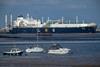
A large LNG tanker ship in an industrial port. In the foreground are small pleasure boats.

Source: © James Buttenshaw/Alamy Stock Photo

With large parts of Asia and Europe dependant on Gulf feedstocks, the longer the crisis persists, the more difficult recovery becomes

The Gulf exports large amounts of phosphate fertilisers, especially to Asian countries without much natural gas such as India, Pakistan and Bangladesh. Likewise sulfur is a vital fertiliser ingredient and a byproduct of crude oil, especially ‘sour crude’ that has been impacted by the conflict. Spot prices for sulfur have soared in China, as a result of the supply shock.

The Middle East is the largest supplier of sulfur to Morocco’s state-owned OCP, the world’s largest phosphate producer, for example. It recently brought forward maintenance that would cut its fertiliser output by around 30%. ‘My read on that is that it is down to the sulfur shortage,’ says Goldstein.

In March, China – also major fertiliser producer – began restricting exports. Countries such as Ethiopia, Malaysia and Vietnam reportedly rely on China for over 60% of their fertiliser imports. Fertiliser maker Yara warned that prolonged disruption of exports from the Gulf will impact global supply and food security. It predicted that farmers will likely scale back fertiliser purchases in response to surging prices.

Ripple effects

Some other chemicals with supplies being squeezed include helium and methanol. Qatar generates about a third of global helium, which is used in computer chip production, in welding and fibre optics and to cool superconducting magnets in MRI scanners. Helium is usually a byproduct of LNG production, so damage to facilities in Qatar took out some helium supplies too.

Iran is the world’s second largest methanol producer, with around 11% of global capacity. It is the main source of methanol imports for Asia, especially China’s east coast, according to market research firm OPIS. This is an important industrial solvent and feedstock for olefins, formaldehyde, acetic acid and avariety of other chemicals. ‘Methanol is used in the manufacture of silicones and prices for those in China have gone up significantly,’ says Bray. ‘For urea and methanol, the damage to Iran’s export capacity is uncertain but the conflict might have significant implications over the next few years,’ says Bray.

Higher commodity prices are feeding down into increases in some fine and speciality chemicals. On 30 March, BASF announced a 20% global price rise for pharmaceutical excipients and selected active pharmaceutical ingredients. ‘It’s a reaction to input cost increases and, in some cases, likely the knowledge that Asian peers may have difficulty delivering in future because of feedstock shortages,’ says Bray. ‘It’s not just in pharmaceuticals. It is in household and care. Quite a broad set of price increases.’

An unknown factor that could accentuate supply shocks is how much damage has been done to production facilities and how long these will take to repair. Qatar estimated that it would take 2–5 years to fix its damaged sites. ‘It is going to take [at least] 6–9 months before we see meaningful supply coming back online,’ says Goldstein. ‘That is assuming we have a ceasefire and we don’t see further destruction of facilities.’

Longer term, economists predict that cost rises will take time to ripple through the economy, which in turn could push down demand and economic activity. Goldstein says, given the magnitude of the supply shock, ‘we’re going to see lasting higher prices throughout most of 2026, if not into 2027 as well.’ This could dull demand for consumer goods, which in turn would be bad for the chemicals sector. ‘An environment of higher energy prices is generally bad for industrial demand globally and that will eventually show up in chemicals volumes,’ says Bray.