Medicinal chemistry
The latest chemistry news and research on medicinal chemistry including drug discovery, clinical trials, toxicology and science of disease, from the Royal Society of Chemistry's magazine, Chemistry World
-
 Research
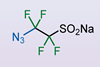
Two-in-one reagent combines fluoroalkylation with being click ready
Researchers add to growing toolkit of bifunctional reagents
-
 Business
Strikes at GSK’s Belgian sites over plans to cut 1200 jobs
Layoffs spread across R&D, manufacturing and support functions
-
 Business
Merck & Co’s US antibiotic withdrawal sends the wrong signals for combating resistance
Loss of last-resort combination Recarbrio reignites questions on how to pay for crucial but rarely-used drugs
-
 Article
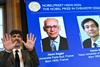
A Nobel for chiral catalysts’ helping hand
This year’s laureates didn’t invent asymmetric synthesis, but filled in our understanding of how it works and how we can do it better
-
 Business
Novo goes on deal spree amid semaglutide patent expiries
Danish firm aims to bolster pipeline of weight-loss and metabolic disease therapies
-
 Opinion
Sanctions, regulation and prices restrict access to medicines
Having medicines available when we need them is a privilege, but access more globally is complex and relies on sometimes fragile supply systems.
-
 Research
Tool flags ‘lurking menace’ isomers before they become an expensive problem for drug developers
Open-source workflow developed at AstraZeneca screens drug candidates for atropisomerism
-
 Research
Fifty years after he won the Nobel, Lipscomb’s insights into boranes continue to pay dividends
From fundamental bonding theory to practical applications, William Lipscomb’s influence can still be felt across chemistry
-
 Research
Batteries that break down in the body could power ingestible medical devices
Magnesium–molybdenum battery powers wireless trackers and stimulation capsules for days before safely breaking down in the gut
-
 Business
Screening therapeutic peptides for ‘undruggable’ proteins
Revolver Therapeutics targets transcription factors that are hard to reach with conventional drugs and antibodies
-
 Opinion
Feeding AI’s appetite for data
Tapping companies’ archives makes for better predictions of how proteins bind drugs, but any data inputs need to be transparent and attributed
-
 Podcast
Drugging the ‘undruggable’ cancer proteins & conserving the Bayeux Tapestry
How did molecular glues help crack one of cancer’s toughest targets? And we explore the chemistry behind the investigation and conservation of the Bayeux Tapestry.
-
 Opinion
‘Molecular glues’ are sticking it to cancer
Compounds that enhance selected protein–protein interactions to interfere with signalling or send proteins to be destroyed are making it possible to influence processes that were previously considered ‘undruggable’
-
 Business
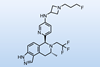
Protein degrading breast cancer drugs navigate bumpy road to market
Camizestrant is now approved in US, UK and Europe despite uncertainty over long-term benefit, while vepdegestrant is approved in the US
-
 Business
US approves pancreatic cancer treatment that targets ‘undruggable’ proteins
Daraxonrasib success offers hope of further approvals for Ras-inhibitor drug candidates targeting various cancers
-
 Business
Antibody data manipulation extends to thousands of images across 15 suppliers
Sleuths discover widespread, systematic alteration of Western blots and other antibody data
-
 Podcast
Advances in CAR-T cancer therapy & carbon materials’ hidden defects
What does recent success with bladder tumours mean for solid cancer treatment? And we discuss why scientists are rethinking how they assign peaks in spectra of carbon-based materials.
-
 Research
Benchmark flaws may be distorting AI drug-discovery leaderboards
Audit identifies subtle but consequential issues, such as conflicting labels and train–test leakage, in numerous benchmark datasets
-
 Business
Protein degrader approval offers hope to relapsed multiple myeloma patients
Highly potent molecular glue drug iberdomide doubles the number of patients reaching fewer than one myeloma cell per 100,000 in bone marrow
-
 Feature
Cracking the ubiquitin code to unlock new drug targets
The approval of the first Protac cancer drug marks a turning point in medicine – but scientists are only beginning to decode the complex molecular language that makes it possible