The US–Israeli conflict with Iran has created a crisis in supplies of fossil-derived oil and polymer feedstocks. Production and shipping through the strait of Hormuz has slowed to a trickle, affecting petrochemical and polymer producers across Asia, Europe and beyond. This disruption is bringing renewed emphasis on the need for alternative feedstocks, and so recent announcements regarding oils derived from chemically recycled waste plastic will be very welcome news.
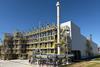
Biofuels and chemicals producer Neste has commissioned what it calls the world’s largest upgrading facility for liquefied waste plastic at its Porvoo refinery in Finland. The unit is intended to take up to 150,000 tonnes per year of raw oil output from pyrolysis and chemical recycling processes – such as Neste’s own Alterra reactors – and catalytically upgrade it into a feedstock that meets the requirements of petrochemical steam crackers as a drop-in replacement for petroleum. Construction of the new upgrading facility and its integration into the existing oil refinery began in 2023 and was completed at the end of 2025. Production will be ramped up ‘depending on market and legislation development’ the company says.

In France, Plastic Energy has begun producing pyrolysis oil from its fourth chemical recycling facility, in partnership with Total Energies. The plant has an eventual capacity to process 15,000 tonnes of plastic waste per year into its Tacoil feedstock, which will then be processed at Total Energies’ petrochemical sites. Plastic Energy already operates two similar plants in Sapin and one in the Netherlands.
On a smaller scale, Clariant has tested a pilot upgrading plant in partnership with Borealis and independent research organisation Sintef. At Sintef’s research facility in Norway, Clariant said the multi-layer hydrotreatment reactor could fully saturate dienes without forming gums, and convert contaminants containing oxygen, nitrogen and halogens, leaving behind a feedstock that meets specifications set out by refining partner Borealis.
While still in its infancy, chemical recycling of plastics has potential advantages in that it can handle mixed materials that are otherwise hard to recycle. It also produces feedstocks that are compatible with existing plastics production infrastructure, and the resulting materials have near-identical properties to virgin polymers. However, it requires significantly more energy than mechanical recycling, and not all the input material can be recovered as feedstock for new polymers – a portion generally ends up as low-grade hydrocarbons that are often burned as fuel to help power the process. This fuel fraction has ignited tangled regulatory discussions about how to classify and account for materila recycled this way, as well as criticism from environmental groups.
The technology also received a regulatory boost after a recent change in EU policy, which now the permits some chemically recycled inputs to be counted to be counted towards recycled content targets. This uses a mass-balance approach – accounting for the overall volume of recycled feedstock that is used alongside fossil feedstocks, rather than tracking recycled content specifically through the manufacturing process. The US is also consulting on changes that would no longer classify pyrolysis plants as incinerators under the Clean Air Act - a move welcomed by industry groups.
While chemical recycling has a long way to grow to make any significant dent in the millions of tonnes of unrecycled plastic waste produced every year, the technological and regulatory frameworks are slowly progressing towards a useful component of a circular plastic economy.


No comments yet