
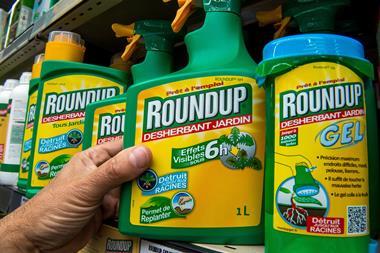
Bayer has agreed to pay up to $7.25 billion (£5.5 billion) to settle current and future US lawsuits claiming its Roundup glyphosate herbicides cause non-Hodgkin lymphoma. Payments will be spread over 17–21 years and includes some settlements that have already been paid.
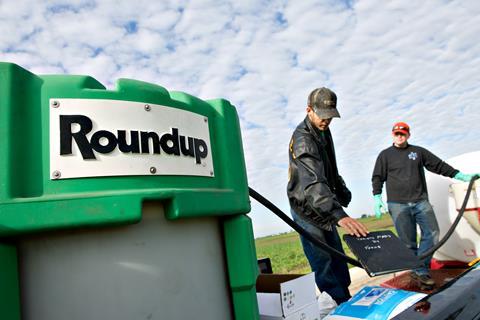
‘Today’s final approval order delivers guaranteed compensation to Roundup cancer victims who have waited more than a decade for justice,’ said Christopher Seegar, a court-appointed lawyer for one of the plaintiff sub-classes. The settlement includes those who have a medical diagnosis of non-Hodgkin lymphoma (NHL) or who receive a medical diagnosis within a 16-year period.
The agreement was approved by a Missouri state court, though the decision is subject to appeal. Any appeal would pause further payments until the appeals are exhausted. The settlement pays around $10,000–165,000 for eligible claims depending on circumstances, with quick pay awards of $6000–14,500 for some.
Bayer pointed to a recent US Supreme Court decision in June that decided in a 7–2 verdict that federal pesticide law (FIFRA) means states cannot require official cancer warnings on packaging unless the Environmental Protection Agency (EPA) decides a warning is needed. The result validated Monsanto’s arguments that the cancer claims ‘cannot be proven’, given that major regulators worldwide have ruled that the products can be used safely, Bayer said in a statement.
Legal challenges to glyphosate have generally relied on assessments that don’t account for exposure levels or mitigation measures used during application. While there is debate over evidence of associations between high levels of glyphosate exposure and cancer, regulatory assessments have generally concluded that this does not translate to significant risk under real usage conditions.
‘The court’s final approval is a decisive milestone in the company’s strategy to mitigate the risks of both pending and future Roundup litigation,’ said Bill Anderson, Bayer’s chief executive. The firm said it expects only small numbers of claimants to opt out of the payment scheme.
Judge Timothy Boyer described the settlement as ‘fair, reasonable, and adequate,’ according to media reports. He overruled objections that the payouts to individual cancer patients were ‘too low because claimants who previously settled were paid more.’ The judge also said that further delays could force people with terminal cancer to wait too long.
Bayer maintains that glyphosate-based herbicides are crucial tools for farmers, but since acquiring Monsanto in 2018, the company has faced thousands of Roundup lawsuits in the US. In 2020, Bayer agreed to pay over $10 billion to settle thousands of legacy lawsuits, but could not reach an agreement to resolve future claims.
This settlement is a business decision, not proof that glyphosate causes cancer, says epidemiologist Geoffrey Kabat. ‘The highest quality epidemiological studies, and the animal evidence, doesn’t support an association,’ he says. ‘More than 17 national and international agencies have done exhaustive studies and found glyphosate not to be a carcinogen at the levels to which people are exposed. But it is hard to prove that something is not a carcinogen.’







No comments yet