Infrared and NMR fusion boosts automated structure verification
By  Kirstine Anderson2025-11-06T11:31:00
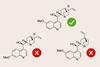
Study highlights untapped potential of IR spectroscopy data
An industry–academia collaboration has led to the development of a tool that combines infrared and proton NMR spectroscopy data to rapidly verify chemical structures.
The goal of automated structure verification is to reduce the time organic chemists spend analysing spectra. Rather than solving a structure from the spectra alone, automated structure verification picks the most likely compound from a set of candidates, mirroring how chemists identify reaction products.
Although several tools for this purpose exist, most focus on NMR spectra and are not yet reliable enough to replace human analysis. ‘If an organic chemist looks at a spectrum then they can probably interpret it. But if they’ve got 1000 spectra, which a robot has just churned out, then they’ve got no chance of doing that,’ notes Jonathan Goodman from the University of Cambridge in the UK.