Porous materials – Page 3
-
 Research
Double-layer hollow spheres catalyse syngas conversion into clean fuels
New catalyst for Fischer-Tropsch process exhibits exceptional performance and selectivity
-
 Research
Case closed on how surfactant micelles create mesopores within zeolites
Raman spectroscopy unveils key step in the formation of heterogeneous catalysts
-
 Research
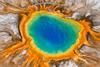
Porous material made by mimicking deep Earth conditions
Extreme temperature changes water’s properties so it can replace organic solvent
-
 Research
Perovskite frozen in MOF glass glows in rainbow colours
Porous material preserves lead halide perovskite’s luminescent form while tailoring emission colour
-
 Research
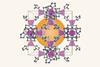
Meltable MOF glass made with ionic liquid
New family of glassy porous materials can be melted and moulded into any shape
-
 Research
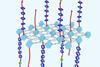
First fundamentally new form of adsorption for more than 90 years driven by molecular machines
Unlike physisorption and chemisorption, the newly discovered ‘mechanisorption’ is an active process that can store energy or chemicals
-
 News
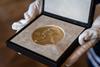
NewsChemistry Nobel predictions range from free-radical chemistry to MOFs
Data-crunching goes up against gut feeling as the chemistry community weighs in on their favourites for the world’s top chemistry prize
-
 Research
Eggshell-ent MOFs made from sustainable precursors
Green starting materials for calcium-based frameworks
-
 Research
Giant crystal lattice is mesoporous but not a MOF
Non-covalent network has the largest unit cell among non-MOFs
-
 Research
Molecular ‘compass’ traces van der Waals interactions within a zeolite
The tiny device consists of single hydrocarbon molecules trapped in the channels of a zeolite
-
 Research
Hydrogen bonding explains MOF’s shock-absorption abilities
Combined experiments and simulations provide insights to develop more efficient shock absorbers with commercial applications
-
 Research
Ingestible COF that delivers insulin could help diabetics duck injections
When blood glucose levels are high, glucose displaces insulin loaded in the framework
-
 Research
NMR monitors MOF assembly process
Technique adapted to interrogate nucleation and growth mechanism
-
 Research
Ancient Maya communities were first to use zeolite to purify water
2000 years ago, people in Tikal were using the world’s most advanced water purification systems
-
 Research
Chemistry Nobel predictions range from organometallic chemistry to DNA synthesis
Crispr is favoured by chemists while publication analysis forecasts winners working on nanocrystals, organometallic chemistry and supramolecular self-assembly
-
 Research
Atoms in mixed-metal MOFs found to adopt predictable patterns
Multi-metallic materials could be encoded with instructions for synthesis or separation
-
 Opinion
Chemists amid coronavirus: Omar Farha
An MOF pioneer has just reopened his lab at Northwestern University after more than two months, with new social distancing precautions
-
 Research
MOFs that remove and reduce hexavalent chromium yield drinkable water
Tests using river water prove system has a high selectivity for Cr(vi), even in the presence of large quantities of competing cations
-
 Research
Gamma ray irradiation gives zeolites incredible bulk
Radiation accelerates early stages of crystal growth and creates larger pores that can adsorb six-times more gas
-
 Research
MOF delivers cancer drug candidate straight to mitochondria
New ‘Trojan horse’ strategy could reduce drug doses needed to kill cancer cells