


This week we discuss a new light-controlled technique that creates structural colour and water repellent properties in polymer films and discuss our low-stakes mistakes – with Mason Wakley and Frankie Macpherson.
This week’s headlines
Featured stories
What do lotus leaves and plastic sheets have in common? We discuss a new light-controlled technique that draws inspiration from nature to create a water-repellent white appearance from structure rather than pigmentation.
White might seem like the simplest colour to make but it comes with an environmental cost. Many white materials rely on mined mineral pigments like titanium oxide and making them water repellent often means adding persistent, fluorinated chemicals like PFAS.
Now researchers have developed a material that is bright white and water repellent without relying on pigments and chemicals. Taking inspiration from the structures that make snow, sea spray and lotus petals look bright white, the team used light and a mild solvent to turn a polymer film into a microscopic foam that scatters light and repels water. How did chemistry make it possible? And what applications might this have?
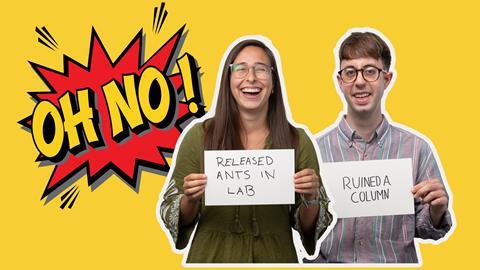
Also in this episode, we are discussing our ‘low-stakes mistakes’. These are the kinds of mistakes we have all made, that may have felt massive at the time, but in reality were pretty inconsequential. We don’t often talk about them, but everyone has made at least one in their career, whether its forgetting a step in a procedure, breaking a piece of lab equipment, or mislabelling their samples. The Chemistry World team discusses their own low-stakes mistakes and try to match famous scientists with historical examples of their own blunders.
We would love to hear your feedback on this podcast, so if you have any questions or comments please get in touch.
Introduction
Mariana Kneppers
What do lotus leaves and plastic sheets have in common? We discuss a new light control technique that draws inspiration from nature to create a water repellent white appearance from structure rather than pigmentation.
And have you ever panicked over a broken piece of lab equipment or ruined an experiment only to realise it wasn’t as big a deal as you thought? This week we are discussing our low stakes mistakes, why they feel so dire in the moment, and what we can learn from them.
I’m Mariana Kneppers, Chemistry World’s science media producer, and this is The chemical breakdown. We’ll be diving deeper into these stories shortly, but first let’s take a look at this week’s news from the Chemistry World website.
This week’s chemical science news
Mariana Kneppers
A drug shortage notice posted on the 9th of September brought to light US pharma company Merck & Co’s decision to discontinue its intravenous antibiotic combination, Recarbrio, in the US. Merck confirmed its decision to voluntarily stop manufacturing and marketing the drug, which is used for serious antibiotic-resistant hospital infections, but stated, quote, this decision is not related to any product safety or quality issues.
China’s Chang’e 6 lunar mission has returned lunar samples from impact craters that contain gamma iron, a rare, highly magnetic allotrope normally stable only above 912 degrees Celsius. Researchers believe that the magnetic fields recorded in the particles could have been generated by lunar impacts and may explain areas of unusually high magnetic intensity on the moon.
Two research teams in the US and Germany independently discovered unexpected visible light-driven methods for converting nitroalkanes into substituted alkenes, a valuable class of chemical building blocks. After journal editors spotted similarities between their rejected manuscripts, the groups joined forces and are now collaborating to explore the complementary reaction’s synthetic potential.
And agrochemicals group Syngenta is proposing to close its manufacturing operations at Grangemouth in Scotland, threatening 377 jobs. The company’s active ingredients for fungicides and herbicides have been off patent for some time now, meaning they can be produced cheaply by third parties.
You can find these stories and more online. Just visit chemistryworld.com for more of the latest news in the chemical sciences.
Biomimetic white materials inspired by nature
Mariana Kneppers
White might seem like the simplest colour to make, but it comes with an environmental cost. Many white materials rely on mined mineral pigments like titanium oxide, and making them water repellent often means adding persistent fluorinated chemicals like PFAS.
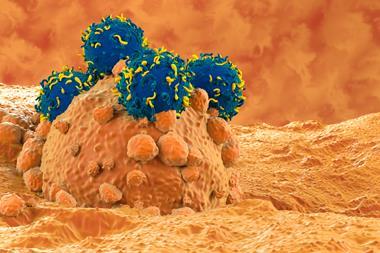
Now, researchers have developed a material that is bright white and water repellent without relying on pigments and fluorinated chemicals. Taking inspiration from the structures that make snow, sea spray and lotus petals look bright white, the team used light and a mild solvent to turn a polymer film into a microscopic foam that scatters light and repels water.
How did chemistry make it possible and what applications might this have? Here to discuss today’s stories are digital content assistant Frankie Macpherson and science correspondent Mason Wakley. Hello to you both.
Mason Wakley
Hi Mariana.
Frankie Macpherson
Thanks for having us.
Mariana Kneppers
Hi guys. So Frankie, you wrote this story, a really, really interesting one. How exactly does this work? Like what is the process behind it?
Frankie Macpherson
Yeah, it’s actually a relatively simple process. Essentially, they take already commercially available polymer films the first sort of photo initiator they call, basically using visible light to begin generating some of these pores and then they soak it in a weak solvent, I think acetic acid, to encourage the expansion of this sort of foam structure.
And so you get like a network of different pores throughout the material and the solvent serves a couple of purposes. One in expanding this foam pore structure and two it also creates wee micro flowers on the sort of outer surface of the material and that helps generate this water repellent property.
So it’s sort of achieving a dual purpose. And actually, when I spoke to the researchers, they sort of saw it as potentially serving 3 purposes down the line, and that it’s water repellent, it creates this white colour that’s desirable in materials, and that in reflecting light, the way it has created the white colour, it also could potentially help with insulation or heat regulation with certain materials as well, which is quite interesting. That last avenue they’ve not explored as much.
Mariana Kneppers
Gotcha, fair enough. And so you say it works on polymers.
Is that just like any kind of plastic or are there specific kinds of plastic that it works on or what does this work on?
Frankie Macpherson
Yeah, so far they’ve used I think a couple of different polymer films but they’ve not tested across sort of like the widest range of all polymers and it is different from sometimes people think polymer and plastic are exactly the same and all polymers are going to be waterproof anyway.
So what are they adding? But actually like nylon is a polymer and that absorbs water and there’s like lots of different ways. It’s all to do with the molecular structure and the way that these things are composed, the properties that they then have.
So yeah, they’ve essentially taken some standard polymer films and modified them to give them these properties.
Mariana Kneppers
Okay, fair enough. And on the article that we have online, there’s some really lovely images of, it almost looks like artwork. How does that work then? Are they like almost printing on the pattern or, can you just give us a bit of an explanation of like why those images were included?
Frankie Macpherson
It’s actually really cool. They got an artist into their lab. So they’d sort of developed this film material and then they’d tested it, like you see, sort of printing onto other surfaces.
One of them is the Kyoto University symbol onto a piece of flat glass. And then they had Claudia Rose, I think her name is, they brought her into the lab, sort of kitted her up with her lab gear and gave her all the information about risking things and asked her to help scale up.
So one of the things you’ll see is Vermeer’s Girl with the pearl earring and they’ve got different sizes and that was sort of her work to scale this up from not just here’s a simple print of a symbol but how can it be applied to artwork and to different areas as well which is really cool.
And that’s where all those pictures come from, yeah.
Mariana Kneppers
That’s really cool. It’s like such a cool way of just merging like science and art together. I absolutely love that they’re using science to create art.
But that being said, you know, obviously really cool way of producing these images. But what other applications, kind of practical applications are people seeing with this? Is this just kind of like a, wow, how cool that we can do this process or are people seeing this as something that can be applied in other contexts?
Frankie Macpherson
Yeah, so while I said they’ve not tested them on all polymers, they have tested on a good range and one of the lead researchers on this said it feels that this sort of technology is so far applicable to every polymer that they have tested on and they’re really hoping that researchers across different fields will take it into definitely like their own area and find a purpose for it themselves.
But he is already envisioning not just in sort of like art or clothing, but also the potential for it as a foam to compress and absorb energy. It could be used for insulation. He said it could be used for bulletproof foams and vests and things like that.
The most obvious one, and I think the avenue they’re going down first, is in waterproof materials. So most of like your Gore-Tex gear and things like that contains PFAS, fluorinated chemicals, and this achieves that without those sort of additives that we know are harmful to the environment and sort of last forever.
So I think that’s the first avenue that they’re sort of focusing on now, sort of scaling up and trying to make sure that they’re ensuring these properties can be lasting. You want to keep your waterproof jacket or whatever for as long as you, for years and years to come, but also making sure that the materials are biodegradable and aren’t themselves sort of harmful to the environment.
Mariana Kneppers
Absolutely, yeah. So you kind of spoke to the waterproof side of things and we’ve spoken about how can you be used in kind of an artistic concept. But something else that you mentioned was like reflecting light.
Is there anything else out there that kind of does a similar thing to this? Because I imagine this technology, like looking at it at a microscope. Does it just happen in plastics or are there other examples of this?
Frankie Macpherson
There’s loads of examples. Structural colour is incredibly interesting. It’s sort of just taking advantage of the physical properties of the material and the way it reflects light in different ways to try and achieve colour without pigments or additives that maybe are rare and sourced maybe unethically or are harmful and can be toxic in our waste streams and things like that.
So structural colour, we’ve seen it like I think over the past decades really sort of grow in different ways and this research team had begun I think looking at other colours and then they found that when they created this foam, or either they themselves had begun looking at other structural colours and then developed this white almost by accident, or they’d been reading about research looking at other colours where they developed this bright white.
Taki, who I spoke to as well, was saying, you know, initially your thought might be, oh, we’ve lost our colour, but actually you’ve got this brilliant white colour that achieves something that’s also quite useful in and of itself, and sort of finding how that came to be.
And it is just you can imagine sort of the way that a rainbow is reflecting light, different particles in the sky reflecting light. It’s a similar thing where the structure, the light that passes through or reflects off of the different structures within the material as resulting in the colour that we see.
Mariana Kneppers
Yeah. Mason, did you write something similar for Chemistry World about some other material? I feel like it’s tickling my brain in some way.
Mason Wakley
Yeah, no, you would be right in thinking that. So about this time last year, actually, I spoke to some researchers who had developed a reflective concrete and what they’d done is mixed a bunch of different minerals together with water, then sort of created this paste.
And then they were able to pour this over this kind of textured polymer film and suck the air out of this. And this then caused these micro cavities to grow within the concrete itself and then when the concrete was then drying, these minute crystals were growing in these cavities so that when light came in, because these crystals were then more pointing at different angles, the light that was coming in was being scattered in at all different angles so the eventual colour was white.
But the advantage of that was that you’re going to reflect more types of or more angles of light hitting a surface. So they were able to make big sheets or boards of them, their concrete material, and then were able to put these or envisage putting these on the surface of buildings that already exist to then kind of reflect heat and light away from a building, which given the fact that we’ve just had a strong heat wave in the UK and most of Europe this summer, situations like that or kind of technologies like that are really, really important.
So yeah, like Frankie said, this isn’t necessarily the first time that scientists have been using structural motifs within materials instead of pigments to create colour or reflect light. In a way, I guess that’s sometimes how a lot of animals and birds, how they get their colour, they’ll have sort of microstructures within their skin that are also able to give them the colour that they want.
So yeah, it really is taking a leaf out of nature’s book.
Mariana Kneppers
Yeah, exactly. So that’s, I think we, I’m not sure if we mentioned this in the intro or not, but that’s exactly that biomimetic, that’s basically what it means, is taking a concept from nature and replicating it with our own kind of technology, using our own applications.
I love that stuff because if nature’s already come up with a way of doing it, why shouldn’t we? So really, really interesting stuff.
And in this case, I think your article mentioned that you could see this in like lotus leaves, for example, in the way that snow, in, I think it’s even within like polar bear fur. I think polar bear fur is actually clear. Their skin underneath is black, but they look white because of the diffraction.
Frankie Macpherson
Isn’t that so cool? The way that I probably would know that, but hearing it, I’m like, wow. It’s amazing, isn’t it?
Obvious and amazing, something like when you understand structural colour, you’re like, oh yeah, that explains so much. But then when you hear about an individual instance, you’re like, how cool.
And yeah, like Mason said, the sort of benefit with the highly reflective or scattering materials like this that are sort of inspired by nature, whether it’s snow, sea spray clouds, is also the added benefit of keeping things cool.
Generally people think, oh, I won’t wear black as much in summer because it absorbs the heat and this is giving the sort of opposite effect and benefit therefore.
Mason Wakley
I was just going to jump in and I guess in a way play devil’s advocate. This all sounds really, really interesting.
But when you were talking about how they actually go about making the material and you’re talking about the degradation of the plastic film, polymer film in a way to create these pores. It kind of got me thinking about, well, when a plastic normally breaks down, we then start thinking about microplastics and we all know that these are not good for us and they enter the environment.
So I guess I was wondering, are there any concerns with this new material having similar issues? You know, how durable are these materials? How long do they last for? Do we know that yet if this is relatively new research?
Frankie Macpherson
Yeah, great question. That’s exactly what it is, sort of breaking down the material in a way. One of the researchers described it as like a controlled demolition that’s going on, whilst there’s also some repair happening at the same time, which I think is like a great way of envisioning this.
But absolutely, yeah, if you’re breaking something down to create it, you have to think, well, what happens to it down the line breakdown products?
And I put this to the researchers themselves, both in terms of durability, how long lasting it is, and concerns over sustainability. And that is definitely a priority for them going forward.
They did sort of recognise that you sort of need time to fully scope these things out, but they have examples of materials that they’ve developed a year or two years ago that are still look exactly the same, like miniature versions of the girl with the pearl earring and things like that.
And equally, they have used some biodegradable materials from the start for that reason. But in the same way that this research is relatively new and there’s a lot still for them to learn, we’re also still like as or the field in general is still learning about even biodegradable materials have microplastics and they are more lasting than we once thought.
So you think about the biodegradable coffee cups people get, I think just like last year or the year before, there was a study about how the breakdown products of those are more lasting than we thought.
So I think that’s a really good point and not something that we should be like, they’re using like this, so everything should be fine. It’s definitely something that they’re both prioritising and that I guess consumers or people interested in it should be keeping an eye on as well.
Mariana Kneppers
That’s such a fair point. Like, you know, we’re talking about coming up with something that means we don’t have to use like fluorinated chemicals, you know, for waterproofing stuff like titanium oxide, things like this.
But are we just perpetuating the plastic problem and replacing it with, are we replacing these other problems with more of a plastic problem? Who’s to say? So yeah, very, very good point.
One last question for you, Frankie. Now, was there anything that in particular writing this article or speaking to the researchers that really interested you or surprised you?
Frankie Macpherson
Yeah, I mean, loads. There is loads.
Mariana Kneppers
It’s a really unique one, isn’t it?
Frankie Macpherson
Yeah, I just, I found it so fascinating and I was so grateful that they both were able to speak to me and it was interesting to hear how their different stories sort of came together.
There was a third researcher who was involved in this as well, who I didn’t manage to speak to, but it sounds like they all sort of came with their own inspirations and were like looking at different elements of it, which was great.
But Ethan and Tacky both had been at Cambridge at the same time years before, and then had gone their separate ways and were working on different things, both somehow ended up in Japan.
And when I think Isam was at a conference, they had almost like a research scientist meet-cute on a bullet train platform where they bumped into each other and were like, how are you also in Japan?
And then because they bumped into each other, they were like, we must check out what they’re doing. And I think then Isan got in touch with Taki to understand and really probe that mechanism that’s going on in the material and understand so that they could further design materials and bring it forward.
So yeah, it sounds like a really good collaboration and I’m excited to see what each of them do, whether together or independently.
Mariana Kneppers
Yeah. Absolutely. So funny that these things can just like happenstance. You bump into somebody on a platform and collaboration comes from that. I mean, that’s, not enough of that is happening, I think.
Frankie Macpherson
I know. Well, yeah, people are too plugged into, I mean, me too. I’m on a train platform just listening to my music.
Mariana Kneppers
Well, that’s the thing. Yeah, I’ve got my headphones in. I’m ignoring people when I’m on public transportation.
So, you know, it just goes to show what happens if you just look around. But really, really interesting stuff and a really cool method. Very interested to see how this is applied further down the line.
So thank you guys so much.
Low-stakes mistakes in science
Mariana Kneppers
We recently released an article highlighting what we like to call low stakes mistakes. These are the kinds of mistakes we’ve all made that may have felt massive at the time, but in reality were pretty inconsequential.
We don’t often talk about them, but I can guarantee that everyone has made at least one, whether it’s forgetting a step in a procedure, breaking a piece of lab equipment, or mislabelling your samples.
So we’re sharing some of the Chemistry World team’s low-stakes mistakes in an article spearheaded by our very own Mason Wakley.
Mariana Kneppers
Mason, what gave you the idea to write this piece in the first place?
Mason Wakley
I think that’s a very good question, but I think it’s worth crediting some of the other members of the Chemistry World team, one of them being Emma Pusey, who’s our comment and careers editor.
She has a weekly, almost column on her LinkedIn page where she shares advice about how to write an opinion article, how to share what you think about science.
And in one of those, she was talking about how people often worry that they have to send in a really perfect draft of writing, and it has to be free of typos, and we’ve got many, many people saying, yes, I’ve made typos too and I spelt this wrong and I did that wrong.
And it was nice to have that engagement and that discussion that we aren’t the only ones that make those small mistakes and that there’s a wider community that do this too.
And I think then also at a similar time, our senior correspondent, Rebecca Trager in the US attended the spring ACS meeting where she spoke to three Nobel laureates and they shared their own mistakes that they’ve made.
And essentially the idea of I’ve also made mistakes in my career and that didn’t stop me from winning a Nobel prize.
And so I think those things combined, we kind of got our heads together in the team and thought, you know, well, let’s actually continue that discussion about opening up the blunders that we’ve made. I’ve just made one there.
In our careers, whether that’s a typo, like you said, breaking a piece of equipment, saying something wrong, the list goes on really.
There isn’t really an end to these low stakes mistakes, but we will make them. And at the time, like I remember making some and going like, oh my God, I’m going to be fired. I’ve done something really, really bad.
But until you learn that other people make them or that they might not have as much consequence as you might think, if you’re new to a new sort of lab group or research field or job, then you kind of have this heart-pounding moment of, oh my God, I’ve made a massive mistake.
And so hopefully what we’re just trying to do is just shed a bit of light on this whole field really.
Mariana Kneppers
Yeah, it’s so funny. Like as you were speaking, I’ve definitely, I’m sure Frankie can relate as well. I’ve definitely made those mistakes.
I mean, there was one time where it was one of my first labs in uni and I was running an experiment that involved a lot of ants. And I thought that I’d secured them properly.
But I remember halfway through one of my days, I got a really angry email from somebody who shared that lab space and was like, there are ants running around everywhere in the middle of my lecture and you need to come and clean them up.
And I was like, oh no. I mean, it was my first year of uni, so I panicked. I was like, this is it. Like, I’ve already made a name for myself. People know I’m this irresponsible lab person.
I had to run into the class and we had this little device that was like a little vial with a straw attached on one end and a spout on the other. There was a mesh in between.
And you would literally like suck up the ants into this little vial. And I had to crawl around on my hands and knees in the middle of this lecture, like scooping up these ants and this, it was pretty bleak.
But in the grand scheme of things, great story, but literally impacted me 0%.
So that’s just how it is. I mean, Mason, I’m sure you’ve probably made a mistake before. Do you want to share something?
Mason Wakley
Yeah, no, I’ve made a few mistakes.
One that I remember making was when I was doing an undergrad experiment where I was running a column and I’d spent the whole morning of the experiment like setting up the column, the supervisor was helping us figure out how to do it.
And then we got back after lunch and they basically turned around and said, you need to go, go, go. You’ve actually not got enough time to do this.
And I had to, you know, add my sample carefully with a pipette into the column. And then I just dropped the pipette into the column and basically I had no time.
So just needed to keep going with the experiment.
And then basically what happened was that the pipette tip that was involved in the column slowly just kind of slightly dissolved, not massively, but mostly the dye.
And so then as I was purifying my product, it turned out that the dye also ended up in similar fractions of my product.
And that was just like a mistake of me not having a steady hand and dropping it and then not being able to rescue it because this column was longer than my arm.
Yeah, it wasn’t great, but it taught me a valuable lesson of like, it’s okay, I learned from the experience. There wasn’t really much else I could do about it.
And I guess it meant that when I was able to do kind of columns and similar experiments in my master’s, for example, it meant that I was more careful when doing the same thing.
Mariana Kneppers
Yeah, absolutely.
Frankie Macpherson
I’ve heard so many stories like that to the point that one of the labs I worked in when I was doing a study abroad thing, they just didn’t let you do columns in the afternoon.
They were like, you start it in the morning because you’re not like, if you take a break, then you’re rushing and people make mistakes so often with columns that they were just like, we don’t do any columns in the afternoon.
Mariana Kneppers
Also like the time pressure was also not going to help you in that case, right? Like somebody coming up to you and saying you don’t have time just primes you for any mistake, right?
But Frankie, do you have an example you want to share?
Frankie Macpherson
Too many to choose from. One that you just reminded me about there was when I was doing like just a simple separation and you shake in between and then you let it settle and you let some out and I’d been doing this and like sort of repeat rinse almost and I was on my final like round of doing this and I went to put it you have like a basically a little circular holder and I went to put it back in and either just missed the holder or my hand slipped and it all fell and because it was the final round of I was creating like gold nanoparticles.
And it was like I’d gotten, they were almost there. My supervisor at the time was like, if you just get loads of blue roll and soak that all up and then squeeze it, squeeze it into the glass.
So it smashed and all my lovely product I was trying to separate out was all over. Luckily I had cleaned the fume hood that morning. So it was clean.
And so he was like, just like soak it all up, squeeze it into this glass bowl and then we’re going to go.
Mariana Kneppers
We’re starting right over.
Frankie Macpherson
And so we just had to do it that way and restart. But it worked out well. There wasn’t anything ecky from the fume hood that it picked up to ruin a project or anything.
But I was like, oh, what an embarrassment ritual, me squeezing out blue roll.
Mariana Kneppers
Oh, it’s just one of those things, isn’t it? I mean, but I mean, we’re all pretty far off in our careers, I’d say. I think we’ve all accomplished quite a bit.
So, clearly it didn’t have a long lasting impact, right?
Scientists’ mistakes through history
Mariana Kneppers
Do you guys want to move on to this game? I have a game for you guys that I’ve kind of created in the spirit of trying to normalise these mistakes and kind of bringing around that everybody’s made these mistakes before, even like in Emma’s article, Nobel laureates.
There’s a lot of historical figures who have made mistakes as well. So I have three questions here for you guys. And I’ve given you a bit of a multiple choice way of guessing who each of these people may be.
I’m going to describe somebody to you and you tell me who you think they are.
So first one, this Nobel laureate, there’s a clue for you there, was so notoriously clumsy with glass tubes and electric coils that their assistant banned them from touching anything delicate, excuse me, claiming they were exceptionally helpless with their hands, quote.
Right, there are three options here. Do you think it was Nikola Tesla, JJ Thompson, or Isaac Newton?
Mason Wakley
I’m going to go for Tesla.
Mariana Kneppers
I got two votes for Tesla.
Right. Well, little did you know, it’s actually JJ Thompson. So the person who discovered the electron was actually a bit useless in the lab and broke loads of things.
So their assistant, Ebenezer Everett, was the one who banned him from touching anything in the lab. Ebenezer ended up being the person who ran most of the experiments.
But yeah, obviously JJ Thompson went on to discover the electron. So there you go.
Another one for you. So this scientist collected a number of specimens for their foundational work, but forgot to label which specimens came from which location.
When they returned home, they realised that they had to rely on the meticulous notes of their ship’s captain to reconstruct the lost data.
Was it Jane Goodall, EO Wilson, or Charles Darwin? I don’t know if this helps, but there was a ship involved.
Frankie Macpherson
Yeah, that’s what I was like, that’s a clue.
Mason Wakley
Yeah, maybe Darwin.
Frankie Macpherson
I think EO Wilson.
Mariana Kneppers
It was indeed Darwin. So of course, on his famous trip to the Galapagos Islands, he was collecting dozens of mockingbirds, excuse me, mockingbirds and finches, but completely forgot to label which islands it came from.
And he obviously, when he returned to England, was like, wait, this could be quite key to the theory of evolution.
So had to rely on his ship’s captain’s notes, Robert Fitzroy, who helped him reconstruct the lost data.
So without that, who knows how long it would have taken to discover evolution.
So there you go.
Frankie Macpherson
There’s a real through line of teamwork here. There is, yeah.
Mariana Kneppers
Relying on people in your lab. Yeah, exactly. Yeah, absolutely.
I mean, it just goes to show having that safety net of people around you to support you is quite big, isn’t it?
All right, this last one is going to be a bit of a modern example for you guys.
So this scientist, this happened a few years ago, mind you. This scientist has been quoted saying that sitting in on their first meeting for this rather big project, they sat in the meeting for two hours and quote, understood almost nothing.
They later went on to help construct the first ever photo of a black hole.
I figured I’d give you a bit more detail on this one. Was it Brian Cox, Jennifer Doudna or Katie Bowman?
Mason Wakley
Maybe Brian Cox?
Frankie Macpherson
Yeah, but I feel bad I don’t know who Katie Bowman is.
Mariana Kneppers
You would think it’s Brian Cox. It is Katie Bowman.
So Katie Bowman is an engineer and a computer scientist and her algorithm played a big role. It was a massive team effort, but for the Horizon or the Event Horizon Telescope, her algorithm helped to capture an image of a supermassive black hole at the centre of the M87 galaxy.
I really like this example because there’s so many times where I sit in on our own meetings and have no clue what’s going on and feel a bit of imposter syndrome.
And to think that Katie Bowman was sat there being like, I don’t even know what a black hole is. And a couple months, years later, here she is with one of the most incredible images, the first image ever of a black hole, which is just amazing.
So it just goes to show, you know, even the most famous people out there make their mistakes.
I will say it was interesting. I had a hard time finding a lot of examples, particularly of women, which I think, especially with stories from further back, which I think is, we’ve discussed this before.
It’s a bit of a sign of the times. Isn’t it?
Why talking about mistakes matters
Mason Wakley
I think it’s worth raising the point that women in science or people from other kind of minorities or people even like younger in their careers are perhaps more or less likely, sorry, to be vocal about their mistakes.
They don’t have that support network, so to speak, that you were talking about, Frankie, of being comfortable to share their mistakes.
And I think unless you have that support network to be comfortable to know that there isn’t going to be a consequence of opening up about your mistake, then you aren’t going to be vocal about them.
And I guess that’s what we’re trying to do with these kind of articles and with this discussion of saying that, you know, it’s okay to have that.
Frankie Macpherson
I totally agree, like for women or for minority groups or anyone, like there’s that extra pressure of like, the space wasn’t previously allowing people in and so it feels like, you have to do everything right.
So it’s an extra pressure, but then it can be quite isolating to not have someone to talk to and realise, oh, everyone does this, it’s fine.
And sometimes it is still a little bit of like leftover wee bits of stigma or lots even in some cases, it can feel not necessarily as low stakes for people sometimes.
Mariana Kneppers
There’s something to be said about, as you say, Mason, sometimes they’re in quite a vulnerable position.
This, maybe this is their first opportunity in a lab. They don’t want to ruin it. It feels like it’s quite high stakes, but because not many people are talking about it.
And I think this is a really great initiative that the team and yourself have done to normalise these things.
In the spirit of things, do you have a mistake, Mason, that you were actually quite glad that you made?
Mason Wakley
Oh, that’s a very good question.
I think one that I can think of is when I was doing a sort of a summer placement, I dropped a reaction flask essentially all over the floor. It was a deep red ruthenium complex.
My supervisor basically walked in and said, it looks like a murder scene because it’s splattered everywhere.
But I think, not only did that teach me about the fact that, A, not to rush. And again, there’s a common theme here.
But it also opened up a discussion with my supervisor of like, what do you do in those instances and like, what can you learn from them?
And I think then I was then able to, when I was actually doing my master’s, and someone else had a similar situation.
Being able to know what to do in that instance of, okay, where’s the spill kit? You check people are safe, no one’s injured.
And it kind of better prepared me for when the shoe was on the other foot.
So actually I kind of was glad to make that mistake in a relatively controlled environment so that, you know, when it was going to happen again, then luckily then also there was no problems.
It kind of gave me more confidence and kind of the know-how to what to do.
Mariana Kneppers
There’s a lot to be learned from these mistakes, right? I mean, I would argue I learn most, if not all of my lessons from mistakes.
So you just, you kind of stumble your way into your career, right? And I think that needs to be talked about more.
Frankie Macpherson
I was just going to say, I think some of the times in science and chemistry as well when you’re doing experiments, there are things that maybe feel like mistakes, but they’re just like inherent paths that sometimes you can’t anticipate if you’re adapting something from one experiment and you meet or bump up against, especially if you’re in a summer placement or your undergrad project where you’ve got limited time.
It feels like, oh, I can’t believe this has gone wrong.
But then you discover a new interesting thing about the reaction and you’re like, oh, this is maybe because of that and you learn something way more interesting.
So.
Mariana Kneppers
I mean, just look at, the discovery of penicillin literally was an accident.
This article is a really great way of celebrating these low stakes mistakes.
That being said, we want to hear from you, our audience, and hear about your low stakes mistakes.
If you have an idea that has come to mind as you’ve been listening to this and you think, gosh, I’d really love to share that, please do have a look at the link in the description of this podcast.
You can submit them anonymously, so don’t worry if you don’t necessarily want to have your name.
We would love to hear from your mistakes, anonymously or otherwise. And your response could be included in a future Chemistry World article.
We want to keep this rolling and really normalise everyone’s low stakes mistakes.
So go ahead and follow the link that we’ve included to this podcast and you could submit your low stakes mistakes there and you might see it up on a Chemistry World article.
So thank you both so much for joining today. Thanks for having us.
Mason Wakley
No worries. Thank you very much.
This Week in Chemistry History
Mariana Kneppers
And finally, this week in chemistry history, we’re heading back to the 15th of October, 1951, to a laboratory in Mexico City where Carl Djerassi and his team developed one of the first oral contraceptives, helping to transform reproductive medicine forever.
The story starts more than a decade earlier with a teenage refugee arriving in New York.
In 1939, young Carl Djerassi fled his home in Austria for New York to escape Nazi persecution. At just 16, he arrived with his mother, $20 in his pocket, and a dream of success.
He began his higher education at Tarkio College in Missouri before transferring to Kenyon College in Ohio at 17, determined to complete his bachelor’s degree in chemistry within the year.
Meanwhile, his mother had taken a job in a doctor’s office. While browsing brochures in the office one day, Djerassi discovered pharmaceuticals and was immediately intrigued.
He wrote to as many pharmaceutical companies as he could, asking for a job, until he was eventually offered a position at CIBA in New Jersey, where he worked on antihistamines.
Djerassi later completed his PhD, focusing on how to transform testosterone into estradiol, prompting his fascination with steroids.
This eventually led him to Mexico City and a company called Syntex in 1949.
At the time, Syntex was at the forefront of a revolution in steroid chemistry.
Almost a decade earlier, American chemist Russell Marker had developed a way to use diosgenin, obtained from Mexican yams, as a starting material for producing progesterone and other steroids synthetically.
It meant chemists could finally make these valuable hormones economically and on a much larger scale.
This prompted Russell to open up Syntex to continue exploring steroid chemistry.
But there was still a problem.
Progesterone might work as a hormone, but it wasn’t very useful as a pill. The challenge was to create a synthetic version that remained biologically active when taken orally.
The race was on as multiple companies competed to be the first to find the solution.
At Syntex, Djerassi led a team including George Rosencrantz and a young Mexican chemist, Luis Miramontes, set on cracking the chemistry.
On October 15, 1951, Miramontes recorded the synthesis of the compound the team had been looking for, norethindrone.
It was a potent synthetic progestin that could retain its activity when taken by mouth.
Just over a year later, on the 22nd of November, the team filed a patent for their creation.
It looked like Syntex had won.
But a rival company, Searle, beat them to the market with a drug known as Enovid.
It used a closely related compound, norethynodrel, which converted into norethindrone under acidic conditions, ideal for the digestive system.
It differed from Syntex’s norethindrone only in the position of a double bond.
Although Syntex had a chemical head start, Searle won the race to consumers as the first commercially available birth control pill.
But 2 years later, Syntex’s product joined the shelves and eventually became the most widely used ingredient in oral contraceptives worldwide.
Carl Djerassi eventually earned the nickname of the father of the pill.
But perhaps the larger story isn’t that of a single inventor of the pill, but rather how several scientists discovered the chemistry that helped make the pill possible.
Podcast Outro
Mariana Kneppers
That’s all for this edition of the podcast.
If you’re interested and want to hear more about any of the items we’ve covered, check out chemistryworld.com for more of the latest stories in the chemical sciences.
You can also sign up for our weekly newsletters like Reaction, giving you a handpicked selection of stories from Chemistry World and beyond from newsletter and research editor Jennifer Newton, or our industry brief containing essential analysis and insight on the industrial side of chemistry from business editor Philip Broadwith.
I’m Mariana Kneppers, we’ll see you next time.
This transcript was generated by AI and checked by a human editor














No comments yet