Homogeneous catalysis
The latest chemistry news and research on homogeneous catalysis, including photocatalysis, asymmetric catalysis and organocatalysis, from the Royal Society of Chemistry's magazine, Chemistry World
-
 Feature
How asymmetric autocatalysis won the Nobel prize
Mason Wakley tells the full story of how Henri Kagan and Kensō Soai’s work on non-linear effects and asymmetric autocatalysis won the 2026 Nobel prize in chemistry
-
 Research
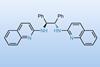
Organocatalyst streamlines oligonucleotide drug synthesis
New reaction controls phosphorus stereochemistry during the synthesis of phosphorothioate oligonucleotides
-
 Feature
Frustrated Lewis pairs mark 20 years of metal-free catalysis
James Mitchell Crow explains how an unexpected discovery in main group chemistry inspired two decades of chemical creativity, from carbon dioxide reduction to fluorocarbon recycling, offering sustainable alternatives to precious metal catalysis
-
 Research
New studies highlight emerging potential of aluminium(I) chemistry
Aluminium redox catalysis and reactive aluminium clusters showcase main-group element’s transition-metal-like reactivity
-
 Whitepaper
Optimise cross-coupling with ligand-free NHC–Pd precatalysts
Discover how new NHC–Pd precatalysts deliver superior performance without stabilising ligands
-
 Research
Light-driven catalytic system makes ammonia from nitrogen and water
Dual catalyst system operates under ambient conditions, offering a way to reduce ammonia production’s environmental impact
-
 Research
Light-activated catalyst sorts mirror-image molecules by resetting carbon–halogen bonds
Photocatalytic reaction that inverts chiral centres offers new way to enrich racemic mixtures
-
 Research
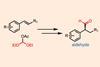
Simplified hydroformylation replaces rhodium with base metal
Bench-friendly asymmetric hydroformylation swaps toxic gas and expensive catalyst for cheap reagents and mild conditions
-
 Research
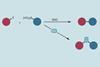
Classic cross-coupling reactions rerouted to make new products
Combination of Suzuki–Miyaura and Buchwald–Hartwig couplings produces carbon–nitrogen–carbon linked compounds
-
 Research
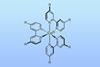
Long-lived excited states open the door to earth-abundant metal photocatalysts
New findings show that cobalt (III) complexes can catalyse reactions not previously thought possible
-
 Research
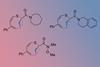
Small ring insertion expands structural editing toolbox
Bicyclic ring system made by adding a bicyclobutane into a thiophene
-
 Opinion
Boosting cubane synthesis with photosensitizers
Leaping to a greener approach for cubane synthesis
-
 Research
’Photoredox catalysis goes asymmetric’: counterion strategy a breakthrough in reaction control
Ion-pairing enables chemists to reach previously inaccessible enantiomers
-
 Research
Homogeneous catalysis boosted by electrochemical recovery of precious metal complexes
Process can recover metals from industrially important catalysts
-
 Research
Chirality-flipping reaction could completely change total synthesis strategies
Photocatalytic reaction that inverts configuration of chiral carbon centres offers new stereochemical editing logic
-
 Opinion
David MacMillan: ‘The medal is the real celebrity’
The Nobel prize-winner on the joys of handing out his medal to everyone, chatting with William Shatner and Alex Ferguson, and the pain of being a Scottish football fan
-
 Research
Microdroplets tackle scale-up issues for enzyme-photocoupled catalysis
Gas-spray reactor enhances light illumination efficiency and boosts rate of reaction
-
 Feature
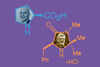
How organocatalysis won the Nobel prize
Jamie Durrani tells the story of how two young upstarts, Ben List and David MacMillan, created a whole new field of catalysis
-
 Research
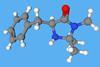
Explainer: why has asymmetric organocatalysis won the chemistry Nobel prize?
In a rather unexpected move by the Nobel committee, this year’s prize in chemistry has been awarded to Benjamin List and David MacMillan
-
 News
NewsAsymmetric organocatalysis scoops 2021 chemistry Nobel prize
Benjamin List and David MacMillan recognised for research that makes chemistry greener