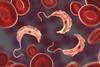
In February, the European Medicines Agency (EMA) adopted a positive scientific opinion on acoziborole, the first single-dose treatment for both early and late stage sleeping sickness, paving the way for registration and distribution in sub-Saharan African countries affected by the disease. The benzoxaborole compound will become only the sixth licenced medicine to contain boron, whose chemistry is crucial to the drug’s efficacy. Charles Mowbray, discovery director at the Drugs for Neglected Diseases initiative (DNDi) says it’s not the only active molecule of this class. ‘We’re quite excited that there could be other uses for benzoxaboroles for parasitic diseases.’
DNDi is a collaborative drug research and development non-profit, headquartered in Geneva, Switzerland. It brought together public and private partners over two decades, with funding from the Gates Foundation, to develop the drug. Sanofi will now manufacture acoziborole, which will be distributed free of charge via the World Health Organization (WHO). Their ambition is to eliminate the disease by 2030. ‘We hope that we will see approval for marketing first in the Democratic Republic of Congo later this year, with other countries hopefully to follow,’ says Mowbray
The EMA decision is part of its EU-Medicines for all programme which leads to prequalification of the medicine by the WHO and enables faster registration in relevant countries. Established in 2004, the initiative aims to facilitate patient access to safe, effective, and quality medicines in low- and middle-income countries based on the same rigorous standards as medicines intended for use in Europe.
Sleeping sickness or Human African trypanosomiasis (HAT), is caused by the Trypanosoma brucei parasite and transmitted by infected tsetse flies. If untreated, the parasite can enter the brain and ultimately cause death. According to the DNDi there were 40,000 cases reported in 1998, with a suspected further 300,000 going undiagnosed. At that time the only late stage treatment was a painful and toxic injectable arsenic derivative. But the DNDi and others developed several improvements – including in 2018 the first oral 10-day treatment, fexinidazole, a nitroimidazole antimicrobial, which reduced cases to 600 a year.
Now acoziborole offers the real hope for disease eradication, says co-inventor Robert Jacobs. Now retired, Jacobs was head of chemistry at boron drug specialist Anacor Pharmaceuticals, which created the original benzoxaborole compound library and identified the first activity against the parasite. ‘This is a single-dose treatment, three pills, and could be given quite broadly, given its safety observed today. I think that’s the real excitement,’ he says. Anacor was acquired by Pfizer in 2016.
Boron compounds have a reputation for being toxic but ‘this is a myth,’ says Webster Santos, an expert on organoboron compounds at Virginia Tech in Blacksburg, US. He says this comes from really old data. Although he says boron’s electrophilic character does make it susceptible to off-target effects which makes development of boron drugs ‘a bit longer and more difficult than a standard small molecule drug.’
This is a single-dose treatment, three pills. I think that’s the real excitement
But these electrophilic properties are also its unique superpower. ‘[It] binds to Lewis bases, such as oxygen and nitrogen,’ explains Santos, which allows it to target specific amino acid sequences within a protein and block normal function. ‘Typically boron likes to bind 1,2-diols, so that chelation makes it really attractive for targeting,’ adds Santos. So far there are only a handful of licenced drugs containing boron, including two others from Anacor’s library of benzoxaboroles.
Acoziborole kills trypanosomes by inhibiting an mRNA processing enzyme called CPSF3 (cleavage and polyadenylation specificity factor 3) which is crucial for the parasite’s gene expression. ‘Boron is absolutely key to the to the utility of this compound,’ says Jacobs. The drug can form a tetrahedral boronate that binds to two zinc atom sites within the enzyme and mimics the phosphate in RNA, blocking the space usually occupied by an RNA molecule being processed. A carbon atom in the same position could not do this.
Boron’s ability to switch configurations is also ‘absolutely critical to the success of Acoziborole and its ability to get into the brain of infected patients and kill the parasite,’ says Jacobs. The neutral molecule can pass through the blood brain barrier, but it can then convert to the active negatively charged boronate. ‘One can easily tune how much of each species exists by choice of substituent on the rest of the molecule,’ he says.
The hope now is that more boron-based compounds can be developed to treat parasitic diseases. Santos says Anacor’s library contains hits for other targets, with several more compounds in clinical trials. The class of benzoxaboroles seems particularly fertile because the cyclic scaffold increases a drug’s half-life in the body. In general, Jacobs says there is a lot of potential for boron compounds, ‘it only remains for creativity in the medicinal chemistry field and commitment to exploring.’


No comments yet