Organic chemistry – Page 2
-
 Research
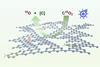
Surprising oxidising power of carbon dioxide freed by photochemistry
Iron-based photocatalyst enabled a range of useful organic molecules to be synthesised from alkenes
-
 Opinion
Celebrating click chemistry’s 25th birthday
The field ‘is nowhere near mature – if not in its infancy, then perhaps enjoying a highly active childhood’, says one of click chemistry’s orignators
-
 Opinion
Why I think it’s time to change how we teach the inductive effect
New evidence challenges the idea of long‑range inductive transmission, highlighting that some textbook explanations of inductive effects are oversimplified and, in key cases, completely wrong
-
-
 Research
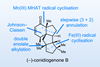
25 years ago click chemistry changed science. What happened next?
Barry Sharpless and his team first introduced the concept of ‘clicking’ molecules together 25 years ago
-
 Opinion
Click chemistry, 25 years on
A quarter of a century since first introducing the concpet of ‘click’, one of its originators explains how it became a transformational tool for scientists
-
 Research
Study points to ammonia contamination in water microdroplets saga
Replication effort attributes mass spectrometry peaks to ammonium not hydroxyl species
-
 Research
Elusive electronic effect could explain the origins of chirality for all life on Earth
Study suggests spin selectivity is different in enantiomers – altering their reaction rate – which ‘challenges a fundamental assumption in the field’
-
 Research
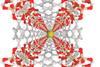
Electrifying MOF synthesis drastically reduces time it takes to make them
External electric fields stimulate the formation of various metal–organic framework materials
-
 Research
‘Flip-over’ nucleophilic substitution reaction challenges classic SN2 textbook mechanism
Team behind work say this is a reminder that even simple reactions are more complicated than they first seem
-
 Research
Click chemistry toolbox expanded with 'forbidden' C–C bond forming reaction
Copper-catalysed addition produces functional links that should be compatible with biological systems
-
 Research
Versatile skeletal editing strategies upgrade nitrogen compounds into drug building blocks
Two techniques could help speed up the discovery of drugs containing nitrogen heterocycles
-
 Research
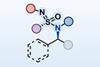
Silver bullet catalyst works magic transforming stable C–H bonds into amines
Method allows for late-stage, stereoselective aminations to drug-like molecules
-
 Research
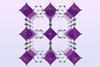
MOF magnet with virtually no external magnetic field ideal for advanced electronics
Researchers say that the material could be used in spintronic devices
-
 Research
First total synthesis of macrocycle with four stereocentres at the heart of bacterial photosynthesis
Technically daunting synthesis of bacteriochlorophyll a finally reaches completion
-
 Business
‘Basic research is needed more than anything else’
Christian Hackenberger, co-founder of Tubulis, is excited that his team’s initial research is now creating clinical impact
-
 Research
Contra-thermodynamic stereochemical editing explained
How chemists are using light, enzymes and mechanical force to access higher‑energy stereoisomers without rebuilding a molecule from scratch
-
 Research
Using light to push stereochemistry uphill
While chemistry usually follows the downhill pull of thermodynamics, Alison Wendlandt is creating higher‑energy stereoisomers in the final stages of synthesis
-
 Careers
Sustainable laboratories: Cleaner solvents and substrates
How to identify greener replacements for DMF and recover ITO from glass substrates
-
 Research
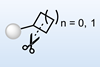
Electrochemistry unleashes untapped potential of strained rings to build molecules
One pot technique achieved functionalisation at up to four sites