Organic chemistry – Page 7
-
 Opinion
Normalising huge substrate scopes worsens wellbeing
And holds up the pace of scientific progress
-
 Research
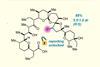
Selective C–H bond fluorination enables conformational reporting in a complex natural product
Radical fluorination leaves extant functional groups intact
-
 News
News‘I worked on it little by little, with the help of a beer’: Making MOFs out of paper
Chemistry World talks to Ryo Horikoshi about engaging students with chemistry concepts using his stunning paper models
-
 News
NewsHow to make metal–organic frameworks and cages out of paper
Ryo Horikoshi shows us how to make amazing supramolecular models to inspire students
-
 News
NewsA year on from the announcement of the dichloromethane ban, US research labs brace for change
Trump administration appears to be backing the Biden rule so universities are moving to comply
-
 Research
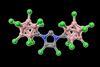
Super-shielded carbene is stable in liquid water
Researchers claim to have validated a decades-old hypothesis formulated by Ronald Breslow by generating a carbene in an aqueous environment
-
 Research
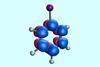
Bridging the gap between Hammett parameters and the electronic structure of aromatic systems
Occupation of effective atomic orbitals used to quantify and predict Hammett parameters
-
 Research
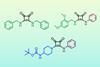
Filter paper simplifies squaramide synthesis
Capillary-driven flow distributes reagents evenly
-
 Research
Skeletal editing provides quick access to pharmaceutical ‘matching pairs’
Late-stage functional group switching in dibenzofurans will aid drug discovery chemistry
-
 News
NewsWhy does asparagus make my urine smell?
The chemistry of the organosulfur compounds that result in a fragrant toilet
-
 Research
LSD analogue synthesised by swapping just two atoms less likely to cause hallucinations
New molecule shows promise for treating neuropsychiatric conditions such as schizophrenia
-
 Research
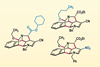
Cascade reaction brings a new dimension to amine synthesis
Method creates two new rings and four new bonds
-
 Research
Catenane with tuneable mechanical chirality created
The chirality of a compact cationic catenane can be controlled using chiral sulfonate anions
-
 Research
Reimagining synthetic strategy with skeletal editing ticks box on chemists’ wish list
Selective heteroatom alkylation offers route to modify important drug building blocks
-
 Research
Light-activated catalyst sorts mirror-image molecules by resetting carbon–halogen bonds
Photocatalytic reaction that inverts chiral centres offers new way to enrich racemic mixtures
-
 Research
‘Bowtie-shaped’ molecule displays spin entanglement
A new solution synthesis strategy could catapult quantum applications
-
 Research
Spray-drying investigated as a speedy method for synthesising small organic molecules
Technique applied to Schiff-base condensations, Claisen–Schmidt reactions and amine acylations
-
 Research
Long-chain alkanes preserved in Martian mudstone
Molecules could have derived from biological fatty acids, although abiotic origins are also possible
-
 Research
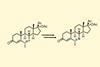
Skeletal editing targets double bonds
Two new techniques selectively install nitrogen atoms into complex molecules
-
 Research
Study challenges notion that solution-phase organic reactions are unfeasible at high temperatures
Capillary synthesis at 500°C converts N-substituted pyrazoles into their isomers within five minutes