All articles by Tim Wogan – Page 10
-
 Research
Odd 'entropic bonds' akin to chemical ones can form between nanoparticles
Simulations finds that ’bonding’ can occur in the absence of any electronic interaction
-
 Research
Copernicium behaves like a volatile noble liquid, simulations suggest
Relativity plays a part in making element 112 very different to its counterparts in group 12
-
 Research
Super-wood offers way to create air con that doesn’t need power
Buildings covered in densified wood ‘super-material’ could cut cooling’s carbon footprint
-
 Research
Reaching new heights to form a better picture of 3D molecules
Combining two microscopy techniques enables clearer imaging
-
 Research
Bizarre ice XVIII is an oxygen ion crystal swimming in a sea of protons
High pressure superionic form of water may hold clues to behaviour of giant icy planets in our solar system
-
 Research
Electrostatic doping improves 2D semiconductor performance
Overcoming defects in monolayer materials could pave the way for their use in electronics
-
 Research
Drilling down to molecules’ atoms gives unprecedented glimpse of vibrations
Microscopy technique could help scientists understand how to design new catalysts and superconductors
-
 Research
New twist on graphene gets materials scientists hot under the collar
Stacking graphene at an offset ‘magic angle’ can introduce new properties like superconductivity
-
 Research
'Self-destructing' solvents control crystallisation
‘Deep eutomic’ mixtures allow easy access to unusual pharmaceutical polymorphs
-
 Research
Designer copper complexes offer route to cheaper organic LEDs
New material cuts out precious metals
-
 Research
Hunting for isotopes with EELS
Electron microscopy detects isotopically labelled molecules with nanoscale resolution
-
 Feature
Forcing reactions with plasmons
Traditional catalysts can lack both efficiency and selectivity. Tim Wogan explains how plasmons offer the potential to do chemistry with a lighter touch
-
 Research
New class of carbides could be toughest yet
New disordered materials show exceptional hardness and heat tolerance
-
 Research
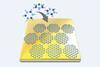
Largest perfect 2D crystal ever made from boron nitride
Fabrication technique could lead to thinner, flexible electronics
-
 Research
Remote controlled self-optimising flow synthesis
Online interface could allow virtual sharing of complex kit, and enable simple improvement of reaction conditions
-
 Research
Plasmonic photocatalysts flatten reaction barriers
Light-driven reactions under mild conditions made possible with metal plasmonic nanoparticles
-
 Research
Paint achieves seemingly impossible by cooling buildings in direct sun
Coating offers a route to zero-carbon air conditioning
-
 Research
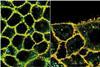
Twisting molecule probes cell membrane tension
Changing fluorescence visualises strain in live cells, and reveals unusual behaviour
-
 Research
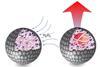
Bubbly protocells bob up and down
Enzymes inflate or consume oxygen bubbles making clay capsules float and sink reversibly
-
 Research
Prebiotically plausible version of pH gradient generating catalyst
Scientists create simple metal ion system could have facilitated early metabolic processes, like ATP synthesis