All Matter articles – Page 26
-
 Research
Are organic chemists discovering fewer reactions than they were decades ago?
Analysis of millions of transformations reveals reliance on popular methods – and the rise of complex reactions
-
 Research
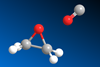
Plasma-based approach leads to more reactive oxygen donors for alkene epoxidation
Yield of epoxidation reaction increased, and waste reduced, by using CO2-derived atomic oxygen and plasma-based conditions
-
 Research
Individual proteins identified with world’s tiniest ruler
Nanosized caliper that can identify individual proteins could ‘do for proteins what next-generation sequencing did for DNA’
-
 Research
Wood made foldable and stronger than steel
Next-level modification sees natural material made into knives, nails and honeycomb structures that can carry the weight of a car
-
 Business
Nanoparticles in full flow
Promethean Particles’ hydrothermal reactors make nanomaterials in liquid dispersions
-
 Research
Flawless quasicrystals may be possible to synthesise simply
Cutting misalignment should allow perfect structures to form
-
 Research
Clippanes join rotaxanes and catenanes in mechanically interlocked molecule family
Keck-clip molecules consist of two entangled gold–carbene metallotweezers
-
 Research
Polymerisation used to synthesise 2D material inside living cells
Sheets are larger than those cells can take up and the technique could find uses in imaging
-
 Research
Meltable MOF glass made with ionic liquid
New family of glassy porous materials can be melted and moulded into any shape
-
 Research
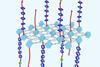
First fundamentally new form of adsorption for more than 90 years driven by molecular machines
Unlike physisorption and chemisorption, the newly discovered ‘mechanisorption’ is an active process that can store energy or chemicals
-
 Feature
mRNA vaccines for Covid and beyond
Already hailed as a miracle, the new vaccine technology could protect us from other diseases, Clare Sansom finds
-
 Research
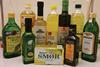
Cooking oils work as solvents for metal-catalysed reactions
Suzuki–Miyaura, Hiyama, Stille, Sonogashira and Heck cross-couplings shown to proceed with quantitative yields in certain vegetable oils, fish oil, butter and waxes
-
 Research
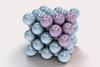
Squeezed crystal becomes better catalyst
Fine-tuning platinum’s lattice strain with removable atomic spacers boosts its catalytic activity by up to 50%
-
 Feature
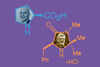
How organocatalysis won the Nobel prize
Jamie Durrani tells the story of how two young upstarts, Ben List and David MacMillan, created a whole new field of catalysis
-
 Research
Uranium’s strong covalent bond breaks periodic table predictions
Actinide’s unusual covalency could explain its ability to fix nitrogen
-
 Research
First snapshots of ionised water’s fleeting radical–cation pair
Ultrafast electron diffraction spots hydroxyl–hydronium complex before it separates a hundred quadrillionth of a second later
-
 Research
Möbius metallacycles show their aromaticity with textbook reactivity
First electrophilic aromatic substitution reactions with unusual molecules
-
 Research
New process could turn scrap metal into hi-tech steel in demand for cars and alloys
Ultra-low carbon steel created electrochemically
-
 Research
Explainer: why has asymmetric organocatalysis won the chemistry Nobel prize?
In a rather unexpected move by the Nobel committee, this year’s prize in chemistry has been awarded to Benjamin List and David MacMillan
-
 News
NewsAsymmetric organocatalysis scoops 2021 chemistry Nobel prize
Benjamin List and David MacMillan recognised for research that makes chemistry greener