Supramolecular chemistry – Page 3
-
 Research
Extraordinary crystal structure displays abiotic foldamer with unprecedented complexity
Four aromatic oligoamide helix-turn-helix units assemble in organic solvent into an abiotic architecture with quaternary-like structure
-
 Research
Chemical chainmail constructed from interlocked coordination polymers
Simple synthesis yields an ‘infinite’ structure with applications in flexible materials
-
 Research
Molecular motor running on electricity mimics biological motors
The nanomachine is based on a [3]catenane and isn’t operated through a microscope tip, unlike others
-
 Research
Radium chelator researchers working to improve targeted cancer therapies
Oak Ridge National Lab team investigate factors underpinnning Ra2+ complex stability and selectivity in attempt to expand the therapeutic utility of radium-223
-
 Research
AI beats human experts when it comes to peptide design
Algorithm throws up some counter-intuitive structures in contest
-
 Research
Dual use molecular motor can drive or glow
Infrared light can flip molecular machine between rotary motion and photoluminescence
-
 Research
Chemical Turing machine reads molecular tape
Crown ether ratchet reads out molecular strand’s chirality
-
 Research
Artificial active transport offers new way to prepare complex oligorotaxanes
Novel class of molecular pump is driven by transamidation
-
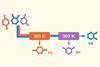 Research
Manganese coordination polymer separates xylene isomers
A highly flexible and stable material offers new opportunities for industrial xylene purification
-
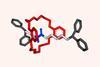 Research
Improbable rotaxane made using a foldamer helix
Macrocycle displaced to a site for which it has no formal affinity
-
 Research
Light-driven molecular motor made from entirely renewable resources
Green synthetic strategy leads to first light-driven molecular motor from wood biomass
-
 Research
Switching molecular self-assembly on and off with electricity
New approach uses electrons to catalyse molecular recognition, giving chemists precise control over the process
-
 Research
This computational chemist is experimentalists’ secret weapon in the hunt for new materials
Kim Jelfs discusses how software development feeds – and needs – collaboration
-
![Terphen[3]arene](https://d2cbg94ubxgsnp.cloudfront.net/Pictures/100x67/7/3/6/518736_d2cc00040gf1_733670.jpg) Research
ResearchSulfonated macrocycle helps the medicine go down
A supramolecular approach makes alkaloid drugs taste less bitter
-

-
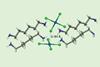 Research
Doubly negative dianions can form π hole bonds too
Researchers report an attractive interaction between two doubly negative dianions for the first time
-
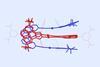 Research
Clippanes join rotaxanes and catenanes in mechanically interlocked molecule family
Keck-clip molecules consist of two entangled gold–carbene metallotweezers
-
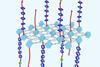 Research
First fundamentally new form of adsorption for more than 90 years driven by molecular machines
Unlike physisorption and chemisorption, the newly discovered ‘mechanisorption’ is an active process that can store energy or chemicals
-
 Research
Peptide superstructures speed up Michael reaction
A tripeptide that self-assembles into a supramolecular fibres accelerates an asymmetric benchmark reaction by up to 74%
-
 Research
Giant molecular cage protects plastic-eating enzyme
Caged protein withstands temperatures much hotter than its usual melting point and becomes 1000 times more resistant to solvents