



In this episode, we breakdown the controversy unfolding across the research community as hundreds of doctored images have been identified in Thermo Fisher Scientific’s online catalogue, and discuss the complexity behind chemical recycling of plastics – with Frankie Macpherson and Phillip Broadwith.
This week’s headlines
Featured stories
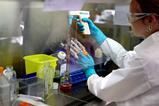
One of the world’s largest laboratory suppliers has found itself at the centre of a debate about trust, transparency and data integrity. Researchers and research-integrity sleuths have identified hundreds of images in Thermo Fisher Scientific’s online antibody catalogue that appear to have been digitally altered.
The images in question are Western blots, part of the company’s verification to demonstrate the antibody reagents perform as expected and accurately detect their intended protein targets.
While the company maintains any changes are cosmetic and say they remain confident in their reagents’ performance, the allegations have raised concerns for researchers who have relied on this data when selecting reagents. What does this mean for the researchers whose experiments depend on commercial reagents every day, and for transparency in the scientific community?
And, chemical recycling has long been touted as the solution for the mountains of plastic waste that traditional recycling can’t handle. It’s the process by which plastics are broken down into oils or their basic components to be remade into new materials. The science behind the method is well established, and with increasing focus on the plastic crisis over the last decade one would expect that the industry would be thriving.
But a series of plant closures and project cancellations across Europe and the US is raising uncomfortable questions about whether the technology can live up to the hype. Is chemical recycling facing a temporary setback, or are these troubles exposing deeper flaws in the economics of the circular plastics economy?
We would love to hear your feedback on this new podcast, so if you have any questions or comments please get in touch.
Introduction and News Roundup
Mariana Kneppers
Multinational laboratory supplier Thermo Fisher Scientific has been criticised after hundreds of doctored images of validation Western blots were found on their online antibody reagent catalogue. We discuss how the scientific community is responding. And the chemical plastic recycling industry is contracting across Europe and the US. What are the complex reasons behind it and what does this mean for the future of plastic recycling? I’m Mariana Kneppers, Chemistry World science media producer, and this is the Chemical Breakdown. We’ll be diving deeper into these stories shortly, but first let’s take a look at this week’s news from the Chemistry World website.
Many inspirational science biographies could be conveying demotivating messages to children. New research has found that while scientists’ ability was represented fairly evenly as a mixture of inherent genius and cultivated skill, people tend to fixate on the false perception that scientific success often relies on innate talent and lifelong interest.
A psychedelic compound has been redesigned to retain therapeutic activity while limiting unwanted side effects during testing on mice. The molecule’s structure was adjusted to avoid interactions with a specific subset of serotonin receptors, potentially offering a blueprint for safer neuropsychiatric drugs.
Japan has officially associated to Horizon Europe, becoming the 23rd non-EU country to join the EU’s flagship research funding programme. The agreement entered effect on the 30th of July and means that Japanese researchers can now access parts of the Horizon programme on the same terms as EU researchers.
And a new, first-of-its-kind, once-daily pill has been greenlit by the U.S. Food and Drug Administration as an alternative treatment for adults with high cholesterol. Known as enlicitide, this macrocyclic peptide can reduce low-density lipoprotein cholesterol by 56 to 59 per cent, similar to traditional injections.
You can find these stories and more online. Just visit chemistryworld.com for more of the latest news in the chemical sciences.
Thermo Fisher Western blot controversy
Mariana Kneppers
One of the world’s largest suppliers of scientific research tools has found itself at the centre of a debate about trust, transparency and data integrity. Researchers and research integrity sleuths have identified hundreds of images in Thermo Fisher Scientific’s online antibody catalogue that appear to have been digitally altered.
The images in question are Western blots, an important technique used to demonstrate that antibody reagents perform as expected and accurately detect their intended protein targets. While the company maintains that the changes to the image were cosmetic and that they remain confident in their reagents’ performance, the allegations have raised concerns for researchers who rely on this data when selecting reagents for their experiments.
What does this mean for the researchers who depend on commercial reagents every day and for the transparency in the scientific community? Here to discuss today’s stories are digital content assistant Frankie Macpherson and business editor Phillip Broadwith. Hello to you both.
Frankie Macpherson
Thanks for having us.
Mariana Kneppers
Frankie, give us some context here. I explained a bit about what Western blots are, but how are they used? How do they work? Give us some context.
Frankie Macpherson
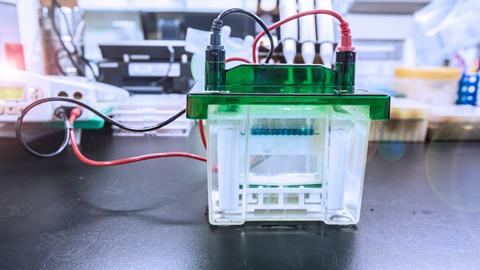
Sure, yeah. So essentially they’re sort of a gel membrane-based system, which most chemists, I guess, would compare maybe to like a TLC, thin layer chromatography. They’re used to identify proteins by molecular weight, so they can separate out proteins.
And a lot of the biomedical sciences, they use them for different reasons, but in this context, they’ve been used for antibody validation. So increasingly researchers are looking for antibodies that specifically bind to one protein and importantly don’t have any off target binding to other proteins of different molecular weights.
And so use Western blots to say these bands of what you can see in some of the images of bands of like the black blots or blobs are where it’s binding. But yeah, they can be used as part of separating out things and they can be used to validate an antibody that you’re looking to bind to a specific protein as accurate in doing that. I see.
Mariana Kneppers
So these come as part of a validation pack with these reagents. Why can’t researchers run these validations on their own if they’re concerned that these Western blots are, you know, perhaps not depicting accurate information?
Frankie Macpherson
Yeah, it’s a good question. And while some researchers can and do, because there’s been issues previously across the sort of biomedical research community with antibody performance, it’s really expensive to do and time consuming.
And the antibodies themselves are quite costly. So it can cost anywhere between 400 and $500, that’s like 300 to 400 pounds for just a.1 millilitre vial of antibody solution. So for researchers to be taking extra time and the cost of running the blots to redo what they’re expecting to have already been correctly and accurately portrayed when they’re buying antibodies is just not feasible for a lot of people.
Mariana Kneppers
Yeah, fair enough. And so what exactly is the extent of the scale of the manipulation we’re seeing? You know, how many of these images are we seeing that have been manipulated and how are they being manipulated? How is this first detected?
Frankie Macpherson
Yeah, so they’ve been manipulated in a couple of different ways. Probably the most audacious examples are where there seems to be what they’ve called sort of ‘apparent painting’, where off target binding bands that it looks like the antibody would have bound to a protein of a molecular weight, which was not what it was specifically advertised to do.
So I guess there appears to have been sort of like painting over, ‘scratching out’ they’ve described it as. And the other examples where it looked like they’d essentially copied a sort of clean background, as it were, from one Western blot and pasted it across lots of different antibody reagents and then almost pasted bands on top of it.
And so we’re not sure exactly how many it seems to have pasted bands on top of it, but the researchers last I checked had identified around 203 where the same pattern of background was copied and pasted, which is quite significant.
Mariana Kneppers
Yeah, that’s quite a lot. So Frankie, Do we know why have these images been manipulated then?
Frankie Macpherson
Yeah, I mean, we’re not certain why. According to Thermo Fisher, any changes made were to clean up for presentation purposes or just cleaning up for clarity. However, of the researchers I’ve spoke to, while they have different versions of what they would categorise as like acceptable cosmetic changes for presentation, they all agree that this goes sort of well beyond it in some of the cases.
So it’s unclear what’s driven this.
Phillip Broadwith
I mean, The worst case is they haven’t done, and it’s just copied and pasted. But that’s absolutely not clear. The best case is the real data is there, but it’s a bit messy. They’ve taken what is real data and just put it onto a cleaner background, which wouldn’t be acceptable for publication in a journal, for example.
Mariana Kneppers
Yeah. this brings into question, what is the distinction between what’s acceptable and what’s not? It sounds like it’s kind of a grey area here. Do you have any thoughts on that, Phillip?
Phillip Broadwith
Well, so academic journals, for example, will have their own set of standards of what they say is acceptable. And I think as Frankie’s mentioned, a lot of what we’re seeing from Thermo looks like it’s well outside of those standards, but there’s no agreed standard for commercial presentation of these things.
It’s entirely possible that the real data does exist. It’s maybe a bit messy and they’ve just used a very quick and dirty method of cleaning it up. But it’s also possible that at some points there’s data being hidden. There’s more serious problems with some of this data. The biggest problem is we don’t know what’s what. We can’t tell what degree of change there’s been until we can see the original data?
Mariana Kneppers
Yeah, fair enough. So what does this mean for researchers and teams that are using these products? You know, people have conducted previous studies using these reagents. Are there worries now that perhaps the reagents are performing the way they should? Are people now conducting their own validation studies?
Frankie Macpherson
Yeah, well, I think the big concern for the research community as a whole is that it’s been holding back research. For some people, it may be Phillip talked about, they may still work and it’s just not an accurate representation of the Western blot, but we just don’t know.
And so for a lot of people who have run experiments and they’ve just found, oh, we could never get this antibody to work, they’re now reflecting back on time wasted in the lab, money wasted on experiments and the antibodies themselves.
So I’m sure it will potentially lead to researchers trying to run their own Western blots if they do have the money for it, but For a lot of people it’s stoked a fair amount of outrage because it has been holding back research and disappointing for the research community.
Phillip Broadwith
I mean the biggest thing is the uncertainty, right? Because you’ve lost confidence in the performance. So we don’t know whether your negative results are because the antibody is not working or because the experiment doesn’t work, right.
Frankie Macpherson
Exactly. And Thermo Fisher have said that they remain confident in the quality of these antibodies and that they should continue to work. They have also said that researchers concerned can request access to the raw data. They haven’t yet put up a page of where you can access that, but they are conducting a sort of internal review of these things.
Mariana Kneppers
Yeah, something that this does bring up as well is. The standards or the expectations of what a Western blot should look like, right? If this has become unbeknownst to us or unconsciously has become the standard that these Western blots are clear, have very clean results, what kind of impact does that have on the standards we set for these validation tests?
Frankie Macpherson
That’s a good question. And you know, when I was speaking to one of the sort of science leaders, Elisabeth Bik, She was saying she likes it when she sees a Western blot or data where there’s wee impurities, for example, because it lets her know, oh, this is real, I can trust it in a sense.
But for a lot of people, they’re left wondering, oh, has this artificially raised the bar for what we should be expecting for Western blots for these antibodies?
All of the researchers and scientists I spoke to said that it would be really helpful if industry were to meet publication standards that Phillip spoke about of what should be expected. they think that’s a good step towards progress in terms of sometimes these antibodies also link to papers where they’ve been used and so it would make sense for them to adhere to the same sort of standards. but there’s not really a pathway for change in that way from the researchers side.
Phillip Broadwith
The position where we are now is that there’s a kind of trust and transparency gap.
Frankie Macpherson
Yeah, I was just going to say, I guess one of the questions that a lot of people have been left with following this is when it comes to industry, which is supplying things for academia and for researchers who have dedicated funding for specific projects, where is the through line in terms of responsibility, transparency and accuracy?
And there’s obviously different motivators for business and for academia. And so it could be that the expectations have, there’s been a bit of a gap between what’s expected in publications and what’s expected when you’re buying an antibody. And then that’s something that needs to be reevaluated now so that Maybe researchers know when they go to buy antibodies, it’s not as clean a Western blot, but their trust is restored.
Mariana Kneppers
Yeah, absolutely. It kind of sets that standard, doesn’t it? I assume this is an ongoing story. I mean, it sounds like more images are still being found, not just at Thermo Fisher, is that correct?
Frankie Macpherson
Yeah, so far there’s just been one identified from another supplier, Abcam. and it seems to have a similar background pattern as a couple of the ones identified for Thermo Fisher.
There are some images that are from internally analysed antibody agents in Thermo Fisher and there are some that are from third-party suppliers that have done the Western blot analysis.
So it is sort of an evolving story and The science sleuths I spoke to have a repository that they’re continually updating. And when I last spoke to them, they said that it’s likely that there will be many, many, many more images identified. And so it does seem like it’s quite a wide spanning problem.
Phillip Broadwith
I mean, if one of the outcomes of this is that people are just a little bit more careful and critical of the data that they’re looking at when they’re buying these antibodies, then maybe that’s a good thing.
But the other side of that is that the companies absolutely need to be working hard to restore the trust of their customers who are paying large amounts of money for these things, often funded by public science funding. that they’re getting what they’re paying for.
Mariana Kneppers
Yeah, absolutely. That transparency does have to be restored.
Frankie Macpherson
There’s an independent organisation called Icarus that validates antibodies and they use sort of gold standard protocols and it’d be interesting to see if there is a bit of collaboration or if they’re brought in to inform practice moving forward because not just the manipulation we’ve seen but the response from Thermo Fisher so far has felt disappointing to a lot of people in the research community and so be interesting to see the steps that are taken moving forward.
Mariana Kneppers
Yeah, absolutely. Gosh, well, definitely a developing story and we’ll be sure to keep an eye on it and I’m sure we’ll be reporting on it for the next couple months at least. Well, thank you so much everyone.
Chemical recycling and the plastics industry
Mariana Kneppers
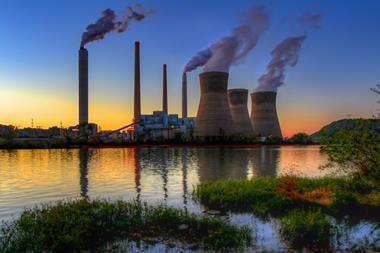
Chemical recycling has long been touted as the solution for the mountains of plastic waste that traditional recycling can’t handle. It’s the process by which plastics are broken down into oils or their basic components to be remade into new materials.
The science behind the method is well established and with increasing focus on the plastic crisis over the last decade, one would expect that the industry would be thriving. But a series of plant closures and project cancellations across Europe and the US is raising uncomfortable questions about whether the technology can live up to the hype.
Is chemical recycling facing a temporary setback, or are these troubles exposing deeper flaws in the economics of the circular plastics economy? So Phillip, let’s jump right in. Why are we seeing this contraction? I mean, particularly as all these key policies are coming out here in the EU and the UK pushing through for plastic recycling, why are we seeing this contraction?
Phillip Broadwith
Just to kind of set the scene of where we are with this, plastic waste, most of it is not recycled at all. About a third of plastic waste in Europe is recycled at all. and in the US that’s closer to sort of 10%.
But when we’re talking about chemical recycling, that’s a tiny, tiny fraction of that, maybe like 0.1% of that is chemical recycling. The rest of that recycling is mechanical recycling where you take the polymer, you kind of shred it up, clean it up, melt it down and reform it into pellets of the same polymer.
Sometimes the quality goes down a little bit, but anyway, it can be made into new stuff. What we’re talking about here is chemical recycling and the idea is that hopefully it will be better at dealing with materials that are mixed material packaging, where you’ve got mixtures of different polymers or where they’re a bit more contaminated, so you can get rid of some of that contamination.
But in reality, if you want chemical recycling to work really well, you still need quite a clean, consistent flow of feedstock to go into that. So the same kinds of plastics and a uniform mix of those materials to get a reasonable quality stuff out of the other side.
You can do this kind of pyrolysis and other treatments, so that’s basically heated up in the absence of oxygen and it breaks a lot of the carbon-carbon bonds and gives you a mixture of hydrocarbons that you can then process either through normal oil refining infrastructure or separately on its own.
But the more complex and mixed up your feedstock, the more difficult it is to get a good fraction of that material back in a usable form, particularly if you’ve got things like PVC in there which has chlorine, that messes up a lot of the chemistry.
So that tends to mean you get more products that are low value waste products that end up either being burned or not being very useful. Whereas if you’ve got that clean stream of feedstock, then you’re going to get better conversion into useful polymers.
Mariana Kneppers
Yeah. What does the price of energy have to play in this? Because obviously this process is quite energy intensive, right? Is that affecting any of the industry?
Phillip Broadwith
Yeah, so you might think that when something like the war in the Middle East happens and the price of virgin plastic goes up really high, that would help recyclers, right? Because recycled plastic is generally a little bit more expensive than brand new plastic because you have to do all of the collection and all of those processes take time, energy, people to do, resources to do.
So generally high quality recycled plastic has been more expensive than virgin plastic. So you might think if there’s a kind of constriction of the supply of virgin plastic and the price of virgin plastic goes up, then that helps the recyclers.
But because this process is also very energy intensive, because the price of energy is also going up, that means that the price of the recycled plastic is also going up. So they still can’t really compete on a pure cost basis.
To be able to scale up these processes, because they are still in their infancy, it’s expected when you’re introducing a new technology that you might have to have some government subsidies, some incentives, to allow that industry to grow to scale to the point where it becomes cheaper, it becomes more cost effective.
But we’re not seeing that because those policies keep getting delayed. They are kind of on the horizon, but they’re getting delayed. So that means that the companies that are trying to do this are putting in some investment on the basis that they think in a given amount of time they’ll be able to do this profitably and then that timeline keeps getting stretched and stretched and stretched and their money runs out and they kind of go, well, we can’t sustain this for long enough to get the return on our investment.
Mariana Kneppers
So it doesn’t really sound like, you know, there’s a lack of incentives or I don’t know, is there? Are there a lack of incentives? Like people, or is it mainly policy that’s kind of hamstringing this whole process?
Phillip Broadwith
Part of the problem is that on a global scale there’s too much production of virgin plastic. China particularly has scaled up its production of various plastic materials because it had been a big importer of plastic, it wanted to become self-sufficient, so it’s built a load of petrochemicals and plastics plants and then The supplies that would have been going to China are now being spread around the rest of the world and there’s lots, there’s a sort of excess, so the prices go down, which means new plastic is really, really cheap, but the price of recycled plastic has either gone up or has stayed the same.
So it’s difficult to compete. People just want to go, well, we’ll buy the virgin plastic because it’s cheaper.
But there are regulations coming in the EU that say you have to include a minimum amount of recycled material. and there are taxes coming in on the virgin plastics as well for their carbon emissions.
So there are incentives in both ways, but from a technical developer’s point of view, they know that those things are coming, but the timeline is a little bit uncertain. And it’s that uncertainty that is the problem.
It’s kind of like, well, we’ll either pause or we’ll hold back our investment because we don’t know for sure that this is actually going to happen or when it’s going to happen. So we don’t want to waste our money doing this when we’re not going to get any money back.
Mariana Kneppers
So there needs to be a bit more concrete leadership or concrete decision on what direction the industry is moving in as a whole. Because at the moment, it feels like people are stuck in a stasis, aren’t they? All of these closures, the contraction, do you see this as part of, you know, maybe the normal growing pains of an emerging technology or is this evidence that chemical recycling industry may have fundamentally over promised on what it could accomplish?
Phillip Broadwith
It’s difficult to say. If the governments of various countries are willing to put in enough effort and support, they could make it work. Whether there’s something more cost effective you could do with that money, that’s a slightly different question.
So there are definitely arguments going on in the background about whether or not we should even be doing this at all. I’m not going to say either way, because I don’t have the expertise in that kind of area. But that’s another thing that’s kind of going on.
environmentally, there are lots of our environmental groups are saying actually chemical recycling is, it produces too much pollution, too much carbon emissions, too much hazardous waste of its own. That’s one of the issues that some of the plants in the US have faced.
They haven’t shut down because they weren’t cost effective. They’ve shut down because the authorities have kind of said, no, you’re producing too much pollution and emissions. So it’s a really complicated thing.
Mariana Kneppers
Yeah, absolutely.
Frankie Macpherson
I was just thinking it was so interesting when I was first reading the coverage of this, I hadn’t realised that actually these plants, like their issues included them contributing to rising pollution and things like that, which It’s really surprising.
Mariana Kneppers
Yeah, it seems counterintuitive.
Frankie Macpherson
It seems like it’s sort of, like you mentioned, almost going through a growing pain stage, but also is it growing as fast as it needs to meet not just the demand for recycled plastics and materials, but also our net zero needs. It sounds like that’s the debate people are having.
Mariana Kneppers
Yeah, absolutely.
Frankie Macpherson
Thinking about when you’re saying what they’re looking for is like a nice consistent clean stream to help them separate it into the different components because a lot of our food packaging things like that are mixed plastics.
Is this something that researchers or like waste management teams are working on developing in terms of that separation or like how to take the less cleaner, more mixed plastic waste and add an additional step that potentially reduces pollution? Or is that something that is a ways away?
Phillip Broadwith
Yeah, well, one of the other strands of the regulations that are coming in is around the design of products, but that takes more time to come through, right?
So the idea is that plastic products, plastic packaging will be designed to be recyclable. So there’ll be less mixing of materials. If there are labels, they’re easier to remove, all of those kind of things.
There are ways of designing the products that make them more easy to recycle. I mean, in the UK, some of this has already happened. You might notice that milk bottles, the tops which used to be made from a different kind of plastic are now made from the same kind of plastic that the body of the bottle is. That was done to make them easier to recycle.
So there’s just small things that you can do like that, but that takes time to kind of percolate through the system and not everybody’s working on the same kind of time frame.
Different packaging has different priorities, like if you really need the performance that you get from mixing those materials together in terms of being a gas barrier or anything like that, then sometimes you can’t do these things.
So that’s also happening, but it’s a bit more slow. So to increase the amount of recycling and of material that we’re getting back from our plastic waste, we need to do all of these things, but it’s about what’s the most cost effective thing to do at the time.
Mariana Kneppers
Yeah, absolutely.
Frankie Macpherson
And then when it comes to that industry scale chemical recycling process in the interim, while we are still dealing with more of the mixed plastics, is there anything that could be introduced to help with that process and limiting the pollution that comes from that?
Phillip Broadwith
I mean, I think the companies and the research groups that are doing work on this are working on improving their processes all the time and making them more able to deal with that variability and the different plastics. But that’s really, really hard. And it takes investment, it takes money, and there needs to be the confidence that there’s going to be a viable business model at the end.
Mariana Kneppers
Yeah, absolutely. Final question for you, Phillip. What do you think this means then for the overall plastic waste crisis? I mean, do you think we can move forward and make progress into reducing our reliance on plastic if we can sort this system out.
Phillip Broadwith
There’s a lot of different arguments here. If we think back to when there were negotiations around the plastic waste treaties, you know, trying to get an international agreement about how we address this.
The vast majority of countries are saying that we should be trying to reduce the overall amount of plastic that we’re producing, but targets around that keep getting blocked by a small number of countries that rely very heavily on their petrochemicals and plastics industry for their income that are saying, no, we don’t want to reduce the amount of plastic, we just need to deal with the waste.
But I mean, from my opinion, both of those things need to happen, right? We need to get better at dealing with the waste. We need to get better at designing products so that they can be recycled.
We need to build more of the infrastructure around how they are collected, reprocessed, all of those things to be able to clean up those streams and get better quality circular systems going, but also produce less plastic in the first place. But that’s a hard thing to do politically.
Mariana Kneppers
It sounds like there are challenges on all sides of this issue for the researchers, for us as consumers, for industry leaders. It’s quite a complex issue and we’ll keep our eyes on this and hope that things can smooth out further down the line. Thanks so much everyone.
Phillip Broadwith
Thanks for having us.
This Week in Chemistry History: Curiosity Rover Lands on Mars
Mariana Kneppers
And finally, this week in chemistry history, Nasa’s Curiosity rover successfully landed on Mars on August 6, 2012, marking one of the most ambitious achievements in planetary exploration.
Curiosity was the 4th rover sent to Mars, but it was in a class of its own. At around 3 metres long, 2.2 metres tall, and weighing nearly a ton, it dwarfed its predecessors, Spirit and Opportunity.
More importantly, it was designed as a mobile chemistry laboratory carrying an unprecedented suite of scientific instruments, including spectrometers, gas chromatographs, X-ray diffraction equipment, radiation detectors, and high-resolution cameras.
Unlike earlier rovers that relied on solar panels, Curiosity was powered by a radioisotope generator fuelled by plutonium-238. This gave it a reliable source of energy and allowed it to keep working through the dust storms and harsh conditions of the Martian environment.
As landing day approached, nerves were running high in mission control. Mars has a long history of defeating spacecraft, with many missions ending in failure.
The most critical phase was the final descent, famously dubbed the ’seven minutes of terror’. During this time, Curiosity had to slow from around 20,000 kilometres per hour to less than a metre per second, all while descending through Mars’ thin atmosphere.
To make matters even more nerve-wracking, the 13-minute communication delay between Mars and Earth meant that by the time engineers received data from the descent, the rover had either landed safely or been lost to the Martian atmosphere.
Mission Control watched anxiously as each milestone was ticked off. heat shield separation, parachute deployment, powered descent, and finally, the revolutionary sky crane manoeuvre.
Then came the words everyone had been waiting for: touchdown confirmed, we’re safe on Mars. The room erupted in cheers, applause, and tears of relief as the first images from the Martian surface began arriving on Earth.
14 years later, Curiosity is still exploring and continues to transform our understanding of Mars. It has shown that ancient Mars once possessed the chemical ingredients and environmental conditions needed to support microbial life.
Along the way, it has detected organic molecules and most recently, it’s identified long-chain hydrocarbons in ancient Martian mudstones. These are intriguing compounds that may offer clues about the planet’s distant past.
None of these discoveries proves that life ever existed on Mars, but together they paint a picture of a world that was once far more hospitable than it is today.
Fortunately, the mission has been extended repeatedly, and Curiosity continues to send back new data. 14 years after the dramatic landing, our robotic chemist on Mars is still helping us answer one of humanity’s biggest questions. Are we alone in the universe?
Outro
Mariana Kneppers
That’s all for this edition of the podcast. If you’re interested and want to hear more about any of the items we’ve covered, check out chemistryworld.com for more of the latest news in the chemical sciences.
You can also sign up for our weekly newsletters like Reaction, giving you a hand-picked selection of stories from Chemistry World and beyond from newsletter and research editor Jennifer Newton, or our industry brief, containing essential analysis and insight on the industrial side of chemistry from business editor Phillip Broadwith.
I’m Mariana Kneppers, we’ll see you next time.
SEO Keywords
Thermo Fisher Scientific, Western blot controversy, antibody validation, scientific data integrity, research transparency, doctored scientific images, antibody reagents, research reproducibility, laboratory suppliers, research ethics, scientific publishing standards, commercial antibodies, Icarus antibody validation, Abcam, biomedical research, chemical recycling, plastic recycling industry, circular plastics economy, plastic waste crisis, pyrolysis recycling, recycled plastics, virgin plastic production, EU recycling policy, UK recycling policy, sustainable materials, plastics regulation, net zero, plastic packaging design, chemical recycling economics, plastic pollution, Mars Curiosity rover, NASA Curiosity, Mars chemistry laboratory, Martian organic molecules, planetary exploration, chemistry history, Chemical Breakdown podcast, Chemistry World
This transcript was generated by AI and checked by a human editor







Topics
- Analytical chemistry
- Antibody
- Biochemistry
- Biology
- Biotechnology
- Business
- chemical recycling
- data analysis
- data science
- Environmental
- EU
- Fine and speciality chemicals
- Government
- Industrial chemistry
- Industry
- manipulation
- Materials
- Microbiology
- Molecular biology
- Petrochemical industry
- Pharmaceutical industry
- plastic recycling
- plastic waste
- Podcasts
- Policy
- Pollution
- Polymers
- Reagent
- Regulation
- scientific suppliers
- The Chemical Breakdown
- ThermoFisher Scientific


No comments yet