Nobel prizes 2026
The most anticipated prize in the scientific calendar is here. Find predictions, discussion and the latest news below.
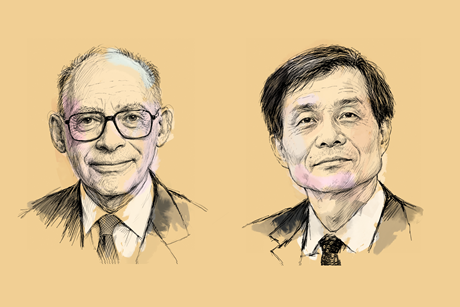
How asymmetric autocatalysis won the Nobel prize
Mason Wakley tells the full story of how Henri Kagan and Kensō Soai’s work on non-linear effects and asymmetric autocatalysis won the 2026 Nobel prize in chemistry
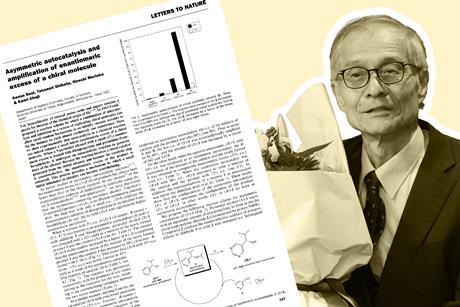


Explainer: what are autocatalysis and non-linear effects and why have they won the 2026 Nobel prize in chemistry?
Reactions that demonstrate how homochirality can emerge take chemistry Nobel prize
The Nobel prize in chemistry 2026 as it happens – Live
High-energy neutrino detection captures Nobel prize in physics
Discovery of light-activated proteins and their application in neuroscience wins Nobel prize in medicine
How are the winners of the Nobel prizes chosen?
Fifty years after he won the Nobel, Lipscomb’s insights into boranes continue to pay dividends
Nobel prize in chemistry 2026: predictions
Latest
Research
40 years of patent data reveals an overreliance on hazardous solvents
AI models trained on biased datasets could perpetuate hazardous practices rather than making chemistry more sustainable

Feature
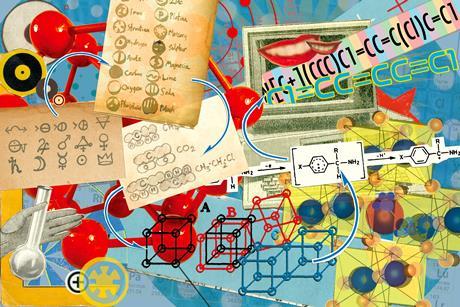
The evolution of chemical notation
Chemical notation has come a long way since the cryptic symbols of the alchemists – but agreeing on how to represent molecules, bonds and reactions has never been straightforward, and the challenge is far from over
Feature
How asymmetric autocatalysis won the Nobel prize
Mason Wakley tells the full story of how Henri Kagan and Kensō Soai’s work on non-linear effects and asymmetric autocatalysis won the 2026 Nobel prize in chemistry
Opinion
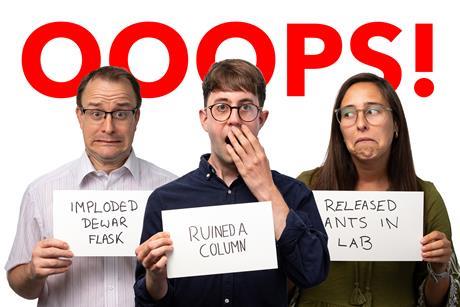
The Chemistry World team shares some of its low-stakes mistakes
Have you ever made a typo, broken some equipment or made a general slip-up? Get in touch and tell us about some of your own low-stakes mistakes.
Research
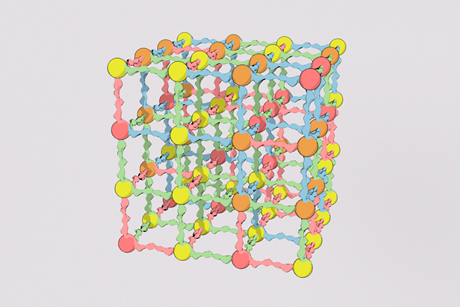
Multivariate MOFs make the case for embracing complexity
Frameworks built from multiple different metals and ligands are expanding the possibilities for materials that can do many things at once
Research
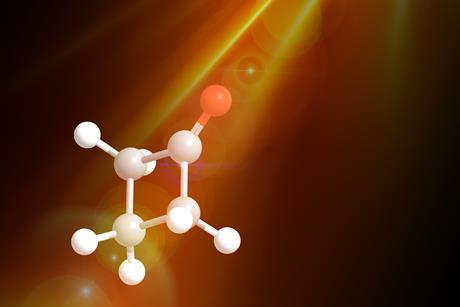
Can we predict what happens in a molecular movie?
A seemingly impossible challenge revealed how close theorists are to truly predicting the future in computational photochemistry
40 years of patent data reveals an overreliance on hazardous solvents
AI models trained on biased datasets could perpetuate hazardous practices rather than making chemistry more sustainable
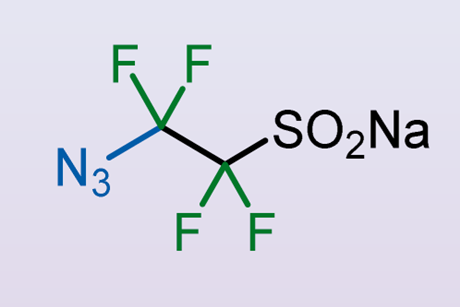
Two-in-one reagent combines fluoroalkylation with being click ready
Researchers add to growing toolkit of bifunctional reagents
Rare N2 dimer could let scientists answer questions about global nitrogen cycle
Femtosecond x-rays solve contentious question of how azobenzene flips between isomers
Microsoft’s split-personality retrosynthetic AI is a fast learner
Skeletal editing step forward as carbon atoms swapped for nitrogen by embracing unreactive radical intermediate
Lunar samples returned by China’s Chang’e 6 mission contain rare, highly magnetic iron allotrope
Two accidental nitroalkane reactions reveal complementary photochemical routes to alkenes and unite their discoverers
AI helps chemists consider more options when it comes to picking the best reactants for an experiment

Why innovation gets stifled if you've settled into the fur-lined rut
Progress involves assessing all processes for improvements – even those whose inefficiencies we’re comfortable with
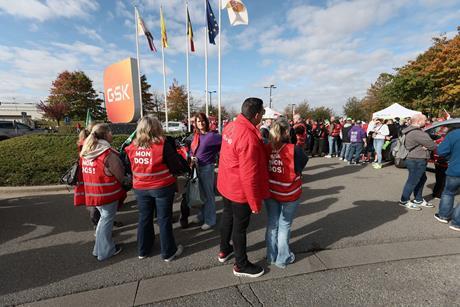
Strikes at GSK’s Belgian sites over plans to cut 1200 jobs
Layoffs spread across R&D, manufacturing and support functions
Syngenta plans to close Grangemouth manufacturing site
Merck & Co’s US antibiotic withdrawal sends the wrong signals for combating resistance
A Nobel for chiral catalysts’ helping hand
Novo goes on deal spree amid semaglutide patent expiries
Sanctions, regulation and prices restrict access to medicines
US watchdog calls for voluntary replacement for expired chemical plant security programme
Tool flags ‘lurking menace’ isomers before they become an expensive problem for drug developers
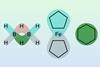
Stop drawing lies: Why chemistry needs hypergraphs
Guillermo Restrepo reflects on the limitations of how we currently draw molecules and calls on chemists to adopt a system that better illustrates their complexity

Why innovation gets stifled if you've settled into the fur-lined rut
Progress involves assessing all processes for improvements – even those whose inefficiencies we’re comfortable with
What’s it like to be the first person privy to Nobel-worthy work?
As Philip Ball, handling editor of Kensō Soai’s 1995 paper reveals, sometimes you’re oblivious to it

Sanctions, regulation and prices restrict access to medicines
Having medicines available when we need them is a privilege, but access more globally is complex and relies on sometimes fragile supply systems.
Scientists must be trained to work without AI, as well as working with it
As AI and autonomous labs become more capable, human reasoning must be preserved
Susumu Kitagawa: ‘I tell my students three words: luck, stubbornness and perseverance’
The winner of the 2025 Nobel prize in chemistry on books, porous materials and his mantra for success
Autocatalytic networks could lie at the beginning of evolution
New modelling suggests how compartmentalised cross-catalysing networks can evolve adaptations that are passed on through chemical states
From preservative to poison
New concerns have arisen about a chemical’s deliberate misuse
In conversation with Richmond Sarpong
Hear from the synthetic chemist rewriting the rules of molecular construction – join us 3 December
Where art meets chemistry: the science of communicating science
Join us on 4 November to explore how creativity can change the way we share science

El Agente: ask me anything! A live demonstration
Join us as we tackle your chemistry challenges live with the El Agente team on 24 November
Nobel prize in chemistry 2026: Reaction
Join us for an exclusive look at the science behind the Nobel prize in chemistry 2026

Waterproof white inspired by nature & low-stakes mistakes
How can structural colour provide an alternative for pigments, chemicals and their environmental cost? And the Chemistry World team discusses their low-stakes mistakes.
Nobel prize in chemistry 2026: predictions
We discuss our picks for this year’s chemistry Nobel prize. Plus, are there certain traits that make a Nobel laureate?

Drugging the ‘undruggable’ cancer proteins & conserving the Bayeux Tapestry
How did molecular glues help crack one of cancer’s toughest targets? And we explore the chemistry behind the investigation and conservation of the Bayeux Tapestry.
Advances in CAR-T cancer therapy & carbon materials’ hidden defects
What does recent success with bladder tumours mean for solid cancer treatment? And we discuss why scientists are rethinking how they assign peaks in spectra of carbon-based materials.
Webinar
In conversation with Richmond Sarpong
Hear from the synthetic chemist rewriting the rules of molecular construction – join us 3 December
Feature
The evolution of chemical notation
Chemical notation has come a long way since the cryptic symbols of the alchemists – but agreeing on how to represent molecules, bonds and reactions has never been straightforward, and the challenge is far from over
Opinion
Why innovation gets stifled if you've settled into the fur-lined rut
Progress involves assessing all processes for improvements – even those whose inefficiencies we’re comfortable with
Business
Strikes at GSK’s Belgian sites over plans to cut 1200 jobs
Layoffs spread across R&D, manufacturing and support functions
Careers
The PhD to biotech series: Networking, hiring reality and making the transition stick
In the fourth and final part of the series, Matteo Tardelli discusses strategies to find and thrive in the industry
Sponsored

Scientists must be trained to work without AI, as well as working with it
As AI and autonomous labs become more capable, human reasoning must be preserved

The scientists who will power our future
Calling in the next generation of scientists from all backgrounds to address the energy crisis and build the next generation of batteries.
Advantages of monodisperse PEG in drug development
Precision matters: why monodisperse PEG is transforming drug development.

Karl Fischer titration for moisture analysis: applications in batteries, fuels and food
Accurate moisture analysis has consequences that extend well beyond the laboratory. Karl Fischer titration is what keeps them in check. The question is whether the reagent is up to the task.
Why data visualisation is so important in the age of AI
Machines don’t need to draw charts and plots to work with data, but humans will still need datavis skills to work with machines.

Pittcon 2026 heads to San Antonio for analytical chemistry showcase
The world’s largest laboratory science conference returns to San Antonio in March 2026, featuring Nobel laureate Frances Arnold as keynote speaker and showcasing cutting-edge analytical instrumentation across five days of technical sessions and networking events.
Biphenyl: 20 years of Restek innovation
How Restek’s Biphenyl column changed chromatography

Explainer: the Welch Award in Chemistry
Many people have never heard about one of the biggest awards in chemistry. Chemistry World sets the record straight.


In conversation with Richmond Sarpong
Hear from the synthetic chemist rewriting the rules of molecular construction – join us 3 December
Why innovation gets stifled if you've settled into the fur-lined rut
Progress involves assessing all processes for improvements – even those whose inefficiencies we’re comfortable with

The PhD to biotech series: Networking, hiring reality and making the transition stick
In the fourth and final part of the series, Matteo Tardelli discusses strategies to find and thrive in the industry

Waterproof white inspired by nature & low-stakes mistakes
How can structural colour provide an alternative for pigments, chemicals and their environmental cost? And the Chemistry World team discusses their low-stakes mistakes.
The PhD to biotech series: Translating an academic profile into an industry narrative
How to make the most of tutorials
How to tutor students
Susumu Kitagawa: ‘I tell my students three words: luck, stubbornness and perseverance’
The PhD to biotech series: Understanding the biotech landscape and where you fit
The PhD to biotech series: Clarifying your direction before you leave academia