Computational chemistry – Page 19
-
 Research
Quantum mechanical mechanism behind 100-year-old textbook reaction revealed
Study challenges established understanding of Michael addition as it uncovers Pauli repulsion’s key role in halogen catalysis
-
 Research
Algorithm accurately predicts mechanical properties of existing and theoretical MOFs
Machine learning could speed up the production and use of coordination polymers in industry
-
 Business
Fighting fake medicines
RxAll’s handheld scanner assesses drug quality in real time via a smartphone
-
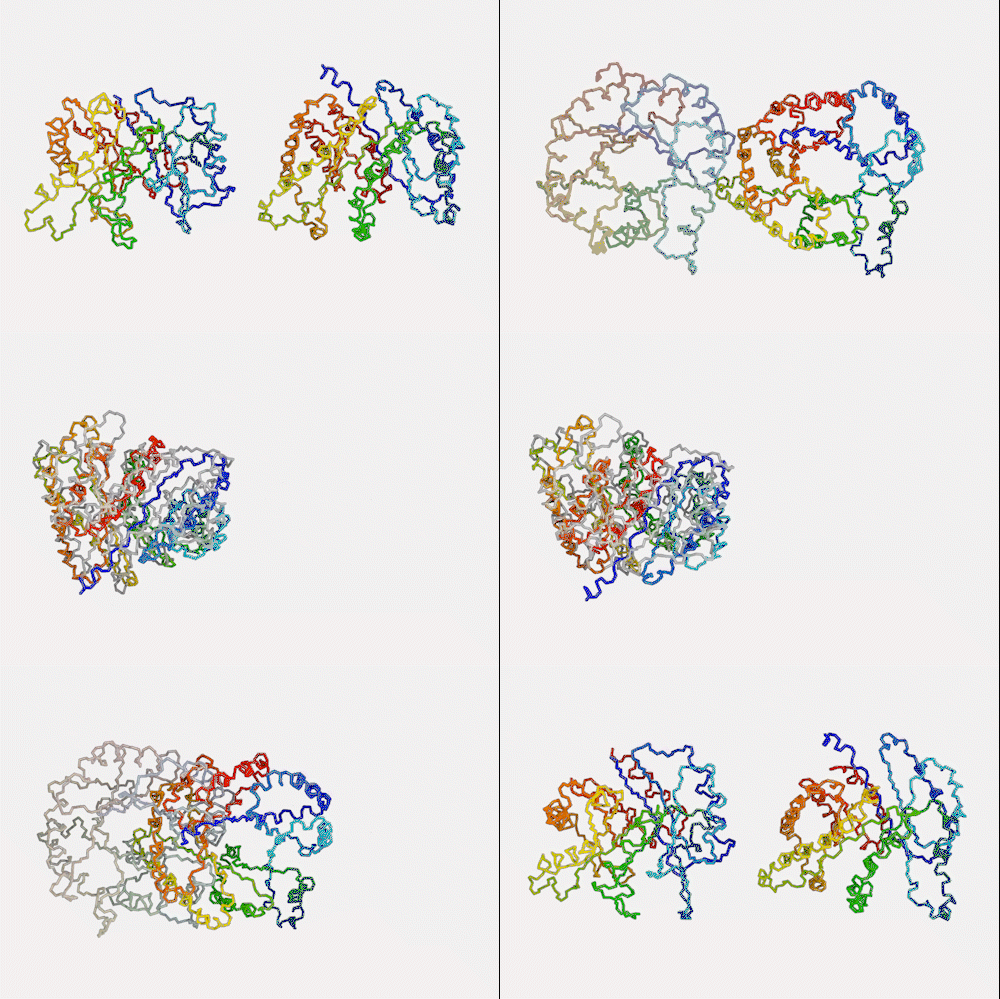 Research
Neural network folds proteins a million times faster than its competitors
Machine learning algorithm that predicts protein structures in milliseconds could top next protein folding contest
-
 Opinion
Death of the author
The first machine-generated book in chemistry is here. But is it any good? And what future does it herald?
-
 News
NewsLithium–ion battery book written by machine learning algorithm
Slip-ups and incoherent text show that machine written books have a way to go yet
-
 Research
Ligand selector steers C–N cross-couplings down most sustainable path
Tool is step towards strategy that considers reagents and reactants above and below the arrow
-
 Research
Machine learning predicts ammunition from gunshot residue
Forensic tool will assist investigators by turning back time on firearm chemistry
-
 Research
Synthesis-searching software’s superior scoring sharpens selections
Realistic costs and diverse suggestions make Chematica more insightful
-

-
 Research
Molecular movie reveals how twisting methyl disturbs aspirin electrons
Femtosecond x-ray experiments show how small vibrations kick off electron redistribution around an entire aspirin molecule
-
 Research
Mechanochemical simulations surprise with crystals behaving like putty
Inaugural picture of what happens when materials are bashed together reveals unexpected level of molecular transfer
-
 Research
Patent-busting AI tool navigates around protected drug pathways
Organic retrosynthesis software can identify key bonds involved in patented reactions to find alternative pathways
-
 Review
The Book of Why: The New Science of Cause and Effect
Artificial intelligence pioneer Judea Pearl and science writer Dana Mackenzie explore causality
-
 Research
Dispute over reaction prediction puts machine learning’s pitfalls in spotlight
Two research teams’ argument over a reaction-predicting algorithm show that there is still a lot to understand when applying machine learning to chemistry
-
 Review
Hello World: How to be Human in the Age of the Machine
Mathematician Hannah Fry explores the power and limitations of the algorithms that surround us
-
 Research
Catalyst predictor shows drug manufacturing promise
Joint industrial–academic team develops and validates force-field tool for identifying ligands for enantioselective catalysis
-

-
 Research
Robotic organic synthesis to make reproducibility simple in chemistry
Chemputer claims universality after making three drugs without human intervention
-
 Research
Diet approach to DFT benchmarking
Self-confessed grumpy physicist calls on developers to stop focusing on molecules and start thinking about solids