Organic chemistry – Page 13
-
-
 Research
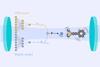
Machine learning could ‘change the paradigm’ for polaritonic chemistry
Model reveals influence of vibrational strong coupling during light-driven reaction
-
 Opinion
Bin Liu: ‘Breakthroughs always need patience’
The materials expert on deciding to become a scientist, collaboration and fishing
-
 Research
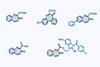
Regioselective nitrogen-insertion reaction is latest addition to skeletal editing toolbox
Protocol transforms arenols into benzazepines
-
 Research
Riding the microwave: three chemists share their stories
Disagreements surrounding non-thermal effects didn’t stop microwave reactors becoming a standard part of laboratory life
-
 Research
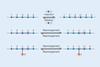
Steroid separation made easy with photoswitchable coordination cage
Light-activated coordination cage purifies progesterone
-
-
 Research
Ion-beam experiments probe fundamentals of hydronium–hydroxide neutralisation
Researchers uncover new insights into one of chemistry’s most fundamental equilibrium reactions
-
 Feature
Editing polymer backbones
Changing the chemical makeup of a polymer backbone could revolutionise how we make, use and even recycle plastics. James Mitchell Crow reports
-
 Research
Photochemistry converts dry-cleaning solvent waste into useful chemicals
One-pot reaction offers way to upcycle industrial solvent waste
-
 Opinion
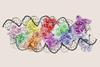
An unprecedented supramolecular structure brings new complexities to life
The transcription factor FOXP3’s interactions with DNA present more evidence of the importance of disorder
-
 Research
Explainer: What are water microdroplets and why are chemists talking about them?
Researchers are struggling to agree on the underlying reasons for accelerated rates and altered reaction mechanisms in water microdroplets. Here’s what we do know and where open questions lie…
-
 Research
Water microdroplet chemistry is contentious, here’s why
Are water microdroplets chemical dynamos or are their apparent effects experimental artefacts? Rebecca Trager investigates
-
 Research
First GPT-4-powered AI lab assistant independently directs key organic reactions
Large language model takes control after being prompted to do Suzuki and Sonogashira couplings
-
 Opinion
Exploring new fragments of chemical space
How medicinal and process chemists are working together to build better drugs
-
 Research
Fast flow-chemistry set-up facilitates sulfur-fluoride click chemistry
A modular method makes the most of flow-chemistry to create click-ready reagents selectively and efficiently
-
 Feature
Cubanes help drugs take the strain
Medicinal chemists are increasingly exploring strained ring systems, George Barsted reports, believing they can serve as replacements for conventional building blocks in pharmaceuticals
-
 Careers
The chemists creating knowledge-sharing websites
Speeding up scientific progress by sharing organic chemistry techniques, lab safety resources and computational procedures
-
 Careers
Online resources for chemists
A selection of tools, databases and advice sites to support your research
-
 Research
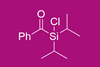
New silicon-based protecting group removable with blue light
Benzoyldiisopropylchlorosilane protects primary, secondary and tertiary alcohols, and also works alongside other protecting groups