Organic chemistry – Page 45
-
 Feature
Hofmann's chemistry factory
How two German chemists shaped chemistry education and research in Britain
-
 Research
Structural sleuthing salvages superbug slayer
Combining ‘assembly line’ synthesis, spectroscopy and computational predictions solves stereochemistry riddle
-
 Podcast
Piranha solution
When you need to get your glassware extremely clean, you need a cleaning solution with real ‘bite’
-
![Top view of the single-crystal X-ray diffraction structure of a dithienothiophene (DTT)-bridged [34]octaphyrin](https://d2cbg94ubxgsnp.cloudfront.net/Pictures/100x67/3/6/2/132362_Bicyclic-Baird-type-aromaticity-fig-1-c.jpg) Research
ResearchUnusual bicyclic molecule extends frontier of aromaticity
Odd resonance stabilisation observed in ground state opens door to studying poorly understood phenomenon
-

-
 Opinion
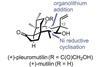
(+)-Pleuromutilin
Total synthesis is sometimes the only way to explore the chemical space around a natural product
-

-
 Research
Automated exploration of chemical space finds two new reactions
Synthetic chemists hit on undiscovered reactions by processing data from a high throughput screen of tens of thousands of potential products
-
 Research
Polar solvents promote halogen bonds over hydrogen ones
Solvent decides bonding battle winner in supramolecular systems
-
 Opinion
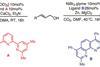
Nickel catalyst couples alcohols and carbon dioxide
Flexibility and low cost make nickel a firm favourite in catalysis
-
 Research
Giant ‘supersnowflakes’ start to lay
Self-assembled supramolecular structures overcome previous limitations
-
 Research
Protein cation is strongest organic acid ever made
Even inert gases fall prey to highly charged proteins
-

-

-
 Research
Fullerene nanoflask captures reactivity of atomic nitrogen
‘Molecular surgery’ transforms fullerenes into nano-scale flasks
-

-
 Research
Seductive sulfurs woo wasps
Amorous insect pollinators caught in the act with (methylthio)phenols
-
 Business
Merck KGaA to buy Chematica
Retrosynthesis tool will gain computational muscle and integrate with Sigma–Aldrich catalogue
-
 Research
‘Walking’ catalyst shows carbon dioxide the way
Unrefined hydrocarbons and carbon dioxide are turned into speciality fatty acids with the help of a migrating nickel catalyst
-
 Opinion
Crystal clear
The dark craft of crystallisation is an essential skill when working on kilogram scale