Organic chemistry – Page 48
-
 News
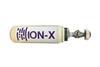
NewsMOFs offer safer toxic gas storage
Start-up’s gas cylinders allows sub-atmospheric storage of hazardous gases like arsine used in semiconductor processing
-
 News
NewsThe patriotic chemist
Northwestern University’s Omar Farha, who hails from the West Bank, is all about MOFs and keeping America’s scientific community inclusive
-
-
 Research
Nanomotors change up a gear with metal turbocharge
Metal complexation can speed up molecular motor 32 times
-
 Research
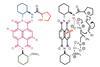
‘Artificial brain’ aces undergrad organic chemistry test
Algorithm learns chemistry just like a human and can predict the outcome of reactions it has never seen before
-
 Feature
Supraheroes
The three winners of this year’s chemistry Nobel gave chemists the tools to make molecules into machines. Emma Stoye assembles the story
-
 Research
Batch and flow: united at last
Fully automated reactor can carry out multistep reactions using both batch and flow chemistry
-
-
 Business
Chemical activity on demand
Aqdot controls the release of encapsulated cargoes using supramolecular chemistry
-
 Feature
Ionic liquids revisted
Ionic liquids have flowed far and wide since they first bubbled to the surface in the late 1990s. Michael Freemantle reports
-
 Opinion
Why molecular machines are more than just toys
This year’s Nobel prize could shift the field into high gear
-
-
-
 News
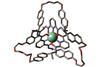
NewsMolecular machines roll in for the 2016 chemistry Nobel
Ben Feringa, Jean-Pierre Sauvage and Fraser Stoddart take chemistry’s top gong for creating a series of nanoscale machines
-
 Opinion
Merrifield’s resin
The story of solid phase peptide synthesis shows the wisdom of embracing new ideas
-
 Opinion
Slimmer synthesis
Atom economy is a noble aim, but there are other routes to efficient molecule making
-
 Research
Coin catalyses chemical reaction
British one-penny coin catalyses polymerisation to make acrylics
-
 Research
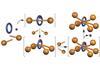
Chemists cultivate ‘macromolecular wheatsheaf’
Triply-threaded rotaxane could bind together long-chain organic molecules
-
 Research
Click-on, click-off linkages join biochemical toolkit
Click chemistry reaction can be reversed ‘without a trace’
-