Physical chemistry – Page 28
-
 Research
Program that automatically interprets NMR spectra is boon for structure elucidation
Raw NMR data takes 60 seconds, rather than eight hours, to go from spectrometer to structure
-
 Feature
The weirdness of water
Can we explain the strange properties of water by thinking of it as two different liquids? Rachel Brazil dives into the ongoing debate
-
 Research
Hydrogen bonds are single atom nickel’s secret for carbon dioxide reduction
Computational calculations show that hydrogen atoms and charge capacity are behind nickel’s high activity and selectivity in electrochemical carbon dioxide reduction
-
 Research
‘Liquid biopsy’ blood test accurately spots cancer by detecting DNA methylation
Power of AI harnessed to identify 50 different cancers before symptoms have even begun to emerge
-
 Research
New type of bond is the first to defy actinide contraction trend
Bonds discovered in metallacycles are unique to the 5f elements
-
 Feature
The Middle East’s synchrotron is open Sesame
How difficult is it to build a world-class research facility in the Middle East? Kit Chapman investigates
-
 News
NewsCracking down on corrosion with Hexigone Inhibitors
Intelli-ion technology provides non-toxic, chromium-free protection from corrosion
-
![An image showing a [2]catenane](https://d2cbg94ubxgsnp.cloudfront.net/Pictures/100x67/0/0/4/504004_fja0c01757_0007.jpeg_49119.jpg) Research
ResearchMechanical protecting group shields molecules from stress and strain
Catenane makes force-activated molecules more resistant mechanical bond breaking
-
 Research
Structure-based AI tool can predict wide range of very different reactions
Molecular properties, enantioselectivities, yields and relative conversion can all be modelled by the same program
-
 Research
Automatic conformer investigator takes tedium out of exploring low-energy chemical space
Quantum chemical calculations drive program that quickly and easily builds up plausible ensembles of molecular conformers
-
 Research
Textbook structure rules formulated by Linus Pauling 90 years ago prove unreliable
Just 13% of 5000 oxides found to fulfil all five coordination geometry predictions
-
 Research
AI tool screens 107 million molecules, discovers potent new antibiotics
Deep learning approach could help in fight against drug-resistant bacteria
-
 Research
Excess electrons can degrade polluting fluorinated compounds, simulations find
Strong carbon–fluorine bond dissociates on ultrafast timescale
-
![An image showing the bonding pattern of [2]catenane](https://d2cbg94ubxgsnp.cloudfront.net/Pictures/100x67/2/8/7/503287_c9cc09483kf2_286914.png) Research
ResearchAromaticity lends stability to carbon-only catenanes
Catenanes of newly discovered C18 rings are theoretically possible thanks to the kinetic quirks of aromaticity
-
 Business
Eliminating sticky situations with Adaptive Surface Technologies
The company’s multi-purpose coating concept can increase the fuel efficiency of ships and reduce the risk of infection in hospitals
-
 Research
Aircraft wings could be assembled cheaply and easily using nanotubes
Technique would eliminate the need for pressure vessels the size of a building
-
 Review
You Look Like a Thing and I Love You: How Artificial Intelligence Works and Why It’s Making the World a Weirder Place
From giraffes to strange pickup lines, this delightful and often laugh-out-loud book will help anyone understand AI better
-
 Podcast
You Look Like a Thing and I Love You by Janelle Shane – Book club
We talk about Janelle Shane’s dive into the depths of AI weirdness
-
 Research
Computer says no to membrane-bound life on Titan
Scientists quash inside–out cell membrane theory but don’t completely rule out possibility of life on cryogenic liquid hydrocarbon worlds
-
 Research
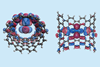
Rhenium plays starring role in bond movie
Controllable energy input from transmission electron microscope captures atoms dissociating and recombining