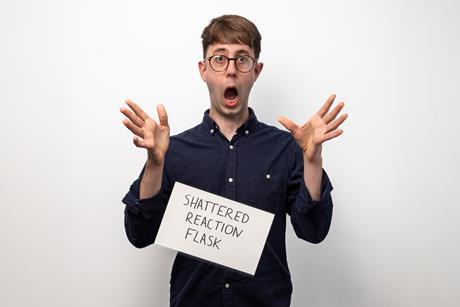
Making low-stakes mistakes is how we learn
Sharing mistakes helps us grow and avoid bigger incidents in the future. Please get in touch if you’ve ever made a low-stakes mistake in your career.

The Chemistry World team shares some of its low-stakes mistakes
Have you ever made a typo, broke some equipment or made a general slip-up? Get in touch and tell us about some of your own low-stakes mistakes.
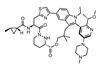
‘Molecular glues’ are sticking it to cancer
Compounds that enhance selected protein–protein interactions to interfere with signalling or send proteins to be destroyed are making it possible to influence processes that were previously considered ‘undruggable’

Avtar Singh Matharu: ‘Being a visible role model is really important’
The green chemist on being authentic, having good mentors and being proud of your culture

Deadly reminders of the importance of risk assessment
Serious incidents in two university labs highlight the importance of knowing what to do when things go wrong
The current academic system doesn’t incentivise risk-taking
But playing it safe can have negative consequences for a field
The evolving landscape of pain drug discovery
Harnessing the power of human-relevant in vitro models
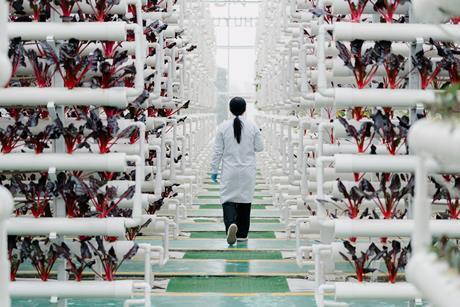
The scientific career clock in China
Age limits on funding and recruitment programmes place unhelpful pressures on early-career researchers
Our columnists

Philip Ball is an award-winning journalist, author and broadcaster who explores the history and philosophy of chemistry

Our cosmic origins remain plausible, not proven
The evidence is there that the molecular ingredients for life can form in space, but that doesn’t mean that they did

Raychelle Burks is an associate professor in the US and an award-winning science communicator and broadcaster.

Strands of investigation
LC–MS/MS techniques applied to hair can provide some answers when other analytical techniques aren’t possible

Nessa Carson is a synthetic organic research chemist based in Macclesfield, UK

Implementing ideas in industry
An initial thought can take on a life of its own as different stakeholders contribute their expertise
Chemjobber is a US-based industry insider, telling tales of tank reactors and organic obstacles

Early lessons from the Garden Grove chemical incident
A runaway polymerisation raises questions about safety measures and their backups

Derek Lowe is a medicinal chemist in the US, sharing wit and wisdom from a life spent in preclinical drug discovery

Chemistry contains multitudes
There’s room (and need) for all the various subspecies of chemical scientists

Chris Nawrat (aka BRSM) is a process chemist at a major pharmaceutical company in the US
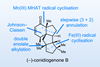
(±)-Conidiogenone B
A beautiful synthesis that measures up to an ideal

Vanessa Seifert explores philosophical issues from the novel perspective of chemistry

Do isolated molecules have structure?
If quantum mechanically described superposition states exist, can a molecule truly have a shape?

Andrea Sella is a professor of inorganic chemistry in the UK with a passion for unravelling the unlikely origins of scientific kit

Alfred Wilm and the hardening of metals
How do you prepare for a so-called accidental discovery?
Research landscape
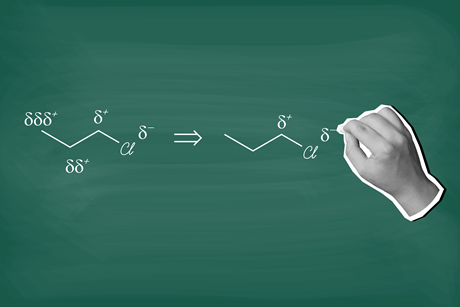
Why I think it’s time to change how we teach the inductive effect
New evidence challenges the idea of long‑range inductive transmission, highlighting that some textbook explanations of inductive effects are oversimplified and, in key cases, completely wrong

Africa should treat entrepreneurial science as a lifeline, not a luxury
Synchronised action from universities, policymakers and scientists is needed to bridge the gap from ideas to impact
The current academic system doesn’t incentivise risk-taking
But playing it safe can have negative consequences for a field
The scientific career clock in China
Age limits on funding and recruitment programmes place unhelpful pressures on early-career researchers
As a first-generation student, I didn’t have a clue what I was doing
And that brought challenges and unexpected opportunites
The chemist anthropologist
What new species remain to be discovered in the lab?
Some voices conspicuously silent when it comes to Trump’s science policies
Research-intensive universities have been targeted in an unprecedented and unrelenting manner since Donald Trump retook the White House
Industry landscape
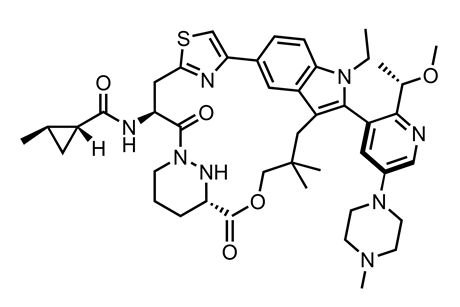
‘Molecular glues’ are sticking it to cancer
Compounds that enhance selected protein–protein interactions to interfere with signalling or send proteins to be destroyed are making it possible to influence processes that were previously considered ‘undruggable’


‘Molecular glues’ are sticking it to cancer
Compounds that enhance selected protein–protein interactions to interfere with signalling or send proteins to be destroyed are making it possible to influence processes that were previously considered ‘undruggable’
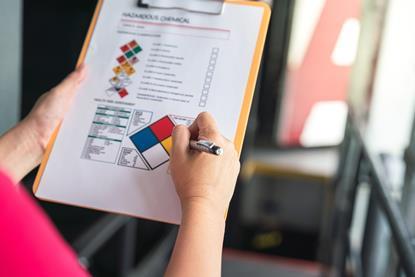
Deadly reminders of the importance of risk assessment
Serious incidents in two university labs highlight the importance of knowing what to do when things go wrong

Artificial intelligence or clever artifice?
It’s important to be realistic about what AI can, and can’t, achieve, across the chemistry enterprise

Letters: July 2026
Readers discuss stamp collection, half drops and more
Profiles

Avtar Singh Matharu: ‘Being a visible role model is really important’
The green chemist on being authentic, having good mentors and being proud of your culture
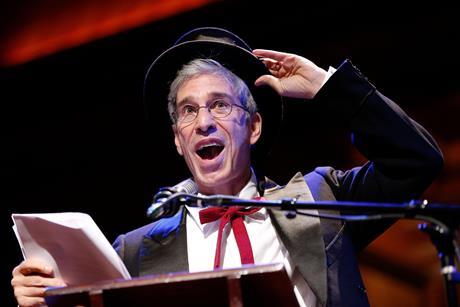
‘Lots of researchers were doing very unusual things – I created an awards ceremony to celebrate them’
Marc Abrahams, founder of the Ig Nobel prizes, on how the annual parody science award show began and how it’s changing
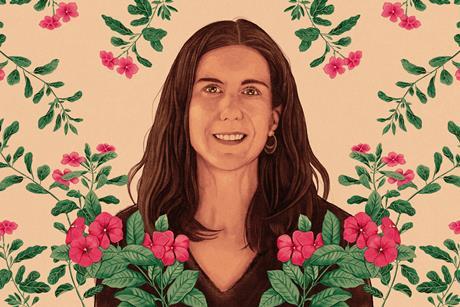
Sarah O’Connor: ‘There’s nothing that matches that thrill of discovery’
The natural product chemist talks growing up in New York, her dad’s late pursuit of a PhD, and her journey to plant chemistry and to Germany
Sarah O’Connor: ‘There’s nothing that matches that thrill of discovery’
The natural product chemist talks growing up in New York, her dad’s late pursuit of a PhD, and her journey to plant chemistry and to Germany
How Robert Crapnell carved out a new role between technician and academic
The research technical manager at Manchester Metropolitan University was awarded this year’s RSC Technical Excellence Prize
Pfizer’s green chemistry team turns 25
What began as a grassroots initiative has become embedded across Pfizer’s research and manufacturing operations, helping reshape processes from Viagra to Paxlovid
150 years of Gibbs’ phase rule
In 1876, Josiah Willard Gibbs published an equation that would transform chemistry – yet barely anyone noticed at the time. The story of his phase rule is one of delayed recognition, mathematical abstraction and enduring scientific legacy
From baseball to chemistry, and back again
With a lifelong passion for baseball and love of science, Jake Bruml began his career in biotech but transitioned to direct scouting for the Boston Red Sox
It’s time for consensus on science’s place in government
By Patrick Walter
The latest shake-up of UK science policy oversight brings uncertainty to a sector that needs stability to succeed
What do university chemistry practicals really test?
By Nitheeshan Gunanantham
In Nitheeshan Gunanantham’s experience, stamina can become a stand-in for skill