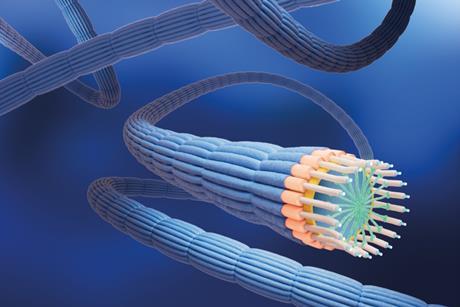
Bacteria discovered to be synthesising metal–organic frameworks with ‘extraordinary conductivity’
Biosynthesis of MOFs observed for the first time and could inspire the design of sustainable electronic structures
Metal carbyne finally synthesised using f-block element
Bonding in uranium–carbon triple bond differs to transition metal equivalents

Controlling variability in biosynthesis: the role of high-purity solvents and reagents
From oligonucleotides to mRNA, precise workflows leave little room for deviation
40 years of patent data reveals an overreliance on hazardous solvents
AI models trained on biased datasets could perpetuate hazardous practices rather than making chemistry more sustainable
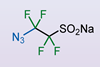
Two-in-one reagent combines fluoroalkylation with being click ready
Rare N2 dimer could let scientists answer questions about global nitrogen cycle
Femtosecond x-rays solve contentious question of how azobenzene flips between isomers
Microsoft’s split-personality retrosynthetic AI is a fast learner
Skeletal editing step forward as carbon atoms swapped for nitrogen by embracing unreactive radical intermediate
Lunar samples returned by China’s Chang’e 6 mission contain rare, highly magnetic iron allotrope
Highlights
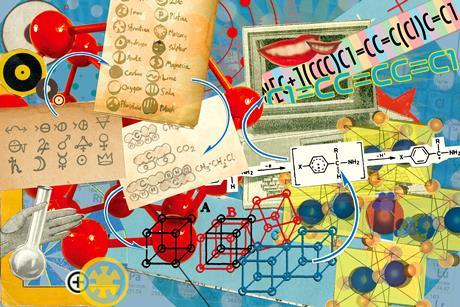
The evolution of chemical notation
Chemical notation has come a long way since the cryptic symbols of the alchemists – but agreeing on how to represent molecules, bonds and reactions has never been straightforward, and the challenge is far from over

How asymmetric autocatalysis won the Nobel prize
Mason Wakley tells the full story of how Henri Kagan and Kensō Soai’s work on non-linear effects and asymmetric autocatalysis won the 2026 Nobel prize in chemistry

NMR spectroscopy from its origins to hyperpolarisation and beyond
From Richard Ernst’s Nobel prize-winning techniques to hyperpolarisation and in-situ battery analysis, nuclear magnetic resonance spectroscopy continues to reinvent itself

Twisting 2D nanomaterials unlocks exotic quantum phases of matter
From superconductivity to fractional charge, strange and exotic states emerge when 2D nanomaterial bilayers are twisted into moiré superlattice structures. Chemists are joining force with physicists to explore a strange twisted world

The chemistry helping to unravel the Bayeux Tapestry’s secrets
As the Bayeux Tapestry comes to the British Museum, scientists reveal how chemistry and imaging technology are unlocking its hidden history
Topics






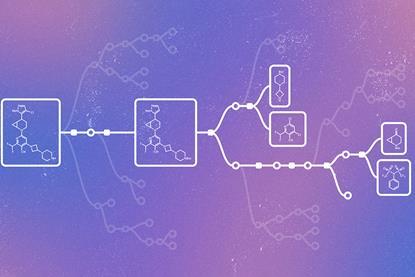
Microsoft’s split-personality retrosynthetic AI is a fast learner
Retrochimera combines two deep learning algorithms from different classes, outperforming their individual success rates on datasets from Novartis and GSK
AI helps chemists consider more options when it comes to picking the best reactants for an experiment
Algorithm can standardise substrate selection to improve performance and structural diversity
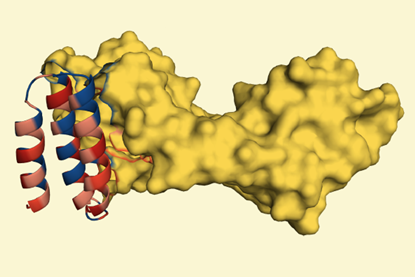
Tagging AI-generated proteins during design process will let scientists know who made them
Google DeepMind researchers who developed the method say that this will help uphold scientific integrity and prevent misuse of protein designs
Google DeepMind’s mutation Atlas shines a light on our dark DNA
Can we predict what happens in a molecular movie?
Molecular dyes outside of the sRGB colour gamut present a challenge for digital chemistry
Benchmark flaws may be distorting AI drug-discovery leaderboards
One-electron bonds may be more common than chemists thought

Is this painting of a Roman emperor a lost Leonardo da Vinci?
Pigment analysis sheds light on Renaissance painting mystery




Embodying polymer chemistry with a purpose by upcycling plastics and trapping PFAS
For Frank Leibfarth, focussing on reactivity and selectivity helps him bridge the gap between fundamental and applied research
Was the ‘Baghdad battery’ really two cells?
A new study suggests it had an ‘outer’ cell that reacted with air to supply a higher voltage. But was it a battery at all?
Prehistoric humans hunted with poisoned arrows thousands of years earlier than thought
Deadly plant alkaloids discovered on 60,000-year-old arrowheads
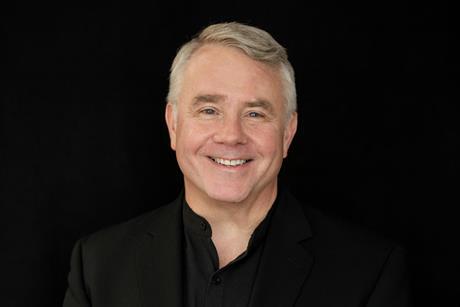
Green chemistry co-founder John Warner on tragedy, creativity and science
Warner shares how his passion for music transitioned into a love of chemistry and how life events have shaped his professional successes
Pfizer’s green chemistry team turns 25
What began as a grassroots initiative has become embedded across Pfizer’s research and manufacturing operations, helping reshape processes from Viagra to Paxlovid
Handbook of practical advice will help chemistry departments reduce environmental impact, save money
Collection of real-life examples aims to balance environmental and financial concerns
Stringent regulations on dichloromethane are forcing US labs to rethink use of common solvent
As broad ban on DCM is finalised, US labs have either abandoned the chemical or readied themselves for exposure monitoring in November
Modified nitrile rubber gets new lease of life as carbon capture material
Two teams are exploring scaling up processes that could tackle the 800,000 tonnes of glove waste created every year
Sunlight-driven process upcycles polystyrene waste and elemental sulfur into valuable organic compounds
Products could be used as building blocks for semiconductor materials
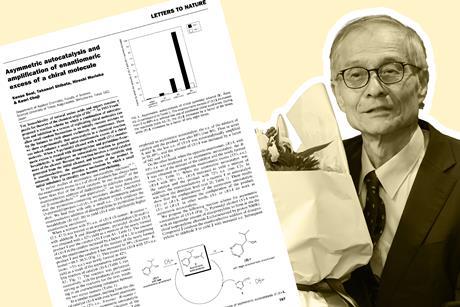
What’s it like to be the first person privy to Nobel-worthy work?
As Philip Ball, handling editor of Kensō Soai’s 1995 paper reveals, sometimes you’re oblivious to it
CaSE calls for government and science sector to ensure R&D remains relevant in UK
Science policy organisation says a long-term vision and stable funding base is needed as public support for R&D is not a given
El Agente: ask me anything! A live demonstration
Join us as we tackle your chemistry challenges live with the El Agente team on 24 November
Elsevier teams up with AI firm to extract chemical structure data from papers
Publishing giant will host data on Reaxys but researchers have concerns about independently validating the method
Doctoral student who fatally shot his UNC Chapel Hill adviser found not guilty due to insanity
Three years after materials scientist’s killing, the culprit has been committed to a psychiatric hospital indefinitely